Violent attacks on schools, pupils and staff around the world up by 40%, says study

Brightly coloured bags piled up in front of the shell of a building amid the wreckage of damaged school desks
theguardian.org

Attacks on education globally have surged by 40% with more than 8,556 recorded incidents and 10,600 students and staff killed, injured, abducted, arrested or otherwise harmed in 2024 and 2025, according to new research.

Attacks were reported in 83 countries, with the highest incidences recorded in Colombia, the Democratic Republic of the Congo, Ethiopia, Haiti, Palestine and Ukraine.

Ukraine experienced about 900 attacks on schools, while Palestine saw at least 2,400 attacks on students and staff, the report from the Global Coalition to Protect Education from Attack (GCPEA) said.

Cases of military forces or armed groups occupying schools or universities nearly doubled (91%) from the previous two years, with 1,912 recorded cases, according to the study, published on Monday.

Lisa Chung Bender, director of the GCPEA, said the report’s findings sounded the alarm about the threat to education.

“They are a warning that the global norms that once protected children are collapsing,” she said. “A warning that the world is drifting toward a place where even the youngest are no longer off‑limits. And a warning that if we do not hold the line now, we may never get it back.”

The highest numbers of people who fell victim to attacks on education were in Myanmar, Nigeria, Yemen and Cameroon; where more than 1,700 students and staff in total were killed or injured.

In Nigeria, more than 700 students and staff were reportedly kidnapped, while in Myanmar, at least 80 students and staff were killed, and about 240 were injured.

Prof Tejendra Pherali, professor of education, conflict and peace at University College London, said: “It’s heartbreaking to see numbers are rising; it is the same pattern every year … In my view, this is more systematic rather than episodic, and attacks are increasingly strategic.”

He added: “Behind these numbers are the children who no longer see schools as a place of safety. It’s not just education that is lost – it’s safety, futures and trust in educational institutions.”

In at least 11 countries, women and girls were targeted because of their gender, the report found. In one example in Nigeria, on 17 November 2025, gunmen attacked a girls’ boarding school, killing the vice-principal and abducting 25 female pupils.

Students with disabilities, who already face significant obstacles to accessing education, were also affected. On 11 September 2025 in Lebanon, sources said the Israeli military carried out a controlled detonation to destroy a school for children with special needs.

The use of high explosives, including drone-borne munitions, featured frequently in the attacks on schools, resulting in extensive casualties, damage to infrastructure and forcing many institutions to close.

Kieran King, from the charity War Child UK, said attacks on education were a grave violation of international law, such as the Geneva conventions.

“The reality is that since 2010, we have seen a 60% increase of children living in conflict,” he said. “Over the same period, we’ve seen grave violations against children, including attacks on education, increase by 373%.”

King added that states acting without fear of sanction and aid cuts were worsening the situation. “We see this weakening multilateral system and political impunity for war crimes more broadly,” he said. “The inevitable result of that is a documented surge in disregard for international humanitarian law.

“The aid cuts that we’ve seen from the US, but also the UK and others, [have led to significant amounts] of the funding for support for humanitarian action removed from the sector.”

The GCPEA’s Chung Bender insisted that the attacks were preventable, however. “We need states to end military use of schools, strengthen legal protection and accountability for attacks on education, and invest in monitoring, reporting and early warning systems,” she said.

The figures come as the number of conflicts between states has reached the highest level since the second world war. Uppsala University’s conflict data programme registered 65 conflicts during 2025 – 13 of which were classified as wars – which means they had caused at least 1,000 battle-related deaths in a calendar year. This is the highest number since 1992.

The number of fatalities also increased sharply during the year, among combatants and civilians. In all, more than 244,000 people were killed in organised violence in 2025, which makes it the second most bloody year since the genocide in Rwanda in 1994.

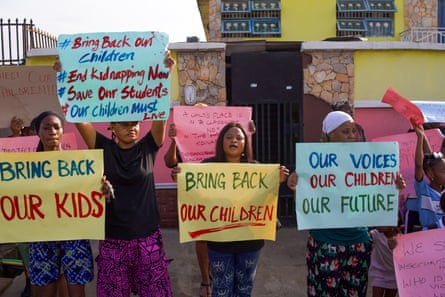
Protesters demand the release of about 39 students and seven teachers kidnapped in Oyo state, Nigeria.
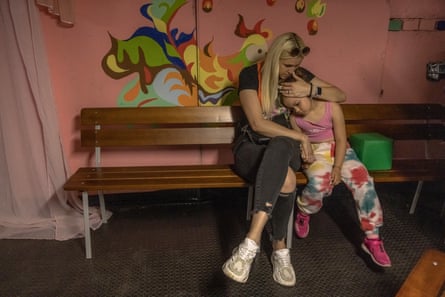
A woman sits with her daughter in a school’s shelter during an air raid alert in Kyiv, Ukraine

Continue ReadingViolent attacks on schools, pupils and staff around the world up by 40%, says study

London council seizes social housing flat rented by Sierra Leone first lady

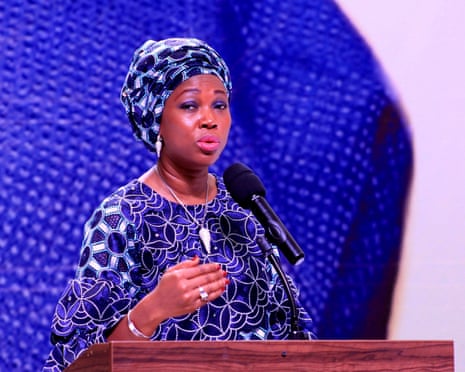
Fatima Maada Bio speaks at a podium with a microphone

A social housing flat rented by Sierra Leone’s first lady has been seized by a London council.

Southwark council confirmed it had repossessed the two-bedroom home in Walworth previously occupied by Fatima Jabbe-Bio, whose tenancy was reported by the Times last year.

Jabbe-Bio, who is married to Sierra Leone’s president, Julius Maada Bio, had been listed on the tenancy since 2007. She has divided her time between Sierra Leone and Britain since her husband was elected in 2018.

Housing rules state that council properties should ordinarily be a tenant’s principal residence. The Times investigation raised questions about whether the south London flat met that requirement after neighbours said they rarely saw Jabbe-Bio.

Announcing the recovery of the home, Reginald Popoola, Southwark’s executive member for council homes, said: “We can confirm we have taken possession of a property in Walworth following a 12-month investigation by our housing investigations team.”

He said the flat would be handed to a family on the waiting list. “I look forward to bringing this council property back to its original purpose, which is to provide a safe and secure home for people with legitimate housing need on the council’s waiting list,” he said.

The case drew widespread attention after reports that Jabbe-Bio had retained the tenancy despite living for much of the year in the presidential lodge in Freetown, Sierra Leone.

In an interview with the BBC last month, Jabbe-Bio defended keeping the flat, rejecting suggestions she had acted improperly. The former model and actor said: “My children are all British citizens. I’m paying for my council house myself. I have not committed any crime.”

There is no suggestion Jabbe-Bio has been charged with any offence.

The recovery of the property comes at a time of acute pressure on social housing in London, with growing waiting lists, rising homelessness and increasing demand for temporary accommodation.

In Southwark alone, more than 18,000 households are on the waiting list for social housing, council figures show. About 4,000 households are living in temporary accommodation while waiting for a permanent home.

Local authorities have stepped up efforts to tackle tenancy fraud and recover properties where tenancy agreements are being contravened. The council said it investigated all allegations of tenancy fraud and unlawful occupation and had recovered 107 properties over the past two years.

Southwark council did not disclose details of the results of its investigation into Jabbe-Bio’s tenancy.


Continue ReadingLondon council seizes social housing flat rented by Sierra Leone first lady

Trump targeting immigrants from countries hit most by climate shocks

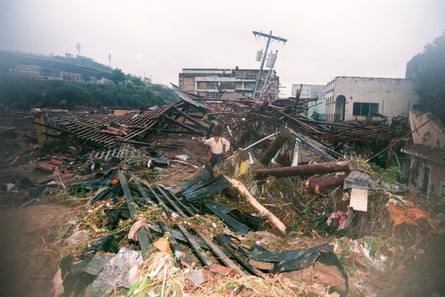
a side-by-side image shows an ICE agent in tactical gear on the left and destroyed homes after a hurricane on the right

Donald Trump’s immigration crackdown is largely targeting people from the countries most vulnerable to displacement from climate-driven disasters, a Guardian analysis shows.

As the Trump administration pushes policies to boost planet-heating fossil fuels, millions of people are being forced to flee their homelands due to storms, floods and droughts worsened by the climate crisis.

Of the 39 countries from which the Trump administration has fully or partly restricted entry to the US, 22 are ranked within the most vulnerable quarter of nations in the world to climate impacts, according to a Guardian analysis of data from the Notre Dame Global Adaptation Initiative, which assesses how prone jurisdictions are to the climate crisis.

Nearly all of the most vulnerable countries are on a ban or visa pause,” said Danielle Wood, an associate professor at Notre Dame. Immigrants from Chad and Niger, the two most climate-vulnerable countries in the world according to the index, are now fully barred from the US, as are people from Sudan, Somalia and Sierra Leone, also among the 10 countries most exposed to climate impacts.

Among the most vulnerable half of countries is Honduras, which has seen stronger rainstorms, droughts, floods and coastal erosion in recent years. When Hurricane Mitch crashed into the country, killing 7,000 people, one affected family surveyed the unsalvageable ruins of their home and realized they had a lifeline – to move to the US.

Evelyn, who did not want to share her full name, was a teenager when Mitch hit in 1998 and recalls how her relatives in New York City pleaded with her mother to bring her and her sister to the US.

“There were bodies and dead animals floating in the water, the house was messed up, the furniture was all gone – doors, windows gone. It was so, so sad,” said Evelyn. “I got sick because of the mosquitoes too. My uncle and aunt were just like: ‘OK, just bring the kids over here, don’t stay. It’s dangerous.’”

Storms of the deadly ferocity of Mitch are even more likely today because our atmosphere and oceans have rapidly heated up due to the burning of fossil fuels.

Yet Trump’s curbing of immigration and asylum has made it far harder for people like Evelyn to flee to the US. “Every day it’s more barriers,” said Evelyn, who still lives in New York and has two daughters, both studying at university. “It’s sad to know that people will not be able to apply for a status or something to help their situation and also help the people back home.”

The administration has also sought to terminate the temporary protected status (TPS) of people from Honduras and 12 other countries who already reside in the US, with nearly half of these countries ranked by Notre Dame as among the most climate-vulnerable places in the world.

The US supreme court is now considering an appeal to the TPS revocation for people hailing from two of the affected countries: Syria and Haiti, which have suffered recent droughts and hurricanes, respectively, as well as violent unrest. Environmental perils in these and other countries have been cited by the federal government when granting TPS status to allow people to remain in the US.

But the current administration’s sweeping bans on entry to the US will “keep the radical Islamic terrorists out of our country” and resolve deficiencies in vetting people, Trump has said. The state department was contacted for comment about climate-related immigration.

Most of the banned countries are at the epicenter of an escalating climate displacement crisis, with the United Nations estimating severe heatwaves, droughts, storms and floods have uprooted 250 million people globally over the past decade, the equivalent of 70,000 displacements every day.

It’s unknown how many of these people flee over borders, with most migration taking place internally – in 2025, nearly 30 million people were forced by disasters to move within their countries, recent figures show. Wildfires, such as those that incinerated parts of Los Angeles last year, were the largest cause of such displacement.

But experts agree that there is a growing cohort of so-called “climate refugees” fleeing their home countries as the planet continues to dangerously overheat. There are currently no official pathways to do so, however, with neither US law nor the UN’s 1951 refugee convention recognizing environmental disasters as a reason to gain protection in another country.

People are being displaced by climate change, the number is growing every year and, increasingly, the displacements are permanent,” said Jocelyn Perry, program manager of the climate displacement program at Refugees International. Residents of developing countries now blacklisted by the US struggle to deal with the loss of crops, sea level rise and other upheavals worsened by global heating, she added.

A house in Florida may be able to withstand a category four hurricane, but there are people around the world unable to deal with that in any way and they are bearing the brunt of this,” said Perry.

Advocates say that people will typically be displaced by a climate-fueled disaster, which leads to a separate but related misfortune, such as violence, that spurs them to leave their country. War or persecution can, unlike climate change, be used as a reason to claim asylum.

Climate change is not necessarily the first issue that displaced people raise,” said Perry. “But if, say, a family’s crops fail for three years and they have to move to an urban area and they can’t find work or it’s dangerous there, climate change has played a key role in their movement – even if their asylum claim is because of the violence that follows.”

The US is the world’s largest emitter of planet-heating pollution in history. However, Trump has dismissed any need to act on the climate crisis, which he calls a “hoax” and “bullshit”, and has demanded the world remain wedded to fossil fuels.

Meanwhile, the Trump administration has effectively shut down the US refugee program, other than to white South Africans, and dismantled overseas aid that ameliorates the symptoms of a warming world, such as the spread of disease. Cuts to USAID engineered by Elon Musk, the world’s richest person, are forecast to result in the deaths of about 4.5 million young children, in places such as sub-Saharan Africa, over the next five years.

All of these actions will increase displacement, and the Trump administration will try to dissuade people from coming to the US border through cruel and inhumane policies, third-country deportation and child detention,” said Perry.

I don’t know if that will deter people if the other option is risking death or injury at home, though, so people will still make that journey,” she added. “We are seeing political decisions in the US and in Europe, too, that will leave more people stuck in vulnerable places and unable to respond. With worsening climate change, this is going to be horrific for the rest of the world.”

The one part of the US immigration apparatus that does factor in the climate crisis is TPS, by which foreign nationals already in the US are granted renewable one- or two-year stays if war or natural disaster hits their homeland.

Syrians were granted TPS in 2024 on the basis, among other things, of falling wheat production and “drought-like conditions” that have plagued the country in recent years. Ethiopia has been hit by severe drought and flooding, displacing more than 4 million people, the country’s TPS status from the same year concluded, while about 350,000 Haitians in the US would risk returning to one of the countries “most affected by extreme weather events”, according to a 2023 determination granting a TPS extension.

The Trump administration has terminated TPS status for a swathe of countries, however, with the courts set to decide on the status of several of these, including the supreme court case involving Syria and Haiti. “There are tens of thousands of people who have fled because of natural disasters,” said Geoffrey Pipoly, a lawyer representing six plaintiffs from Haiti, which has been hit by two huge hurricanes since 2016. “Haiti has been smack dab in the middle of this for decades.”

Even those still protected by TPS face uncertainty. A doctor originally from Sudan, who did not want to be named, said he left for the US after drought accelerated conflict in his country, which has been locked in a civil war for the past three years.

It’s too dry, there’s not enough water, the lands were just left without anyone to cultivate them and millions have fled,” he said. “The conflicts are affected by climate change and the difficulty of people sharing resources in that part of the world. I did not see any hope in things improving.”

Sudan is still on the TPS list but only until October. “It would be very, very tough, very difficult to go back,” said the doctor, who has still not heard whether an application made for a work permit has been successful. “One of the reasons people come to the US is because they think there is a law, everybody is treated equally. But I think this is no longer the case.”

The supreme court ruling is expected by late June or early July.

Efforts to update the US immigration system to include consideration of the climate crisis have so far floundered. The 1952 Immigration and Nationality Act (INA) defines a “refugee” as anyone who is unable to return to their home nation due to a well-founded fear of persecution based on race, religion, nationality, membership in a particular social group or political viewpoint.

It does not include protections for those displaced by environmental degradation – something researchers and advocates have long said is necessary. In 2021 and 2023, Democratic lawmakers aimed to codify such a change with the Climate Displaced Persons Act, which would amend the INA to provide durable legal status and resettlement support to people forced to relocate to the US due to climate disasters.

“As disasters supercharged by climate change cause disruption and devastation around the world, the Trump administration wants to both destroy programs meant to build more resilient countries and make it impossible for those without recourse to seek refuge in the United States,” said the Massachusetts senator Ed Markey, who introduced the proposal both times.

Such legislation is needed now more than ever, Markey said. “Trump’s attacks on foreign aid programs, his disregard of climate science and his attacks on immigrants all come from the same playbook,” he said.

The bill would also ensure that agencies collect data on climate-related displacement. That could remove a major roadblock to establishing and maintaining protections for those affected, said Hannah Flamm, deputy director of policy at the International Refugee Assistance Program (IRAP).

“There’s vast data globally on internal displacement on account of climate, but there’s virtually no data on international displacement on account of climate,” she said, adding that Markey’s proposal is a “valiant effort”.

“Whether or not it passes, it is critical to mobilize advocacy and to reinforce the need to meet this need,” she said.

Given the current political environment, however, the prospect of a new climate migration framework appears dim. “I wouldn’t say there’s a lot of optimism right now that any change could occur anytime in the near future,” Perry said.

Amid a broader push for mass deportations by the administration, “climate has been put on the back burner to safeguard the very concept of regular migration as a whole”, she added.

A future administration could try to implement a sort of climate visa to the US, but it’s more likely that it would focus on limiting damage around the world that displaces people in the first place, according to Yael Schacher, director for the Americas and Europe at Refugees International.

If the tide was to turn, it might be more for adaptation funding to help people stay where they are, rather than a new visa,” Schacher said.

We have our own displacement in the US, too – we aren’t immune from this. Right now the sympathy for immigrants, even people displaced by the worst persecution, is nil. It’s hard to see any sort of expansive opening – up, even if that’s what people need.”

Dharna Noor contributed additional reporting; Aliya Uteuova contributed data visuals

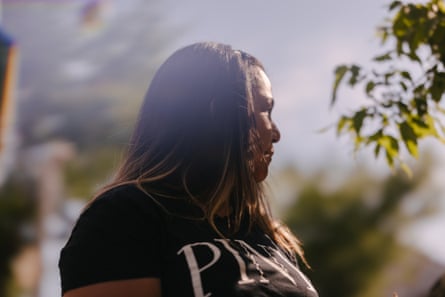
A woman, whose face is turned for privacy reasons, stands for a portrait between trees
A person walks among storm-caused debris
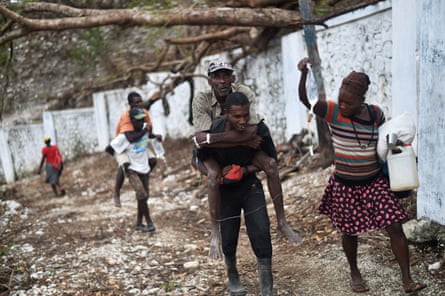
A man carries another man on his back, as a woman holds an IV bag
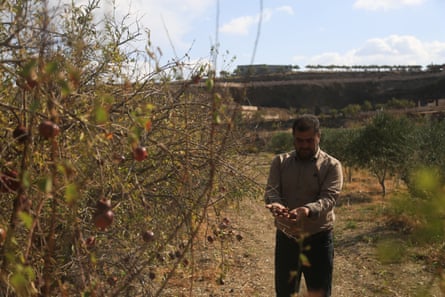
A man examines his drought-stricken crops.
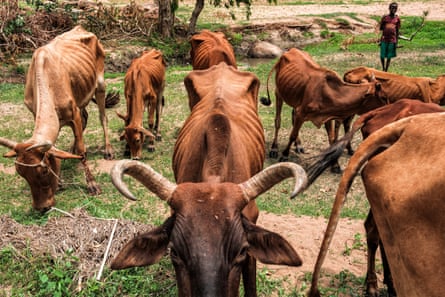
Emaciated cattle graze

Continue ReadingTrump targeting immigrants from countries hit most by climate shocks

Global brands ‘likely’ using mineral that funds rebels accused of atrocities in DRC, investigation finds

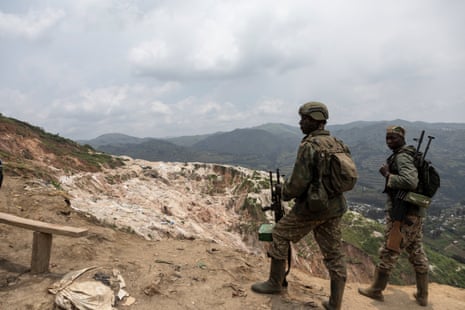
Two M23 soldiers in military gear stand at the edge of a Rubaya mining pit with mountains behind.
theguardian.org

Leading global brands including Amazon, Ericsson and Sony are “likely” to have sourced minerals linked to a militia accused of widespread sexual violence, summary executions and torture, a new investigation claims.

The companies allegedlybut unknowingly, acquired coltan smuggled from mines in the Democratic Republic of the Congo (DRC) that are occupied by the M23 militia, which has committed myriad atrocities in eastern DRC.

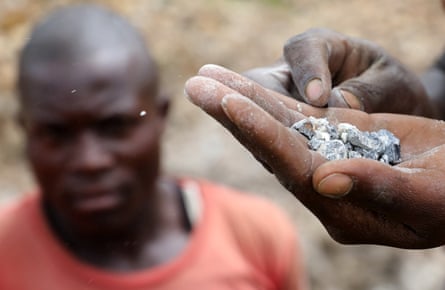
The coltan, vital for the production of mobile phones and computers, is smuggled across the border to Rwanda and moved on by coltan exporters used by large firms, according to a year-long investigation by Global Witness. It alleged that the crucial mineral will probably have also found its way into the products of international brands such as Microsoft, Toyota, Nvidia and Vodafone.

Alex Kopp, senior policy and advocacy adviser at Global Witness, said: “Behind our everyday tech lies a supply chain tainted by violence, exploitation and human suffering.”

He urged government intervention to hold companies accountable and for sanctions to be imposed on those whose financial activities enable M23’s brutal occupation of a significant swathe of eastern DRC.

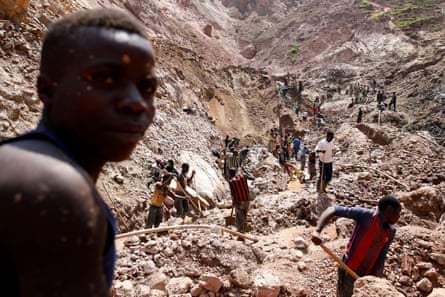
The looted minerals come from a vast site known as Rubaya, situated in DRC’s North Kivu province, and which holds about 15% of the world’s coltan.

The M23 militia, backed by up to 7,000 Rwandan troops deployed within the DRC, captured the mines two years ago and charges a levy on each kilogram of coltan.

The UN’s group of experts have estimated that M23 gathers almost £600,000 a month from coltan taxation in Rubaya, an income used to fund the militia’s operations.

Seizing vast tracts of territory, M23 has killed thousands and displaced hundreds of thousands of civilians, raping and abducting with impunity. Rwanda denies backing the militia.

Coltan, however, has become an important revenue stream for the east African state, with the mineral becoming one of its largest export earners.

Until now, little was known about who bought the smuggled coltan. After interviewing coltan smugglers, Global Witness says that five of the seven largest Rwandan exporters of the mineral buy conflict coltan from the DRC.

Those exporters then sell the mineral through middlemen to smelters in China and Kazakhstan. In the smelters, the coltan is processed into tantalum. From there, it is used to manufacture the capacitors that are essential components in electronic devices.

The investigation raises questions over the complicity of Rwandan officials. One coltan smuggler alleged that the Rwandan authorities were fully aware of the practice.

Previously, much of the coltan was smuggled into Rwanda through lightly monitored border areas. However, sources told Global Witness that large quantities of the mineral now entered Rwanda through the DRC border city of Goma, which was taken over by M23 last year.

The investigation, which reviewed trade data and analysed and cross-checked customs records, indicates how due diligence systems appear to have failed to break the link between conflict and natural resources.

Theoretically, a traceability system relied on by many international companies to keep their supply chains conflict-free – known as the International Tin Supply Chain Initiative (Itsci) – should mean that what goes into a phone handset and other electronics is sourced responsibly and avoids conflict financing and human rights abuses.

However, Global Witness say the initiative has largely failed to detect the conflict coltan. It also accuses other schemes such as the Responsible Minerals Initiative (RMI) of probably being unable to discover conflict coltan being introduced into supply chains.

Kopp said: “The companies behind our phones, computers and cars haven’t been able or willing to clean up their supply chains. This fuels instability and prolongs the suffering of communities.”

Global Witness urged international companies to stop buying coltan from Rwanda until M23 has withdrawn troops from the Rubaya mines, unless they had thoroughly scrutinised the coltan before export by directly checking its origin and grading.

All companies and traceability schemes named in the article were invited to comment.

An Amazon spokesperson, Margaret Callahan, said: “We’re committed to providing products and services that are produced or supplied in a way that respects human rights and the environment – in accordance with our supply-chain standards and all applicable laws.

“While we generally don’t source from mine sites or smelters, we remain committed to responsible mineral sourcing and will continue engaging with suppliers and upstream partners on auditing mechanisms and smelter certification. We’re requesting additional due diligence from Amazon suppliers associated with the smelters identified by this report.”

An Ericsson spokesperson said they took the allegations “very seriously”, adding: “Ericsson does not source raw minerals directly. Tantalum may enter our supply chain through multiple tiers of suppliers and processors, which is why we conduct due diligence through supplier reporting, smelter identification, industry programmes, and engagement with the Responsible Minerals Initiative.

“Following the allegations raised by Global Witness, we have reviewed the named tantalum smelters against our latest supplier-reported due-diligence data.

“Based on the information currently available to us, two of the facilities referenced appear in Ericsson’s supply-chain data and are currently listed as RMI-conformant. One of the named facilities does not appear in our latest supplier-reported smelter list for 2025.

“However, reviewing RMI conformance alone is not the end of our due diligence activities. Given the seriousness of the allegations concerning coltan from the Rubaya area and the conflict situation in eastern DRC, Ericsson is treating this with the attention that it deserves.”

The company said it was seeking additional information but had not been provided with evidence that could verify if tantalum contained in Ericsson products originated from Rubaya. It added that it had requested a meeting with Global Witness.

A Vodafone spokesperson said: “We do not manufacture electronic products nor mine or directly purchase minerals and therefore do not use minerals.

“Vodafone is not distinguished from other UK and global telecom operators, technology retailers and many other high street stores, in selling electronic products.

“Companies like ours rely on certified organisations like the Responsible Minerals Initiative to verify the source of products that we get from third-party suppliers.”

Men with picks work in a rocky ravine.
A hand with coltan in it, with a blurred man’s face in the background.
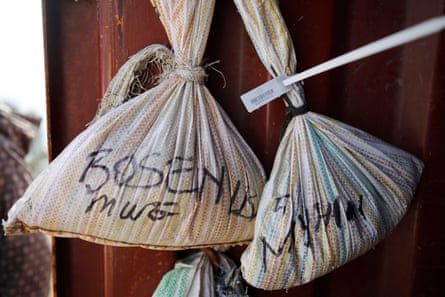
Two sacks hanging on a wall.

Continue ReadingGlobal brands ‘likely’ using mineral that funds rebels accused of atrocities in DRC, investigation finds

Man shot dead during protest against proposed US Ebola quarantine facility in Kenya

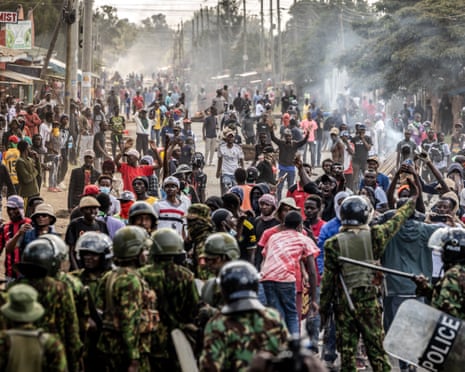
Chaotic scene of demonstrators confronting police who are wearing military-style uniforms

A man has been shot in the head during a protest in a town in central Kenya against a proposed Ebola quarantine facility for US citizens.

Photographs from the scene appeared to show a person lying motionless on the ground. Dozens of people had gathered near Laikipia airbase, the proposed site of the centre in Nanyuki, 120 miles from the capital, Nairobi, some wearing protective equipment and carrying a coffin with “Ebola” written on it.

Several people were arrested and police used teargas to disperse the small crowds. Protesters have said they oppose the centre partly on the grounds that they do not want potential carriers of the highly contagious disease on Kenyan soil.

There has been rising nationwide anger in recent weeks. Two people were killed during a protest in the town on Monday last week.

The US government plans to send 30 medical personnel to staff the Nanyuki facility, which, if completed, will have 50 beds.

After a petition by the Kenyan nonprofit Katiba Institute, a Nairobi court late last month temporarily blocked the establishment of the facility and the admission into the country of people exposed to Ebola.

Last week, it barred the Kenyan government from proceeding with the plan before the case is resolved. The next hearing is due on 23 June.

Kenya’s president, William Ruto, has vowed to press ahead, saying the country owes Washington for years of aid support.

Health officials in Uganda and the Democratic Republic of the Congo (DRC) are battling to contain an outbreak of the virus. The outbreak was declared on 15 May but the virus is thought to have been circulating undetected for weeks before then.

The epidemic, which the World Health Organization (WHO) has declared a public health emergency of international concern, is caused by the rare Bundibugyo virus, which has no vaccine or approved treatment.

As of 6 June, the DRC had reported a total of 515 confirmed cases, with 91 deaths, while Uganda had reported 19 confirmed cases, including two deaths, as well as one probable case who has died, according to WHO figures. There have been no known cases in Kenya.

Agence France-Presse contributed to this report

Continue ReadingMan shot dead during protest against proposed US Ebola quarantine facility in Kenya

Man shot during protest against proposed US Ebola quarantine facility in Kenya

Chaotic scene of demonstrators confronting police who are wearing military-style uniforms

A man has been shot in the head during a protest in a town in central Kenya against a proposed Ebola quarantine facility for US citizens.

Photographs from the scene appeared to show a person lying motionless on the ground. Dozens of people had gathered near Laikipia airbase, the proposed site of the centre in Nanyuki, 120 miles from the capital, Nairobi, some wearing protective equipment and carrying a coffin with “Ebola” written on it.

Several people were arrested and police used teargas to disperse the small crowds. Protesters have said they oppose the centre partly on the grounds that they do not want potential carriers of the highly contagious disease on Kenyan soil.

There has been rising nationwide anger in recent weeks. Two people were killed during a protest in the town on Monday last week.

The US government plans to send 30 medical personnel to staff the Nanyuki facility, which, if completed, will have 50 beds.

After a petition by the Kenyan nonprofit Katiba Institute, a Nairobi court late last month temporarily blocked the establishment of the facility and the admission into the country of people exposed to Ebola.

Last week, it barred the Kenyan government from proceeding with the plan before the case is resolved. The next hearing is due on 23 June.

Kenya’s president, William Ruto, has vowed to press ahead, saying the country owes Washington for years of aid support.

Health officials in Uganda and the Democratic Republic of the Congo (DRC) are battling to contain an outbreak of the virus. The outbreak was declared on 15 May but the virus is thought to have been circulating undetected for weeks before then.

The epidemic, which the World Health Organization (WHO) has declared a public health emergency of international concern, is caused by the rare Bundibugyo virus, which has no vaccine or approved treatment.

As of 6 June, the DRC had reported a total of 515 confirmed cases, with 91 deaths, while Uganda had reported 19 confirmed cases, including two deaths, as well as one probable case who has died, according to WHO figures. There have been no known cases in Kenya.

Agence France-Presse contributed to this report

Continue ReadingMan shot during protest against proposed US Ebola quarantine facility in Kenya