Civilians flee Mogadishu as Somali troops and opposition-allied militias trade fire

People watch as a pickup truck carrying men in the back with weapons drives along a road.

Government troops and militias allied with the opposition have exchanged fire in Somalia’s capital, Mogadishu, damaging property and forcing some civilians to flee.

The violence flared up ahead of planned protests on Thursday over president Hassan Sheikh Mohamud’s decision to remain in office after his term expired in May. In March, parliament backed constitutional changes that could allow Mohamud to extend his term by a year and push back an election.

The ormer president Sharif Sheikh Ahmed, who was in power from 2009 to 2012, said government forces had targeted his home, and accused Mohamud’s government of “illegally altering the constitution”.

“The government forces encircled and attacked my house. I am never scared of their aggressive attack, I will fight back,” he said in a video on his Facebook account posted overnight.

In a post on X, the former prime minister Hassan Ali Khaire accused government troops of using heavy weapons including anti-tank weapons and drones in a densely populated area. Khaire added that the government had directed “a sustained and indiscriminate military assault” aimed at killing him and Ahmed.

Somalia’s information and defence ministers did not pick up calls or respond to Reuters’ messages seeking comment.

Fighting began around 5pm on Wednesday and continued into Thursday morning, with thousands of government troops deployed in Mogadishu’s Howl Wadag and Abdiasis districts, where they traded fire with militias supporting opposition leaders, residents told Reuters.

One resident, Ahmed Ismail, told Reuters early on Thursday: “A mortar shell landed on my neighbour’s house, injuring a mother. A big house near us is also ablaze, mortars and other weapons landed on it.

“In front of our house I see a man injured and carried by hand. Civilians keep on fleeing the war, I see them walking with kids in hand and cursing the two warring groups.”

At least two armoured vehicles were burned by opposition-allied militias, Mohamud Farah, another witness, said.

Somalia has endured conflict and clan battles with no strong central government since the fall of the autocratic ruler Mohamed Siad Barre in 1991. The country has also been grappling with a nearly two decade-long insurgency led by the al-Qaida-linked al-Shabaab group.

The US embassy in Mogadishu described the violence as “reckless”. “Somali leaders on all sides have a responsibility to preserve stability and resolve differences through peaceful means,” it said in a post on X.

The UK also urged restraint and dialogue, saying the violence was unacceptable.

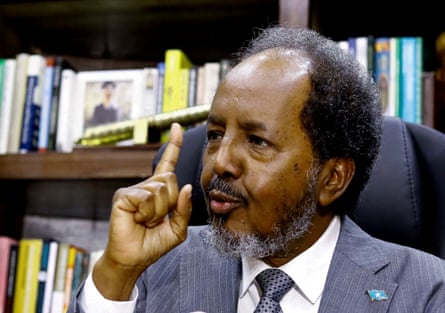
Somalia’s president, Hassan Sheikh Mohamud.

Continue ReadingCivilians flee Mogadishu as Somali troops and opposition-allied militias trade fire

Rebel attacks in eastern DRC kill 30 people and hamper Ebola response

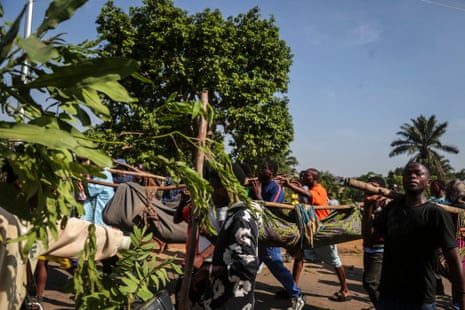
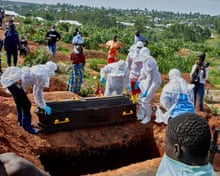
Africans use long poles to carry bodies wrapped in cloth
theguardian.org

Rebel attacks around a town that is one of the centres of the Ebola outbreak in the Democratic Republic of the Congo have left more than 30 people dead over the past few days, complicating the response to the disease.

At least 10 people were massacred in raids on three villages around the city of Beni, in North Kivu, in the early hours of Wednesday morning.

The Allied Democratic Forces (ADF), a militia affiliated to Islamic State, has been blamed for the attacks on the villages of Matété, Mamuli and Kitoho in eastern DRC.

Isaac Kavalami, a community leader from the region, said: “We have provisionally recorded around 10 deaths. Motorcycles and homes were set alight by the ADF rebels. They also kidnapped civilians, the number of whom is not yet known.”

As of Wednesday, 344 cases and 60 deaths have been recorded in the Ebola outbreak in North Kivu, South Kivu and Ituri provinces.

Just before midnight on Saturday, the militia entered Beni, which has been under DRC military administration since 2021.

People were beheaded and others shot in the attack, which caused widespread panic and sent hundreds of people running from their homes into the bush. More than 20 men, women and children, were reported killed and dozens missing, according to witnesses.

Mumbere Sivya, a resident of the Ngandi neighbourhood of Beni, said: “As we were getting ready for bed, we heard people screaming for help. It was an attack carried out by the ADF. We fled our homes in a panic to save our lives. Unfortunately, in the morning we realised that our neighbours had been beheaded.”

The ADF has stepped up its attacks on civilians and the Congolese army in the Beni region. Civil society organisations say about 10,000 civilians have been killed by the armed group since 2014.

The ADF, a loose network of insurgents and bandits, is also accused of committing atrocities in neighbouring Uganda, according to the authorities there.

The military governor of North Kivu said in a statement on Tuesday that three patients confirmed to have Ebola had fled treatment centres in Beni after Saturday’s attacks.

The raids and fear in the communities have complicated efforts to deal with the 17th Ebola epidemic to hit the DRC since the virus was first identified in 1976.

“Ebola kills, but not by decapitation. We are losing loved ones as a result of the ADF’s atrocities. It is a bitter pill to swallow,” said Albert Lusenge, a civil society activist in Beni.

Lusenge has lost 20 family members in attacks attributed to the ADF. In his view, it will be difficult to convince the population to support the fight against Ebola when they are already devastated by the ADF’s activities.

Other community leaders pointed out that people fleeing violence increased the risk of infections spreading.

“The disease can spread from one community to another,” said Lusenge. “We saw that after the attack in Ngandi, the residents fled. During the flight, it is difficult to enforce containment measures. If there are people among them carrying the Ebola virus, that is serious.”

Large-scale government campaigns carried out by the Congolese army between 2005 and 2014 failed to root out the ADF. Another assault on the militia began in 2021, with the Congolese and Ugandan armies still working jointly to track down ADF fighters in North Kivu and Ituri.

It was in response to these campaigns that civilians were targeted, said Reagan Miviri, a researcher at Ebuteli, a DRC-based thinktank.

“The killings of civilians serve as a military deterrent because every time these terrorists are attacked deep within their territory, they respond by massacring civilians. This may be a way of forcing a halt to military operations against them,” he said.

“They move in small groups. And these small groups are difficult to detect during operations, which are sometimes conducted from the air. Furthermore, the group operates in a forested region and can easily evade the army’s surveillance.

“We tend to observe that military operations between the Congolese and Ugandan armies are primarily aimed at driving the ADF away from the Ugandan border. Unfortunately, as long as these operations continue, civilians are being killed.”

The Kinshasa government confirmed that the ADF was behind the killings and said it condemned them in the strongest terms.

“In the face of this tragedy, the government reaffirms that the fight against the ADF remains an absolute priority,” the ministry of communication and media said in a statement.

Miviri pointed out that insecurity in the Beni region and elsewhere risked “reawakening the demons” of mistrust towards Ebola response teams and causing unrest, as occurred during the response to the Ebola epidemic between 2018 and 2020, which claimed nearly 2,300 lives.

“It will be difficult to carry out interventions in areas where the ADF operates because healthcare providers will not want to work in such a volatile environment. People may also fail to understand why there is such a major mobilisation against Ebola when there is none to counter the massacres,” Miviri said.

Last week, the World Health Organization’s director general, Tedros Adhanom Ghebreyesus, emphasised that insecurity in the DRC, particularly in Ituri, was seriously hampering the response to the Ebola outbreak. He warned that isolating patients and building community trust were impossible “while bombs are falling”.

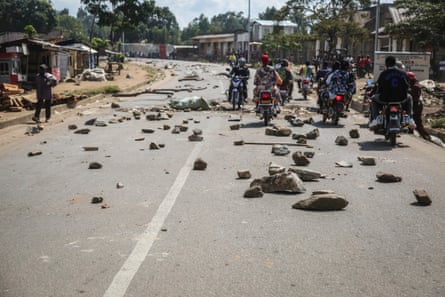
A group of motorcyclists ride along a road littered with stones and other debris
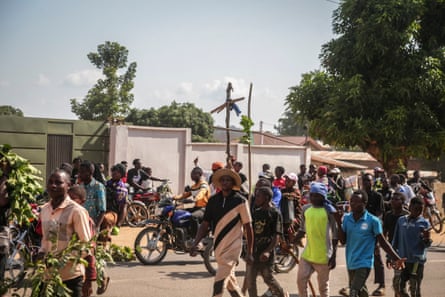
A crowd of people walk or ride motorcycles along a road, two of them holding up makeshift wooden crosses
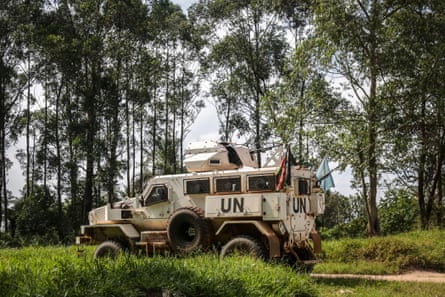
An armoured UN vehicle on a road in a wooded area

Continue ReadingRebel attacks in eastern DRC kill 30 people and hamper Ebola response

DRC Ebola outbreak could have begun as early as January, WHO chief says

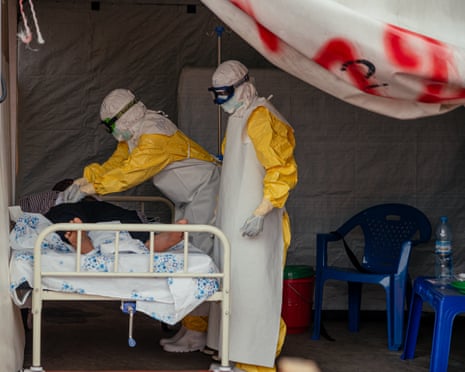
Two medics in white and yellow hazmat suits attend to a patient in a field hospital tent
theguardian.org

The Ebola outbreak in the Democratic Republic of the Congo could have begun as early as January, the head of the World Health Organization said, giving the virus “a big head start”.

Dr Tedros Adhanom Ghebreyesus also said the response was being hindered by blanket travel restrictions and highlighted high levels of community mistrust and low levels of contact tracing as key concerns.

Since the outbreak was identified in mid-May, the Bundibugyo virus has caused 344 confirmed Ebola cases including 60 deaths in DRC, and 15 confirmed cases including one death in neighbouring Uganda.

“The outbreak had a big head start, and we’re still behind” but the response was catching up, Tedros said, with treatment centres now established across Ituri province, the most affected part of DRC.

He called on countries that have imposed blanket travel restrictions, such as the US, to lift them. They “are disrupting supply chains and hindering the response”, he said.

Contact tracing, a key element of the response to any infectious disease outbreak, is being made particularly difficult by insecurity and displacement in Ituri, he said, with only about 45% of contacts followed up.

“To get ahead of the outbreak we need to get that number up to above 90%,” he said.

The number of suspected cases in DRC fell abruptly on Tuesday from more than 1,000 to 116, as officials worked through a testing backlog to either confirm them or rule them out.

Tedros said it was a key priority to scale up laboratory and diagnostic capacity in the most affected areas as well as neighbouring provinces and countries.

The first identified case in the outbreak was a nurse who went to a health centre on 24 April, but Tedros said there were alternative scenarios.

“It could be January, it could be February, March, April,” he said. “But I think the focus now should be on the response.”

Mistrust was a serious barrier, he said, with some community leaders telling him during a visit to DRC last week that they did not believe Ebola was real. He said they also worried that the response would take resources away from other vital services.

There is currently no vaccine or treatment for the Bundibugyo strain of the virus, but Tedros said the recovery of six people in DRC and two in Uganda showed that people could survive Ebola if they had access to care and went to health facilities as soon as they showed symptoms.

The UK’s Foreign, Commonwealth and Development Office has announced the launch of multi-hazard research network through which experts from the UK and international partners could provide rapid advice and evidence on emerging infectious diseases and other crises, including the current Ebola outbreak.


Continue ReadingDRC Ebola outbreak could have begun as early as January, WHO chief says

‘We don’t have another country to run to’: Kenyans fear US plan for Ebola quarantine site

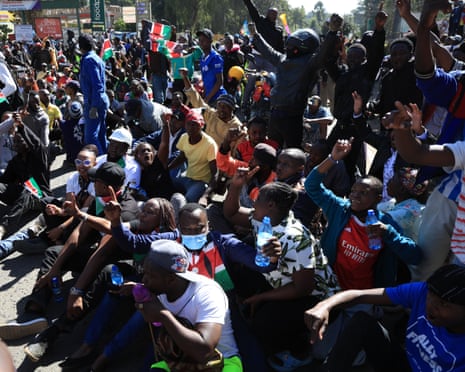
A crowd of protesters sitting on the ground with their arms in the air

People from a town in central Kenya where the US wants to set up an Ebola quarantine facility for its citizens have strongly criticised the plan, saying they fear it will expose them to the virus and that it is indicative of double standards on the part of the US.

“Everybody should be quarantined in their home country. We shouldn’t allow foreigners to bring us diseases,” said Charles Mathenge, a taxi driver who lives near Laikipia Air Base, the proposed site in Nanyuki, 120 miles from the capital, Nairobi. “Kenya is our country, and we should be careful with it.”

There has been rising nationwide anger in recent days. Two people died from gunshot wounds when police opened fire on demonstrators near the airbase on Monday, according to a protest organiser. Police said they were unaware of any deaths.

David Mulinge, a souvenir seller, said: “What’s shocking is that the Americans don’t want their infected fellow citizens to step into their own country but to come to Kenya. That’s like treating us as lesser beings.”

Health officials in Uganda and the Democratic Republic of the Congo are battling to contain an outbreak of the virus. The outbreak was declared on 15 May, but the virus is thought to have been circulating undetected for weeks before then.

The epidemic, which the World Health Organization (WHO) has declared a public health emergency of international concern, is caused by the rare Bundibugyo virus, which has no vaccine or approved treatment.

So far, there have been 41 deaths and 321 confirmed cases in the DRC, and one death and nine confirmed ​cases in Uganda, the WHO said on ‌Tuesday. There are no known cases in Kenya.

The US government plans to send 30 medical personnel to staff the Nanyuki facility, which, if completed, will have 50 beds. In previous Ebola outbreaks, the US has returned affected citizens home for medical treatment.

The US secretary of state, Marco Rubio, said on 28 May that the US must keep potential Ebola patients out of the country. “We cannot and will not allow any cases of Ebola to enter the United States,” he said at a cabinet meeting.

Last month, an American doctor who contracted Ebola in the DRC was flown to Germany for care, with his wife and four children.

The proposal has caused outrage in Kenya. In a statement published last week, Dr Davji Atellah from the Kenya Medical Practitioners, Pharmacists and Dentists Union said the group would not “sit back and watch Kenya be treated as a containment colony”. “If it is too dangerous for America, it is too dangerous for Kenya,” he said.

After a petition by the Kenyan nonprofit Katiba Institute, the Nairobi high court last week temporarily blocked the establishment of the facility and the admission into the country of people exposed to Ebola. The organisation said an arrangement between the Kenyan and US governments over the facility raised serious concerns about public health, governance and sovereignty.

Jeremy Lewin, the US Under Secretary for Foreign Assistance, Humanitarian Affairs, and Religious Freedom, said the US government was in touch with Kenyan authorities and was optimistic about resolving the issue.

On Tuesday Kenya’s president, William Ruto, defended the plan, saying it was being politicised and that it was part of a broader system for national health preparedness. “These measures are intended solely to safeguard public health and strengthen our capacity to respond effectively to health emergencies,” he said.

But the high court judge Patricia Nyaundi later barred the Kenyan government from proceeding with the plan before the case is resolved. She also ordered the government to disclose all agreements related to the facility within seven days. The next hearing is due on 23 June.

In Nanyuki, an agricultural hub of more than 70,000 people that sits almost directly on the equator and hosts a British army training unit, conversations about the planned quarantine facility are taking place among concerned people in shops, markets, homes and elsewhere.

Simon Ng’ono, a motorcycle taxi operator, questioned why the US, which has more advanced healthcare infrastructure and resources than Kenya, wanted to bring Americans exposed to Ebola to the town. “President Ruto should completely abandon this plan and close our borders to patients from other countries,” he added.

Mulinge said he was concerned about the potential for the virus to spread quickly in Nanyuki, where he said people engage in a lot of physical contact in businesses and social settings. “We’re very scared about contracting the disease,” he said.

Fauzia Owinde, a street food seller, said she feared the return of a curfew or lockdown like during the Covid-19 pandemic if Ebola spreads to the community, and said it would disrupt her business and make her unable to provide for her child. “We’d die in our houses,” she said.

The airbase hosts a primary and secondary school, and many people are worried that a spread of the disease would affect students. “My grandchildren [are] there daily,” said Mathenge. “We don’t want a problem.”

Purity Kendi, a business person who lives and works near the airbase, said she felt betrayed by the Kenyan government. “We expect our leaders to protect us but they’ve showed us that they don’t care about us,” she said. She urged Kenyans across the country to unite and oppose the plan. “We don’t have another country to run to,” she said.

David Mulinge in his shop
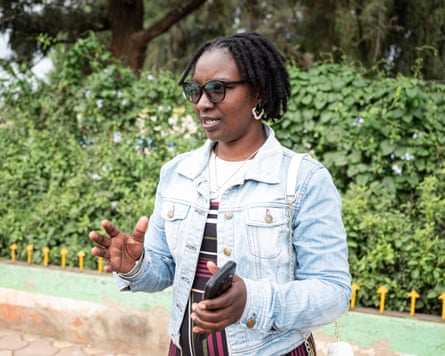
Kendi is wearing a denim jacket and holding her phone as she speaks to someone off-camera


Continue Reading‘We don’t have another country to run to’: Kenyans fear US plan for Ebola quarantine site

Mozambique says five citizens killed in ‘xenophobic attacks’ in South Africa

A person wearing a T-shirt with the slogan 'No illegal immigration' takes part in a march in Durban

Five Mozambique nationals were killed in “xenophobic attacks” in South Africa at the weekend, the Mozambican government said – the first deaths officially linked to protests against illegal immigration sweeping the country.

About 800 Mozambican nationals were caught up in violence that broke out in the southern coastal city of Mossel Bay on Friday, a government statement said.

The violence prompted 300 Mozambicans to return to their country by their own means on Saturday, it said.

“Regrettably, seven Mozambican citizens have died, five of them as a direct consequence of the xenophobic attacks and the other two as a result of a road accident when they were travelling in a private vehicle on their way back to Mozambique,” the statement said.

It said the remaining 500 people affected “have since been sheltered in a safe location in the Western Cape province, and the process of their repatriation to Mozambique is already under way”.

South African police said on Sunday they were investigating the deaths of two men at an informal settlement in Mossel Bay, a port town about 230 miles (380km) east of Cape Town. They did not give details and it was also not immediately clear what nationalities the two men were.

The area’s mayor, Dirk Kotze, voiced “deep concern and dismay at the current xenophobic attacks where people have been murdered, houses burned and families displaced”.

South Africa has long been a destination for documented and undocumented African workers. It has had repeated waves of xenophobic violence over the past decades, with undocumented migrants accused of crime and of taking jobs from locals.

In 2008, 62 people including 21 South Africans were killed in anti-immigrant riots and thousands were displaced. Further outbreaks followed in 2015 and 2016.

The latest rise in anti-immigrant tensions has been building for months and comes as political parties seek support ahead of local government elections due in November.

One citizen-led group has issued an ultimatum for illegal migrants to be expelled by 30 June and there have been reports of groups checking the documentation of foreign nationals and forcing small businesses run by non-South Africans to close. The action has no official backing and has been criticised by the authorities.

With tensions building, Ghana flew out 300 of its citizens last week and plans to take home hundreds more.

Last month, several hundred foreign nationals from countries including the Democratic Republic of the Congo, Rwanda and Somalia sought protection in the eastern port city of Durban, saying locals were going door to door telling them to leave by the end of the month.

Several African countries including Kenya, Malawi, Nigeria, Lesotho and Zimbabwe have urged their citizens in South Africa to exercise caution.

The Mozambique government statement said the situation was volatile and expected to worsen before 30 June and it was working on measures to support its nationals still in South Africa.

Continue ReadingMozambique says five citizens killed in ‘xenophobic attacks’ in South Africa

People ‘panicking’ as Ghana passes sweeping law criminalising LGBTQ+ activity

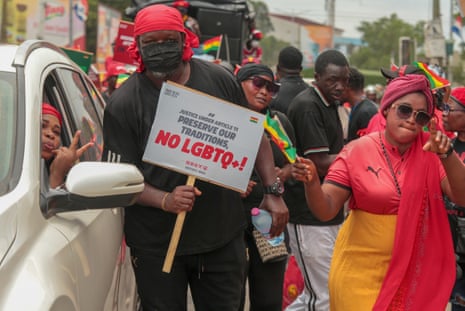
People carrying placards reading 'Preserve our traditions, No LGBTQ+!' and Ghanaian flags march in a street alongside cars
theguardian.org

Ghana’s LGBTQ community is living in fear after the country’s parliament approved a sweeping bill that criminalises the promotion of LGBTQ+ activities and identifying as lesbian, gay, bisexual, transgender or queer, rights groups have warned.

The legislation, which was passed on Friday, mandates prison sentences of three to 10 years.

The human sexual rights and family values bill is expected to be signed into law by the Ghanaian president, John Dramani Mahama.

Community organisations say LGBTQ+ people are worried they could lose their homes, jobs or access to healthcare, with most already reviewing and deleting their online posts for fear of their identity being revealed.

Leila Lariba, director of One Love Sisters Ghana, an organisation that supports lesbian and bisexual women, said: “People are panicking and scared. The new bill affects where you are staying; it can get you evicted; it can lead you to lose your job.

“No matter how safe you think you are,” she said, “you do not know who’s ready to talk.”

“We have advised people to prioritise their safety online and offline. If they have content on their social media pages that could put them at risk, we are encouraging them to remove it. People need to be cautious about what they post because they don’t know how this law could be used against them,” Lariba added.

Same-sex relations were already banned under British colonial law in Ghana but the prohibition was rarely enforced. The new legislation expands criminal liability and is designed to affect both LGBTQ+ people and their allies, such as anyone who provides services, support or advocacy.

The new bill imposes prison terms of up to three years for identifying as lesbian, gay, bisexual, transgender or queer, and up to 10 years for those found guilty of “promotion of, propagation of, advocacy for, support or funding of” LGBTQ-related activities, as well as provisions requiring people to report suspected LGBTQ+ individuals.

Amendments approved by MPs exempt healthcare professionals and lawyers from prosecution for providing services to LGBTQ+ individuals but activists have pointed out that the stigma created by the legislation was likely to deter people from seeking help, including around HIV testing or discrimination.

“We believe the president will sign it,” said Lariba. “People out there are going to use this as a stepping stone to maltreat people and harass people. It’s already happening, but with this bill being passed, it’s going to be higher than it was before.”

Ghana’s parliament approved similar legislation in 2024, but the former president Nana Akufo-Addo left office without signing it.

In an address to parliament, the current bill’s sponsor, the Rev John Ntim Fordjour claimed the proposed law would protect Ghanaian family and cultural values.

However, Ebenezer Peegah, director of Rightify Ghana, an LGBTQ+ rights organisation, said fundamental freedoms were at risk, with the impact extending far beyond same-sex relationships.

“This bill is very far-reaching: it criminalises identity; it criminalises services, including the operations of civil society groups and doctors giving care to the LGBTQ community and those that promote same-sex [relations], like journalists [and] sellers of sex toys. It also criminalises even not reporting people,” he said.

“Just this year alone, we have had 80 cases from our members that include those who have been exposed, abused or evicted. Our colleagues are asking how to get out of Ghana, but we also do not know how to help them because the international community no longer cares, especially the Trump government,” he added.

The bill comes as Ghana this week hosts the fourth African inter-parliamentary conference on family values and sovereignty in Accra from 3-6 June. It is the first time the conference will be held in Ghana, after three years in which it was hosted by Uganda. The notoriously harsh anti-LGBTQ+ legislation in Uganda, which includes the death penalty for “aggravated homosexuality”, was signed into law by President Yoweri Museveni shortly after the inaugural conference in 2023.

Ipas, an international reproductive rights organisation, said the conferences had become platforms to influencepolicies related to sexual and reproductive health rights across Africa.

The organisation also pointed to growing collaboration and influence between parliamentarians from different African countries, especially Uganda and Ghana, including efforts to strengthen coordination on “family values” legislation.

Peegah said the Ghanaian bill was passed as “a gift” to the conference, which will propose an African charter on family, sovereignty and values, a treaty that rejects “harmful gender ideologies” as foreign imports that threaten African morality.

“We know that this is not an attack only on LGBT communities in Ghana,” he said. “It is an attack on the entire LGBT community in Africa. That’s why we believe it will quickly be signed, just like the Ugandan president did when they hosted this same conference.”

Anti-LGBTQ+ legislation has been on the rise across west Africa. Senegal introduced a law in March that doubled the maximum prison term to 10 years for sexual acts by same-sex couples and criminalised the “promotion” of homosexuality. Last year Burkina Faso, a country previously seen as relatively safe for the gay community, passed a law criminalising homosexuality.

Rightify is preparing to challenge the Ghanaian decision in court, based on the undue speed at which the bill passed through its second and third readings, and because the quorum of MPs had not been met when the vote was held.

The proposed law has also been criticised by international rights organisations, including Human Rights Watch, which said it put people’s lives at risk while also “encouraging citizens to surveil and denounce one another”.

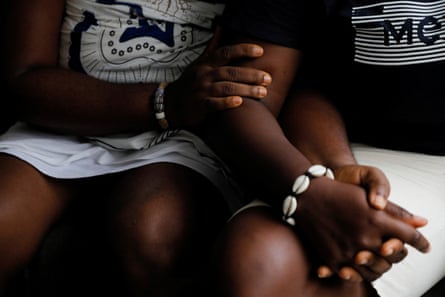
Two seated women hold hands

Continue ReadingPeople ‘panicking’ as Ghana passes sweeping law criminalising LGBTQ+ activity