Whereabouts of nearly 300 people with Ebola unknown in DR Congo

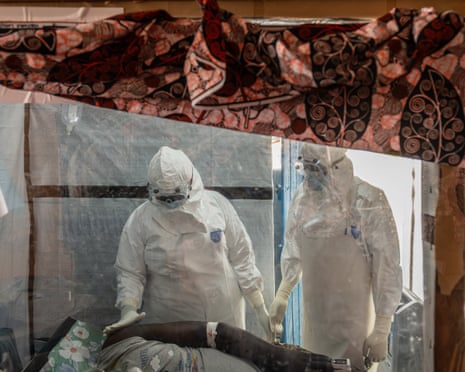
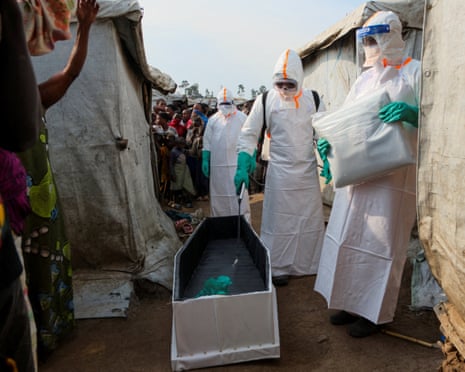
People in full PPE disinfect a simple wooden coffin laid out between densely packed tented accommodation.
theguardian.org

The whereabouts of almost 300 people who have tested positive for Ebola in the Democratic Republic of the Congo is currently unknown, according to Africa’s top public health official.

The humanitarian crisis amid the conflict in the affected areas means more than 1 million people are living in camps to which health workers have no access, Dr Jean Kaseya, director general of the Africa Centers for Disease Control and Prevention (CDC), said on Thursday.

His comments came as projections from the World Health Organization’s Africa regional office, published in The Lancet Infectious Diseases journal, predicted there will be about 8,210 cases and 1,420 deaths by mid-September.

The modelling suggested the outbreak had a 70% chance of spreading to neighbouring South Sudan in the coming weeks.

There have been 1,118 confirmed cases and 291 deaths to date in the DRC, as well as 20 cases and two deaths in neighbouring Uganda.

On Wednesday, France announced that a doctor who had been working in the DRC had tested positive on his return. His employer, medical NGO Alima, said they were “working to understand how the contamination may have occurred”.

Figures on the number of patients who have recovered and those in current treatment, as well as deaths, indicate 297 people who tested positive are unaccounted for.

“This is a concern that we have. Where are these people?” asked Kaseya.

DRC authorities said on Thursday that anyone who had been in affected provinces would need to wait 21 days before they could travel onwards.

The outbreak, caused by the Bundibugyo strain of the virus, is the largest on record for five weeks after declaration. At the same stage, the West Africa outbreak of 2014 to 2016, which infected more than 28,000 people and killed more than 11,000, had 239 cases and 160 deaths.

Computer models were used by the WHO to simulate three trajectories – low, central or high transmissibility.

There are signs that the DRC’s response is working to slow transmission, the authors said, and current figures are most in line with the central scenario, predicting between 6,636 and 10,287 cases by 16 September.

The worst-case scenario projects 66,000 confirmed cases by September.

Kaseya said 30% of new cases are among known contacts of confirmed cases, indicating “huge, huge community transmission”. Authorities intend to recruit 20,000 community health workers from the local area to boost contact tracing efforts, he said.

Bed occupancy in Ebola treatment centres is at 95% and “we didn’t reach the peak yet”, he added.

He said camps in which displaced people were living “have cases, and because we don’t have access to these camps, we cannot have the contact tracing. We cannot have a photo of what’s happening there. We cannot stop this outbreak, without resolving the humanitarian issue.”

Africa CDC and the WHO had earlier said $518m (£392m) of health spending would be needed to tackle the outbreak. When humanitarian needs are added, the total rises to $1.4bn, Kaseya said.

Only about 13% of $910m pledged to the response by international governments and organisations has so far been supplied, he said.

The first trial of drugs that may be able to treat the Bundibugyo virus is due to begin in the DRC next week, while a trial of an antiviral given to contacts to prevent them developing the disease will begin a week later.
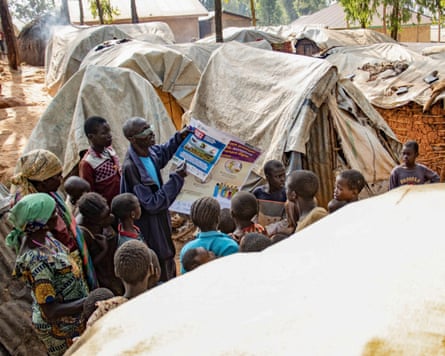
A man holds up an information sheet while speaking to a small crowd of people surrounded by tents.

Continue ReadingWhereabouts of nearly 300 people with Ebola unknown in DR Congo

Outrage as woman jailed for three years after criticising Somali government online

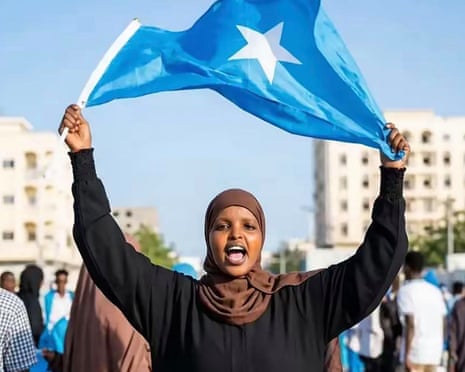
A young woman in a hijab stands holding a Somali flag above her head, shouting
theguardian.org

A rickshaw driver in Somalia has been sentenced to three years in prison for comments she made on social media, in a case that has caught the public’s attention and provoked outrage in the country.

Sadia Moalim Ali, a 27-year-old nursing graduate, was originally charged with insulting government institutions and incitement to commit a crime, but convicted only of the former. Her sentence, immediately condemned as “fundamentally unjust”, was handed down on 25 June.

She had made critical comments on Facebook and TikTok about the federal government of Somalia, speaking out about the youth unemployment and high fuel prices gripping the country, as well as against alleged corruption, nepotism and forced evictions.

The sentencing of the young mother has been condemned by former high-ranking government officials, including the former president of Somalia, Sharif Sheikh Ahmed, and human rights organisations.

Hassan Ali Khaire, former prime minister of Somalia, wrote on X: “The three-year prison sentence handed down today … is deeply troubling and fundamentally unjust. This politically motivated arrest and conviction … reflects a disturbing pattern of judicial overreach, political retaliation, and abuse of state authority.”

In a statement, the Coalition of Somali Human Rights Defenders called for her immediate release, saying: “Ali’s conviction and harsh sentence represent a serious attack on freedom of expression and the legitimate work of human rights defenders in Somalia.”

It said her case reflected a broader pattern of systematic discrimination against women who advocated for social and political change. “Female human rights defenders in Somalia continue to face disproportionate risks,” it said, “including arbitrary arrest, judicial harassment, intimidation, online abuse and gender-based discrimination, aimed at excluding them from civic and political participation.”

Somali media reported that Mohamed Sheikh Osman, one of Ali’s lawyers, rejected the ruling and said the defence would appeal.

“[Ali] is not satisfied with the decision of the Banaadir Regional Court,” he told reporters. “The court issued a harsh ruling that could have been avoided.”

Ali, who is the main breadwinner for her family and has a one-year-old daughter, has been in custody since 12 April. In an interview from prison in May, she told the Guardian she had been subjected to torture. She said: “I was forced to lie face down on the ground, and water was poured on me. I was kicked by guards with boots on. They stood over me and beat me with a baton.

“I was taken into solitary confinement and kept there for two days. I was deprived of food and basic necessities while I was locked in that cell. I wasn’t allowed to leave to go to the toilet.”

At court, Ali said police officers had threatened her with rape.

Torture – defined as any act by which severe pain or suffering, physical or mental, is intentionally inflicted – is prohibited under international law and by the UN Convention against Torture in all circumstances.

Since 2022, Somali authorities have been accused of engaging in a systematic and escalating crackdown on human rights, using arbitrary arrests, detention, harassment, threats and intimidation to silence journalists, activists and other people who express dissenting views.

Continue ReadingOutrage as woman jailed for three years after criticising Somali government online

‘Constitutional coup’ claims as Zimbabwe senate approves extending presidential term

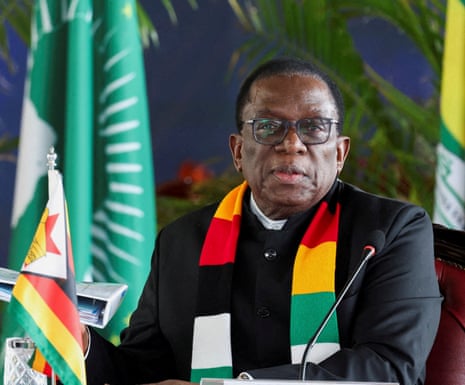
Emmerson Mnangagwa wearing a black suit and a colourful striped scarf at a meeting

Zimbabwe is on the brink of amending its constitution to give the president more time in office, a change that the government says will bring stability but that opponents have labelled a “constitutional coup”.

The upper house of Zimbabwe’s parliament voted on Wednesday 75-4 in favour of the constitutional amendments, which will allow President Emmerson Mnangagwa to stay in office until 2030 by extending presidential terms from five to seven years.

The bill, which will also replace direct presidential elections with the appointment of the president by parliament, was passed by the lower house last week and the government said the president was expected to sign it into law next month.

Opposition figures fear the changes could further tighten the hold on power of Mnangagwa, known as “the Crocodile”, and his Zanu-PF party, which has ruled Zimbabwe since independence in 1980.

Mnangagwa, now 83, won a second term in office with 52.6% of the vote in the 2023 presidential election, amid criticism of the election process from international observers and opposition figures.

Critics of the constitutional changes claimed Zimbabwe could slide back to the repression seen under Robert Mugabe, who resigned in 2017 after 37 years in power, after a coup led by Mnangagwa.

Makomborero Haruzivishe, a spokesperson for the Constitutional Defenders Forum (CDF), a group campaigning against the amendments, said: “It is a calculated constitutional coup against the people of Zimbabwe. It strips citizens of the fundamental right to directly elect their president, replacing popular sovereignty with parliamentary selection by a captured legislature.”

Nick Mangwana, the permanent secretary in Zimbabwe’s information ministry, said: “To characterise this legitimate legislative exercise as a ‘coup’ is not only factually incorrect but deeply disrespectful to the sovereign parliamentary processes of the Republic of Zimbabwe.”

He said: “The primary objective is to enhance political stability and ensure policy continuity … We are not removing presidential term limits, we are simply adjusting the electoral cycle to reduce the frequency of highly contested, polarising elections.”

Mangwana rejected suggestions that constitutional amendments had to be approved in a referendum, saying the attorney general had found no legal basis for requiring a people’s vote.

Opponents of the constitutional amendments said they had been subjected to harassment and prevented from campaigning. Tendai Biti, one of the CDF’s convenors, said security forces had barged into his office six times since October 2025.

Responding to a claim that Biti’s driver had been assaulted in one such incident in March, police said officers had been sent to Biti’s office “for the maintenance of law and order”.

Also in March, Lovemore Madhuku, a lawyer who had filed a constitutional court challenge to the amendment bill, said he was beaten by a group of balaclava-wearing men who then drove off in unmarked vehicles followed by two police vehicles. Local media published photos of Madhuku with large welts across his upper back.

Zimbabwe’s police force said in a statement: “The police were not involved in the alleged incident.”

Mangwana said: “If any individual – whether Professor Madhuku, Mr Biti, or anyone else – possesses credible evidence of assault or harassment by state agents, my office urges them to formally lodge a complaint with the [police] or the relevant judicial authorities.”

Mangwana said a consultation process had received 537,000 submissions, with an “overwhelming majority supporting the constitutional changes”.

Jameson Timba, a minister during Zimbabwe’s government of national unity from 2009 to 2013, said he and his allies had been prevented from speaking during the public consultation events.

Timba said: “We are just the tip of the iceberg. In almost every district that [the government] went to, people were being denied an opportunity to speak … Those public hearings are not a representation of anything. They are a fraud.”

Zimbabwe became internationally isolated during the 2000s after Mugabe’s government confiscated more than 4,000 farms from mostly white farmers. Economic output plunged, resulting in hyperinflation in 2008, after which Mugabe was pressed into a coalition government with the opposition at the time.

Many Zimbabweans view Mnangagwa’s rule as a continuation of Mugabe’s. In 2024, the US imposed sanctions on Mnangagwa, his wife, Auxillia, and nine other people, accusing them of corruption.

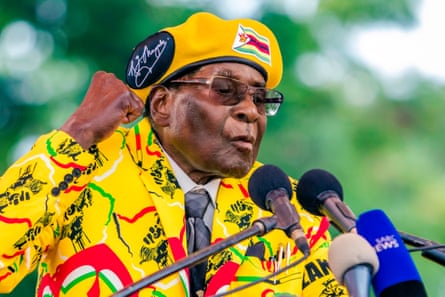
Robert Mugabe addresses party members and supporters in 2017 dressed in a bright yellow jacket and hat

Continue Reading‘Constitutional coup’ claims as Zimbabwe senate approves extending presidential term

France confirms first Ebola case in doctor who had worked in DRC

Two health workers in white hazmat suits tend to a patient

The first case of Ebola has been confirmed in France, the country’s health ministry has said, in a doctor who had returned from a humanitarian mission to an area affected by the outbreak in the Democratic Republic of the Congo.

The patient was transferred to a specialist facility and was in a stable condition, the ministry said in a statement. “All precautionary measures, including the patient’s isolation, were taken upon his arrival in the country, with transfer to the hospital under secure conditions to prevent any risk of contamination.”

Authorities are tracing the patient’s contacts, who will have to isolate at home for 21 days. The ministry said the risk to the general European public was very low.

The outbreak is centred on Ituri province in north-eastern DRC, where authorities are battling to contain the spread of the virus.

There had been 1,048 confirmed cases and 267 deaths as of 21 June, according to the DRC health ministry’s latest data, while 112 people have recovered. Neighbouring Uganda has recorded 20 cases and two deaths.

The World Health Organization declared the outbreak on 15 May, and two days later declared a public health emergency of international concern. Experts believe the virus was circulating in the DRC undetected for weeks before, however, and that the scale of the outbreak there is likely to be much larger than the confirmed cases suggest.

The humanitarian response has been complicated by aid cuts and conflict in North and South Kivu provinces, to the south of Ituri, where the Rwanda-backed M23 rebel group operates and Ebola cases have also been detected.

The outbreak had the largest number of confirmed cases within the first month of any Ebola outbreak, the WHO official Abdirahman Mahamud said on Tuesday.

Mahamud said local resistance to the response in DRC, which had included hospitals and treatment centres being burned down, was waning. “More and more communities are aware of the risk of Ebola and are asking for tools to support and ​protect themselves,” he said.

The current strain of the disease is the rare Bundibugyo virus, which has no vaccine or approved treatment.

Modelling by the US Centers for Disease Control and Prevention suggested the outbreak could be the biggest on record. The previous largest outbreak was in west Africa from 2014 to 2016, during which more than 28,000 people were infected and more than 11,000 died.

It is the DRC’s 17th outbreak of Ebola, which was first detected in the central African country in 1976. Scientists believe it spreads to humans from infected African fruit bats, and is then passed between humans through direct contact with the blood or body fluids of an infected person or someone who has died of the disease.

Initial symptoms include fever, exhaustion, muscle pain, headaches and a sore throat. These may progress to vomiting, diarrhoea, abdominal pain, a rash, and impaired kidney and liver function.

A ‌US citizen who was ​treated for ​Ebola in Germany recovered and was discharged earlier this month having tested negative for the virus after 30 May.

The US government wants to build an Ebola quarantine facility for its citizens in Kenya, which has never recorded any Ebola cases. The country’s health minister said on Tuesday that construction of the highly controversial facility would stop, however, after a high court order that authorities had initially disregarded.

Reuters contributed to this report

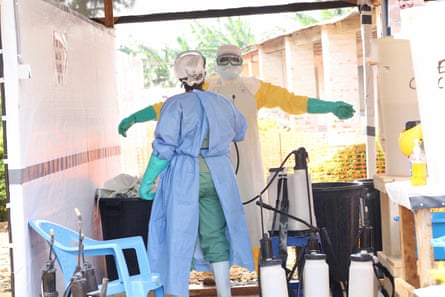
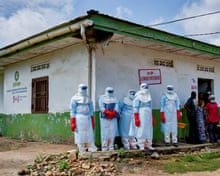
Two medical workers in masks, goggles, long gloves and coveralls stand in a makeshift-looking unit with canisters of disinfectant. One is spraying the other.


Continue ReadingFrance confirms first Ebola case in doctor who had worked in DRC

Play puts spotlight on Kenya’s crisis of gender-based violence

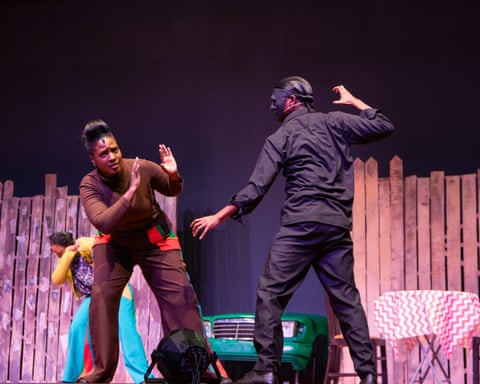
A man raises his hand at a cowering woman on stage

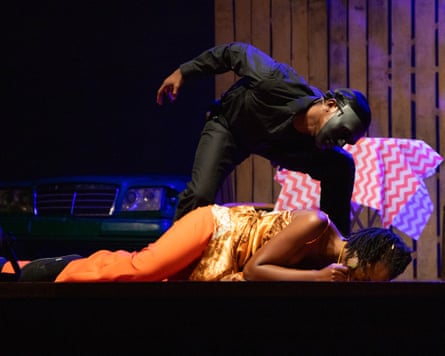
There are audible gasps in the auditorium in Nairobi as a husband launches a volley of blows and slaps on his wife and pushes her to the floor. “I wish I could spare you this,” the wife tells the audience. “My husband beat me up as if we were in a bar fight. Except, in a bar someone fights back.”

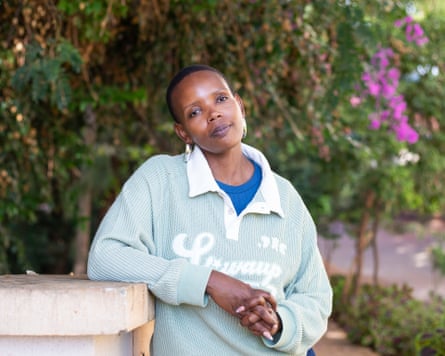
The scene comes from Free Me, an autobiographical play by Gathoni Kimuyu, a Kenyan theatre and TV producer who lived through an abusive marriage.

The success of the production, which was first performed in November and returned this month for a rerun, reflects a public outcry over gender-based violence (GBV) in Kenya, where already high rates of femicide and abuse have risen further in recent years.

This month, hundreds of women marched in Nairobi to protest against violence against women and to call on the government to declare GBV a national crisis.

In January 2025, after a series of marches across the country in 2024 and the supporting online campaigns #StopKillingUs, #EndFemicideKe and #TotalShutDownKe, the government formed a technical working group to identify trends, hotspots and causes of GBV and femicide.

It released a report citing a mix of factors behind GBV, including social and cultural factors such as patriarchal structures and gender inequality. The document made recommendations such as amending the law to define and codify femicide as a distinct offence from murder and for the president to declare GBV a national crisis.

The government has yet to implement the recommendations, and GBV cases continue to make headlines.

“When we look at the numbers in Kenya right now, cases of femicide, sexual abuse, physical abuse – any type of abuse against women – are very high,” said Kimuyu, who is also the producer and head of marketing for the play. “And the numbers just keep rising and rising.”

She added: “One of the reasons why we’re restaging this show is because of how important it is to the conversations that we’re having now and for the change that we’re looking for as women and as a country.”

Popularly known as Queen Gathoni, the 41-year-old writer-producer has worked on some of Kenya’s defining TV and theatre productions, including the children’s TV drama Machachari and the historical play series Too Early for Birds.


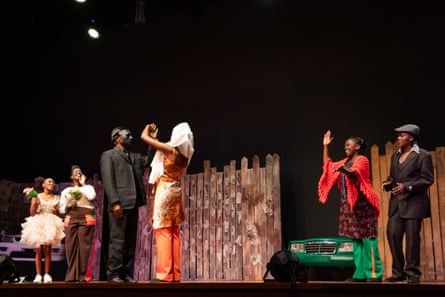
Free Me covers her life from her teenage years living with her family in Nairobi’s eastern outskirts in the early 2000s to the present day. It tells her story in different stages of her life, played by different actors: the mischievous 16-year-old who is full of life; the 21-year-old who gets married and starts being abused; the 25-year-old who gives birth and leaves the marriage; and the 30-year-old who picks herself up and starts rebuilding.

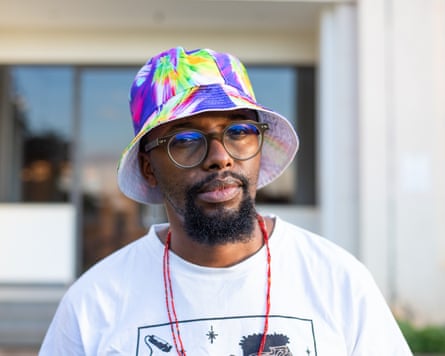
Mugambi Nthiga, the show’s director and co-writer, said: “This is a play about gender-based violence about someone who lived [through it], but it’s being staged in a reality where there’s more than one woman every day who is not so lucky [and] who doesn’t get to have the same kind of ending that this play does.”

He added: “This is not just a story. This is someone’s true story. And it’s a story of someone who’s able to get out of it.”

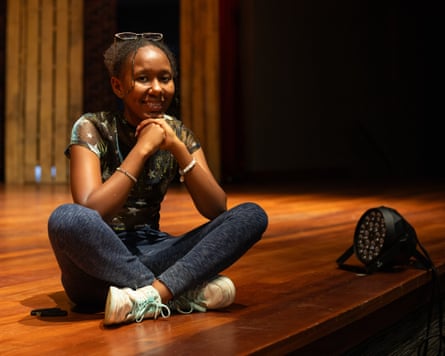
Renee Gichuki, who plays the Kimuyu character at the age of 16, said the play was timely because Kimuyu’s experience was not an isolated story and because GBV “has become a crisis”.

“The person standing next to you has experienced it or knows someone who has experienced it,” she said. “We are educating and we are shedding light to both parties to know what can be done differently.”

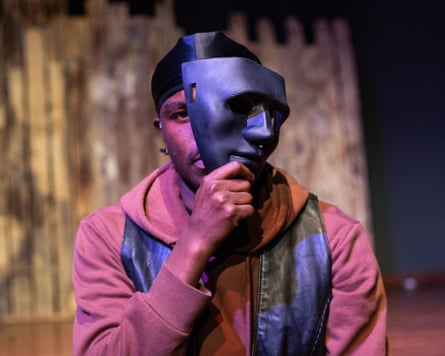
Tobit Tom, who plays the husband, said acting out the role “comes with a lot of heaviness” for him as a man, but he understood that men were the main perpetrators of GBV and he had to show that GBV “is happening and we have to talk about it and address it with seriousness”.

Wambui Njeri, a 24-year-old businesswoman, said after watching the show that it humanised the victims and showed that the perpetrator could be anybody. “This makes it very clear that it’s your everyday woman, it’s your everyday man,” she said.

Sitting next to her, her friend Patrick Muchiri, 40, a communications practitioner, said: “As men we really need to do better … Yes, we are the head of families and the head of societies. But that doesn’t translate to belittling or looking down or causing violence or harm.”


In the show, Kimuyu’s character stays with her husband for two years despite the abuse. After she finally tells him she’s leaving him, his character draws derisive laughs from the audience when he says: “You are never going to find anyone who loves you like I love you.” The laughs turn to cheers when she replies: “Your love is exactly the kind of love I’m walking away from. For ever.”

Kimuyu hopes the play encourages victims to speak out and not be ashamed, and reframes the conversation about women’s safety to stop blaming women and to hold abusers responsible.

She said she chose to tell her own experience rather than create fiction to make people connect with the story more. “There’s nothing that resonates harder for people than a story about someone they know,” she said. “To see someone survive and actually be on this side makes people believe that it’s possible.”

A scene from Free Me.
Gathoni Kimuyu
Mugambi Nthiga: ‘This is not just a story. This is someone’s true story.’
Renee Gichuki: ‘We are educating and we are shedding light to both parties.’
Tom Tobit holds a mask partly obscuring his face
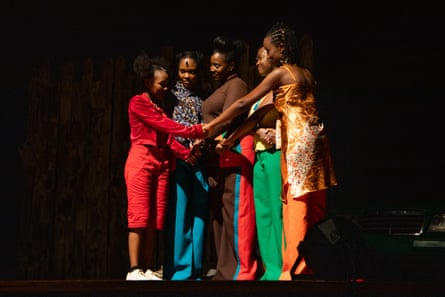
A scene in the play
Women stand in a huddle on a dark stage

Continue ReadingPlay puts spotlight on Kenya’s crisis of gender-based violence

Kenyan minister orders halt to construction of US Ebola facility

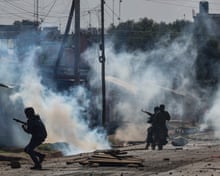
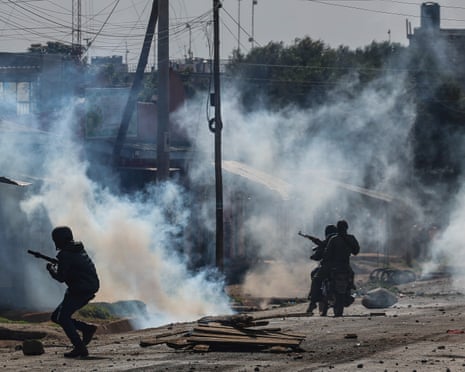
Armed officers crouch in a street filled with tear gas smoke amid scattered debris

Kenya’s health minister has told a court he has ordered a halt to preparations for a US-run Ebola quarantine facility, after being held in contempt for ignoring a previous stop-work order.

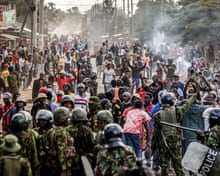
Many Kenyans strongly oppose the plan and deadly protests have erupted since the facility was announced in May for US citizens evacuated from the Democratic Republic of Congo, which is grappling with a large-scale Ebola outbreak.

It has been constructed at Laikipia air base, about 125 miles (200km) from the capital, Nairobi, with about 50 isolation beds, and was expected to be managed by US medical staff.

Kenya’s government ignored a previous high court order to stop work. Rights groups had petitioned the court, saying the facility was being developed secretly and without consultation. On Monday, the court said it was holding the health minister, Aden Duale, in contempt for failing to respond to the order and he would appear for sentencing.

On Tuesday, Duale apologised to the court, saying he had ordered “the immediate and complete cessation of any intended construction, site preparation, or related activities concerning the Laikipia air base facility pending the hearing and determination of the substantive petition or until further orders of this court”.

Three people have been killed in unrest near the facility.

Kenya has never recorded a case of Ebola and many Kenyans oppose bringing potential carriers of the highly contagious disease into the country. The US has promised $13.5m to support Kenya’s Ebola preparedness efforts, but critics oppose what they see as the colonial overtones of the arrangement.

Continue ReadingKenyan minister orders halt to construction of US Ebola facility