UK will not have to pay Rwanda £100m over failed asylum scheme, court rules

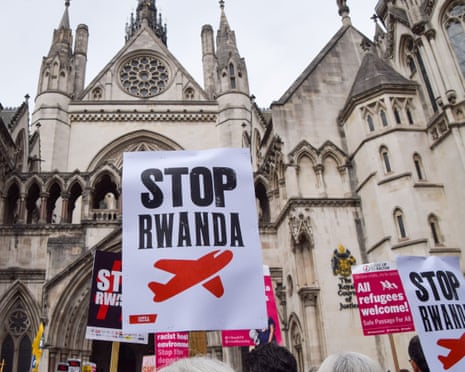
People holding up signs reading: 'Stop Rwanda' and 'All refugees welcome' in front of the building.

The UK will not have to pay the Rwandan government millions of pounds over a failed migrant deportation scheme set up by Boris Johnson’s administration, an international court has ruled.

The east African nation had sued the current UK government for more than £100m, claiming it was owed after a breach of an agreement.

But after a three-day hearing at The Hague’s permanent court of arbitration in the Netherlands, judges ruled that the UK was not liable for two years of outstanding costs from the scheme, which was shelved in 2024.

Johnson, then prime minister, sealed a deal in 2022 with Kigali to send to Rwanda all asylum seekers arriving on UK shores after “dangerous or illegal journeys” in small boats or lorries.

But the scheme hit legal and political obstacles from the start, with the UK supreme court eventually ruling it illegal. When Keir Starmer became British prime minister in July 2024, he declared the plan “dead and buried” on his first full day in office, dismissing it as a “gimmick”.

During the case, lawyers representing the UK argued it was “entirely logical” the plan would be scrapped when Labour came into power after the 2024 general election and “simple common sense” that no further payments would be due.

During the two years before the scheme was scrapped, only four people actually went to Rwanda, all voluntarily, according to the current UK government. About £290m has been paid to Rwanda, the UK government website says, but Kigali argued in its pre-hearing submissions to the court that two annual payments of £50m were still outstanding.

According to legal papers, Rwanda asked the court to find the UK in breach of the agreement and demanded it pay all outstanding sums, as well as compensation.

Lawyers for the UK denied it had breached parts of the deal and said: “Rwanda is not entitled to any of the forms of relief it seeks” when asking the court to dismiss the claims.

Earlier this year, Downing Street defended the decision to scrap the previous Tory administration’s plan when it emerged Rwanda was taking the UK to court.

Before the election, the Conservative government had already spent £700m on its policy, under which migrants who arrived in the UK by boat from France would be sent to Kigali in an attempt to deter Channel crossings.

Emmanuel Ugirashebuja, Rwanda’s minister of justice and attorney general, previously told the court the country had incurred “significant costs” preparing for the partnership and the UK had “then sought to walk away from its legal obligations”.

He also said the UK “did not do Rwanda a courtesy of informing it in advance” that it was scrapping the deal, and that leaders were “left to read about this development in the media”.

In a document setting out Rwanda’s claim, Ugirashebuja asked the court to rule that the UK had breached the agreement and should pay about £100m in two instalments in 2024 and 2025, plus £6m in compensation and interest. Instead of compensation, he said Rwanda would accept a formal apology from the UK for failing to honour parts of the deal.

The arbitration court, set up to settle contractual disputes between nations, rejected by majority a £50m claim for one year and unanimously rejected the same amount for the second.

A UK government spokesperson said: “The UK robustly defended its position, and the tribunal has now ruled in favour of the UK on all grounds.”

The two nations are already in dispute after the UK slashed aid to Rwanda, accusing it of supporting M23 rebels in the neighbouring Democratic Republic of the Congo.

Internal balconies and walkways and a courtyard in a hostel building
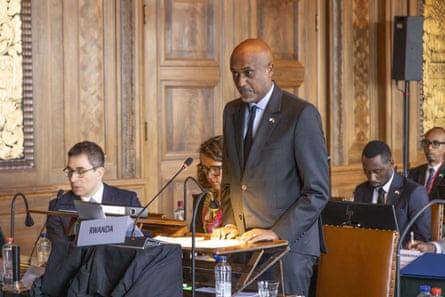
Ugirashebuja speaking previously at the court.

Continue ReadingUK will not have to pay Rwanda £100m over failed asylum scheme, court rules

Wildfires devastating richer areas but fewer hectares burned globally – study

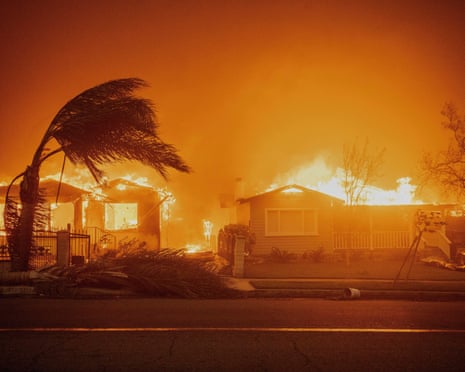
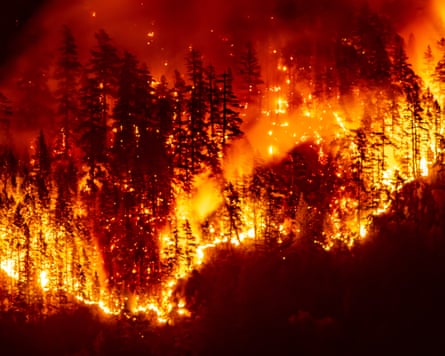
Houses engulfed in flames with a palm tree bending in strong winds and smoke filling the air

“Devastating” wildfires ripped across the wealthier parts of the world in 2025, a study has found, even as globally, the area ravaged by flames fell.

Catastrophic blazes claimed lives, homes and jobs last year in California, Canada, Europe and South Korea. But the 335m hectares burned was the second-lowest since 2002, the review found, largely owing to the expansion of African farms that have fragmented landscapes and hampered the spread of large savannah fires.

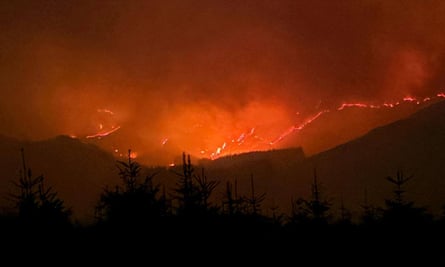
The disasters in 2025 included a Scottish “megafire” that torched more than 100,000 hectares – contributing to the UK breaking its record for burned area – and the Palisades and Eaton fires in Los Angeles, which were among the most destructive in US history.

Record-breaking blazes in Spain and Portugal burned more than half a million hectares, while South Korea had its biggest and deadliest wildfire season on record.

Fires accounted for more than 38% of insured losses from weather disasters in 2025, the study found.

“2025 shows that a ‘quiet’ fire year globally can still be devastating,” said Matthew Jones, a climate scientist at the University of East Anglia and lead author of the study. “We are seeing a growing disconnect between total area burned and real-world impacts.”

Changes in land use mean wildfires burn less of the planet than they have historically done, but global heating is creating conditions allowing them to spread, increasing the danger at what researchers call the wildland-urban interface, where people are most at risk.

Adverse weather, inflamed by carbon pollution, turned some of last year’s fires into explosive infernos.

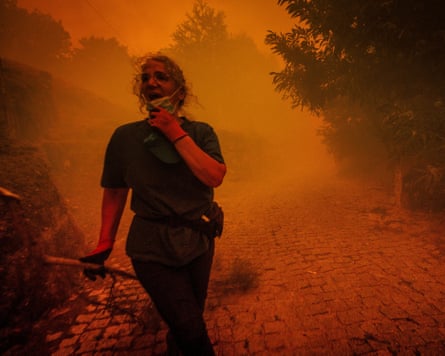
In southern California and South Korea, the researchers found, high winds and dry vegetation pushed fires through densely populated areas, causing “exceptional mortality, mass evacuations, and major infrastructure losses”. In the Mediterranean, meanwhile, drought and extreme heat drove severe blazes, from Portugal to Turkey.

“These conditions do not cause the fires, but in the event of a fire, we have material that is more flammable than usual – because it is drier – and wind conditions that fan the flames,” said David Garcia, an applied mathematician at the University of Alicante, who was not involved in the study. “This makes large fires more likely to occur.”

An attribution study Garcia co-authored last year found the extreme weather fuelling the flames in Portugal and Spain last year was made 39 times more likely by climate breakdown. “If we continue to warm the planet, large-scale fires will continue to increase,” he said.

The overall reduction in global burned area led to a drop in carbon dioxide emissions to their third-lowest level on record.

In Canada, though, extreme wildfire emissions were recorded for the third year in a row. Since 2023, boreal forests in North America have emitted close to 4bn tonnes of CO2, exceeding the total emissions of the preceding 15-year period.

As well as heating the planet, the pollutants in wildfire smoke lead to huge numbers of people dying from breathing dirty air. The toxic particles spewed by Canadian wildfires in 2023 killed 82,000 people, according to a study published in September, with smoke even choking cities in the US, Europe and Africa.

Adrián Regos, a landscape ecologist at the Biological Mission of Galicia, Spain, who was not involved in the study, said last year’s events illustrated how a relatively small number of extreme fires could dominate the ecological, social and economic consequences of an entire fire season.

“The broader pattern highlighted by this study is consistent with what we are observing across southern Europe: while total burned area may fluctuate from year to year, climate change is increasing the likelihood of extreme fire-weather conditions, and fuel accumulation associated with rural abandonment is making many landscapes more vulnerable to large, fast-moving fires,” he said.

“The challenge is therefore not only reducing the number of fires, but increasing the resilience of landscapes and communities to extreme events.”

Wildfire on hills at night
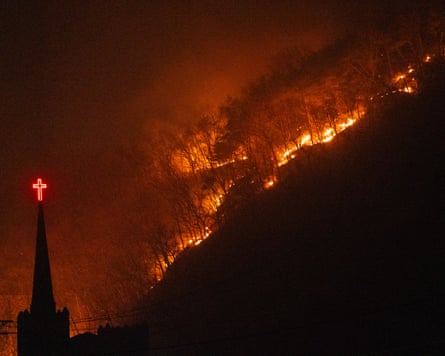
Church spire with cross with wildfire roaring through trees at night
Woman walking along road looking distressed with red sky behind her
A wildfire burns through trees on Mount Underwood

Continue ReadingWildfires devastating richer areas but fewer hectares burned globally – study

WHO calls for community cooperation to contain Ebola outbreak in DRC

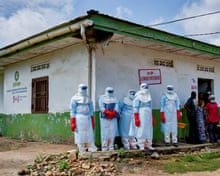
A health worker at the Evangelical Medical Center in the Democratic Republic of Congo.

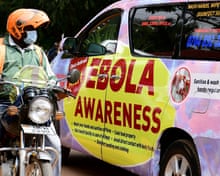
Containing the Ebola outbreak in the Democratic Republic of Congo requires community cooperation and is “everybody’s business”, the World Health Organization has said.

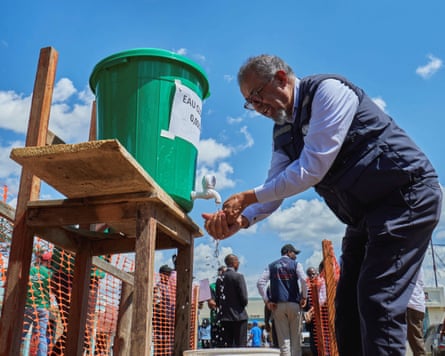
Tedros Adhanom Ghebreyesus, the organisation’s director general, made the plea on Sunday during a visit to eastern Congo where some residents have protested against stringent medical protocols for handling victims’ bodies.

“We can stop this Ebola and anyone who has it can also recover. But the rule … is this thing is everybody’s business and every citizen should be involved,” Ghebreyesus said at the opening of a treatment centre in Bunia, the capital of Ituri province, which is at the centre of the outbreak.

Protesters have complained restrictions on handling victims’ bodies violate local burial rites, a sentiment that has been linked to at least three attacks against health centres.

There is no vaccine for the Bundibugyo virus, the strain behind the current outbreak, but infected people can recover, according to Ghebreyesus.

He said: “If you come to health facilities when you have symptoms, you can get the support and recover, so the key is to come forward as early as possible and to get the necessary support.”

Five patients have recovered and four were to be discharged on Sunday, after the earlier discharge of the other patient, the WHO chief said. The organisation has recorded 906 suspected cases and 223 suspected deaths in the DRC. Authorities in neighbouring Uganda have confirmed nine cases and one death.

Fighting between rival armed groups in the mineral-rich Ituri region has complicated relief efforts, prompting Ghebreyesus to call for a ceasefire, saying: “No cause, no conflict, no grievance is worth condemning innocent people to death from a preventable disease.”

Brazilian health authorities said they are monitoring two patients for possible Ebola infection in São Paulo and Rio de Janeiro. A 37-year-old man from DRC “exhibited symptoms such as fever, meeting the definition of a suspected case” of Ebola, the São Paulo state government said in a statement on Saturday. The health department in Rio de Janeiro state meanwhile reported that it had activated safety protocols after a man from Uganda showed “viral symptoms such as cough, chills and diarrhoea”.

The outbreak – which the WHO has declared a public health emergency of international concern – is the 17th recorded Ebola epidemic in the DRC. The disease was first identified in the central African country in 1976 and has an average death rate, across all outbreaks, of 50%.

Health officials and aid workers have complained they lack basic supplies such as masks. Medical aid donated by the European Union reached Ituri last week and the US announced $80m (£60m) in additional aid, raising its total commitment to $112m.

The Africa Centres for Disease Control and Prevention said national incident systems must be activated rapidly and that investments in pandemic preparedness must become permanent.

Jean Kaseya, the organisation’s director general, said in the Financial Times on Sunday that international support was vital and most effective when it aligned with the strategies of African institutions and African governments. “Africa’s response to Ebola must be defined by Africa itself,” he wrote.

The medical charity Médecins Sans Frontières (MSF) warned on Saturday that the disease’s spread was deeply alarming and that never before had so many cases been recorded so soon.

MSF teams were “witnessing a response that has not yet caught up to the rapid spread of the epidemic”, said the organisation’s deputy director, Alan Gonzalez. “The reality today is that nobody knows the true scale and severity of this outbreak. New suspected cases are being reported daily, yet hundreds of samples remain untested.”

WHO director general Tedros Adhanom Ghebreyesus washes his hands at the Evangelical Medical Center.
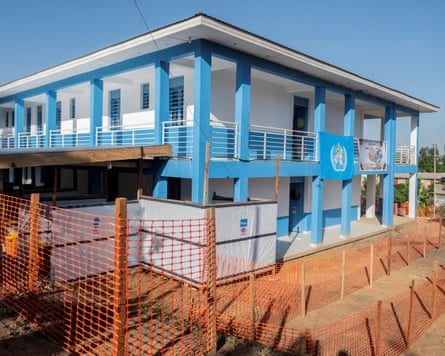
The Evangelical Medical Center, one of the facilities at the forefront of the response to the Ebola outbreak.


Continue ReadingWHO calls for community cooperation to contain Ebola outbreak in DRC

Death of Congolese man renews scrutiny of race relations in Ireland

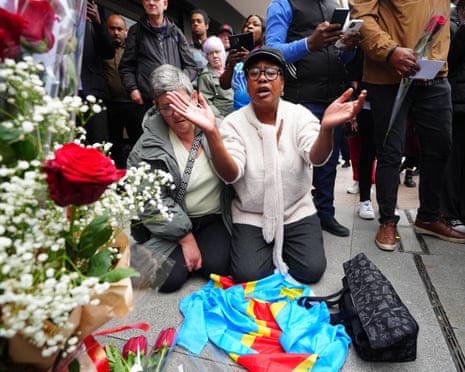
Antoinette Lukeba holds her hands aloft beside flowers at a vigil for Yves Sakila on Henry Street, Dublin.

Irish authorities have agreed to a second postmortem on the body of a Congolese man who died after being restrained by shop security guards on a Dublin street, prompting an outcry and comparisons to the death of George Floyd.

A forensic pathologist from England is to conduct an independent postmortem this week on Yves Sakila, 35, an alleged shoplifter who was pursued and pinned to the ground in the city centre on 15 May. The police force, An Garda Síochána, is investigating.

Protestors have held several rallies and on Saturday held a vigil at Henry Street near Arnotts, a department store where Sakila allegedly stole a bottle of perfume, leading to a chase outside, where security guards detained him for about five minutes until police arrived and found him to be unresponsive. Some of the incident was filmed and shared on social media.

Thérèse Kayikwamba Wagner, the foreign minister of the Democratic Republic of the Congo, visited Dublin last week to meet family representatives and Irish officials.

Sakila’s relatives were traumatised and “reeling”, the minister told RTÉ. “But they also displayed an enormous amount of courage, of serenity, and of course, of patience and trust in the Irish authorities that justice will be made and that light will be shed on the circumstances around Mr Sakila’s untimely death.”

The family wanted to understand “how such a demonstration of excessive force could happen in broad daylight” and to ensure that publicity around the case was not short-lived, said Wagner.

The minister met Ireland’s president, Catherine Connolly, the justice minister, Jim O’Callaghan, and the foreign minister, Helen McEntee. “The conversations that I had in Dublin were very fruitful and constructive and encouraging,” she said.

The case has sharpened scrutiny on race relations in Ireland, where some activists and politicians have linked the arrival of immigrants and asylum seekers with a housing shortage and cost of living crisis.

Bertie Ahern, a former taoiseach, was secretly recorded earlier this month – before Sakila’s death – saying: “The ones I worry about are the Africans. We can’t be taking in people from the Congo and all these places.”

Placards at vigils for Sakila have referenced Black Lives Matter, the movement that spread in the US after a police officer in Minneapolis was filmed cutting off Floyd’s oxygen supply by kneeling on his neck for nine minutes. The officer, Derek Chauvin, was convicted of murder.

Sakila, who had lived in Ireland since 2004, reportedly had convictions for theft and was living in a homeless shelter. During his pursuit, an elderly man was knocked over and broke a hip.

Footage shared on social media showed Sakila face down and being restrained, with one man appearing to kneel on his neck. When police arrived they briefly handcuffed Sakila before realising he was unresponsive and taking him to the Mater hospital, where he was pronounced dead.

The postmortem appeared to be inconclusive, requiring a second one, the family’s solicitor, John Gerard Cullen, told reporters. “There are so many unanswered questions,” he said. He has submitted 41 questions to gardaí. David Rouse, a pathologist with Forensic Healthcare Services in Essex, is to conduct the second postmortem.

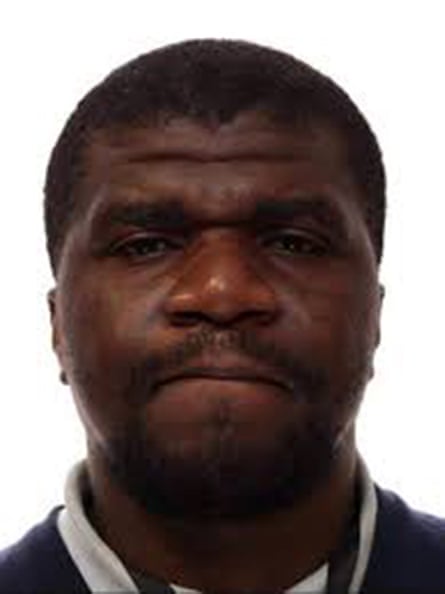
Yves Sakila
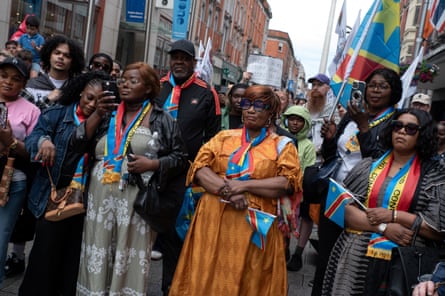
People listen to a speaker during a march for Yves Sakila.

Continue ReadingDeath of Congolese man renews scrutiny of race relations in Ireland

Bound by blood: new film highlights Jamaica’s outlawed obeah belief system

a man and a woman lie in bed together

A new movie from award-winning Jamaican film-maker Sosiessia Nixon shines a spotlight on Jamaica’s enduring west African-based magic and spiritual healing tradition known as obeah.

Nixon’s tense, feature-length suspense, Stew Peas, tells of the story of Jamaican detective Tessa, who is obsessed with an old murder case.

Tessa’s life begins to fall apart when it becomes clear that her husband, Neil, has fallen under the spell of her new maid, Marcia. The story takes a dark turn with the shocking revelation that Marcia has been adding a secret ingredient to Neil’s food – her menstrual blood.

“This film focuses on the persisting Jamaican obeah belief, that a woman could ‘bind’ a man in a relationship by serving him a meal of the traditional kidney beans and meat stew, which becomes a potent love portion when her menstrual blood is added,” Nixon said.

Nixon hopes the movie will spark a dialogue about the tension between Christianity and obeah, which is rooted in the country’s African heritage and still practised today despite being outlawed by colonisers in the 1700s – and still illegal today.

“The practice of binding a man with stew peas remains very much taboo in Jamaica, and I wanted to open a conversation. I wanted to look at this belief system in depth. Jamaicans often say that belief kills and belief cures, meaning that whatever you believe, that is what is going to happen. So, does this thing really work?” Nixon said.

Coming from St Thomas, an idyllic coastal parish on the south-eastern tip of Jamaica, sometimes nicknamed the “obeah parish”, Nixon said she was inspired by actual experiences.

“Growing up in St Thomas, I was very much exposed to a lot of obeah,” Nixon said.

Producer and actor, Ava Eagle Brown, who created Jamaica’s Black River film festival, said the film will resonate with Caribbean people everywhere. “There is so much of us in this film, the things that make us Jamaican – especially if you’re in the diaspora … it brings you back home.”

Brown, who is also in the film, added: “It’s probably going to now have some men looking at their woman with suspicion and asking: ‘What did you put it in my stew peas?’” she said. “But on a serious level, I told my son to make sure he doesn’t eat any stew peas from any woman!”

Sonjah Stanley Niaah, a Jamaican cultural studies scholar and the director for UWI’s Centre for Reparation Research, said the stew peas belief is linked to the African view that natural elements, including blood from menstruation, has an inherent potency. The idea, she added, was that the red kidney beans will mask the blood so the man being charmed cannot detect it.

Stanley Niaah welcomed the opportunity to explore forms of African spiritualities, which she said are often misunderstood, after being vilified and outlawed by European colonialists who had linked them to resistance and rebellions among enslaved Africans.

“People in this part of the world are people of African descent and there’s a pantheon of African spirituality that we have in our blood, that we have inherited … But [today], African spirituality has no attention, no substance, it’s not being taught in schools, we are so afraid of ourselves, we are neglecting it,” she said.

She added: “What we now have is this very profound, alive and longstanding tension between Christian practices and African spirituality. Enslavement was sanctioned by the church. So, some aspects of the legislative architecture in the Caribbean were certainly driven by the need to have enslaved people not assemble, or gather for any reason, whether to worship their gods or to plan rebellions. This legislative architecture is very much present even today, when you see the Obeah Act still on the books in Jamaica.”

Jamaica needs to keep making films that boldly represent the region, communities and cultures, even as it grapples with tough challenges such as rebuilding after Hurricane Melissa, Stanley Niaah said.

Brown, who had to cancel this year’s film festival after Hurricane Melissa demolished parts of Black River, where the event is normally held, echoed Stanley Niaah’s sentiments, describing Stew Peas as “a ray of hope”, as Jamaica’s multibillion-dollar creative industry struggles to recover.

“This year I had to postpone the Black River film festival, which was a real blow because it was part of how Jamaican creatives were starting to connect with the globe, including contacts from major networks like Canal+ and Netflix,” she said.

She added: “The hurricane destroyed so much! It destroyed infrastructure, equipment and for some people it destroyed hope. And that is why we need projects like this that demonstrate the resilience of Jamaicans, and send a message to the world that we are still making music and movies and adding that quintessential Jamaican green, gold and black hue to entertainment.”

Jamaica’s film commissioner Jackie Jacqueline Jackson said films such as Stew Peas are “a powerful testament to the resilience, ingenuity, and determination of Jamaica’s creative industry”.

“It’s important to keep going and demonstrate that Jamaica is still open for business. By signalling this, it encourages international productions to return to Jamaica which positively affects jobs and film production expenditure,” she added.

Continue ReadingBound by blood: new film highlights Jamaica’s outlawed obeah belief system

WHO puts Ebola outbreak death rate at ‘huge’ 30-50% as chief arrives in DRC

WHO Director-General Dr. Tedros Adhanom Ghebreyesus gestures with his hands while seated in a crowded room

The deadly Ebola outbreak in the Democratic Republic of the Congo can be stopped, the World Health Organization (WHO) head, Tedros Adhanom Ghebreyesus, said as he arrived in Kinsasha.

Tedros landed in the DRC on Thursday evening and was due on Friday to travel to Ituri province in the north-east, where the epidemic is centred.

“That thing can be stopped,” Tedros said, adding that the WHO did not support travel bans to combat the outbreak because they “don’t help much”.

“Together, we will overcome this outbreak,” he said earlier, vowing to do “everything in my power to help you”.

The WHO has recorded 10 confirmed and 223 suspected Ebola deaths in the DRC since the outbreak was declared on 15 May, out of more than 1,000 confirmed and suspected cases, according to its figures up to 24 May, the latest available.

The true spread of the virus is likely much wider as it is thought to have circulated under the radar for some time, the WHO has warned.

This is the 17th recorded Ebola outbreak in the big central African country, which has a population of more than 100 million people.

Complicating medical relief efforts, the epidemic is centred in a mineral-rich region fought over by armed groups. “Conflict and displacement make everything harder,” Tedros said. “I am making a direct appeal to all warring parties in this region: please, declare a ceasefire.

“No cause, no conflict, no grievance is worth condemning innocent people to death from a preventable disease.”

No vaccine or treatment yet exists for the Bundibugyo strain of Ebola causing the current outbreak. The WHO said on Thursday that its advisory groups had recommended clinical trials for vaccines and treatments.

The head of the African Union’s health agency, Jean Kaseya, said on Thursday that a vaccine should be ready by the end of the year.

Neighbouring Uganda, with one recorded death from Ebola and six additional cases, announced it was shutting its border with the DRC with immediate effect.

The US said it would deny entry to anyone infected and was working to open a treatment facility for affected US citizens in Kenya. A Kenyan rights group has gone to court seeking to limit operations at any such facility, while health officials have warned it could burden Kenya’s stretched health system.

Ebola has killed more than 15,000 people in Africa over the past 50 years. The deadliest outbreak in the DRC claimed nearly 2,300 lives out of 3,500 cases between 2018 and 2020.

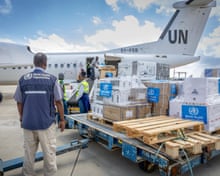
The WHO said it had received 4.6 tonnes of aid at the airport in Bunia, capital of Ituri province, while Unicef, the UN children’s agency, said it was sending 100 tonnes of aid to the DRC.

With Agence France-Presse

Continue ReadingWHO puts Ebola outbreak death rate at ‘huge’ 30-50% as chief arrives in DRC