South African men sentenced in ‘world’s largest’ rhino horn trafficking case

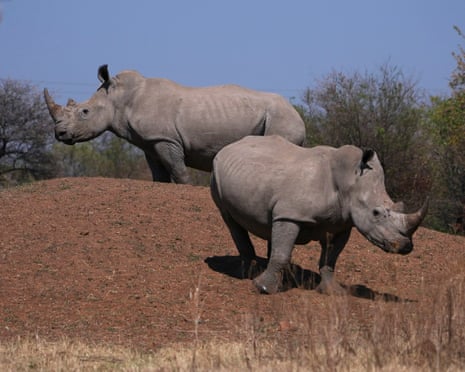
Two rhinos stand on a mound

Two traffickers of rhino horns have been sentenced by a South African court in what police said was the world’s largest such case, partly bringing to an end an almost two-decade legal saga.

Dawie Groenewald and Tielman Erasmus had faced more than 1,700 charges ranging from illegally hunting and dehorning rhinos to racketeering and money laundering.

Groenewald, described by South African police as the mastermind of the enterprise, was handed a 2m rand (£92,000) fine or four years’ imprisonment after reaching a plea deal with the state.

His co-accused was fined 100,000 rand or three years in prison, said the Directorate for Priority Crime Investigation, also known as the Hawks unit.

South Africa has about a third of the world’s critically endangered black rhino population, according to the International Rhino Foundation (IRF). It also has more than 75% of all southern white rhinos, whose global population dropped 10% to fewer than 16,000 in 2024.

The country is plagued by rhino horn poaching, accounting for 81% of poaching cases in Africa in 2024, according to the IRF.

Rhino horn is used in traditional Chinese medicine but has no health benefits for humans. While up-to-date estimates are hard to come by, a 2022 research paper suggests it can fetch tens of thousands of dollars a tonne on the black market.

Groenewald and his brother Janneman were accused by the US justice department in 2014 of selling illegal rhino-hunting trips to Americans under false pretences.

South African police had first started investigating the case in 2007. In 2010, 11 people were arrested, they said, including “professional hunters, veterinary surgeons, a helicopter pilot and general workers involved in an organised criminal enterprise”.

However, more than 15 years of delays followed, amid legal challenges, including in the constitutional court. Two of the original 11 accused died while the case was in progress, as well as 10 of the state’s 185 witnesses, while others emigrated.

The case against three others, Karel Toet, Marisa Toet and Koos Pronk, was postponed to 20 August, police said.

Last year a South African rhino farmer, John Hume, was charged with five others with being part of a horn trafficking syndicate. Hume bred white rhinos on his farm and campaigned for horn trading to be legalised and regulated in South Africa. He had about 2,000 rhinos on his farm when he sold it in 2023, claiming he could no longer afford to run it.

Agence France-Presse contributed to this article

Continue ReadingSouth African men sentenced in ‘world’s largest’ rhino horn trafficking case

Seven-year-old Abdiqadir was hit in a US airstrike. Without a $750 operation, he may lose his ability to walk

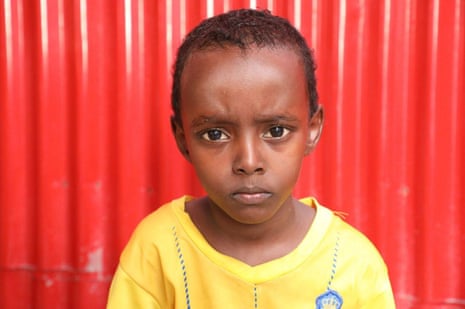
A seven-year-old boy
guardian.org

A seven-year-old boy who was riddled with shrapnel during a deadly US airstrike in Somalia faces losing his ability to walk unless he has a £750 emergency operation.

But Abdiqadir Salah’s family cannot afford the surgery and the US – which refuses to admit that any civilians were killed or injured during its attack six months ago – appears unwilling to pay compensation to those affected by airstrikes in Somalia.

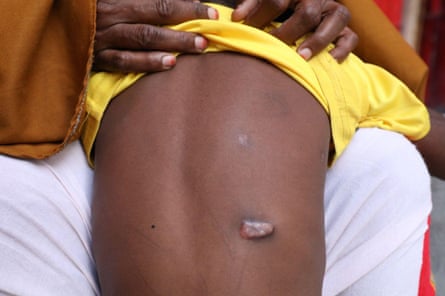
Shards of shrapnel are lodged in two places in Abdiqadir’s back and in his upper thigh after US airstrikes that killed at least 12 civilians, including eight children.

It is the deadliest attack on civilians in Somalia during either Trump administration and one of the worst since the botched 1993 US military operation in Mogadishu known as Black Hawk Down.

A Guardian investigation into the strikes in the town of Jamaame raises myriad questions over US intelligence, how the targets were selected and why children were hit while they were in the open and were likely to have been clearly identifiable to the drone’s strike team.

His mother said Abdiqadir was in the street outside his family home in Jamaame on 15 November 2025 when he was struck by a missile.

“That’s where three of my children got wounded. All three of them were laying on the ground covered in blood,” said Marian Haji Abdi Guled.

“When I tried to tend to them, shells began falling everywhere. Every step you took, or direction you turned, there were shells and missiles raining everywhere.

“There was no warning before the strikes but we could [hear] drones hovering above town before the strikes. It was very loud.”

After the attack, Guled took her three injured children into the surrounding countryside to flee the drones.

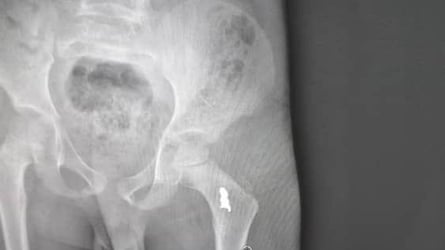
Her eldest, Mohamed, 16, had shrapnel lodged in his fingers, while her daughter Sumaya, 14, had three metal fragments lodged in her head, which have since been removed. Abdiqadir’s X-rays, which have been viewed by the Guardian, show shrapnel still lodged near his hip socket from where it entered his lower back.

“They bled throughout the night,” Guled said. “We couldn’t leave the countryside because we feared the drones hovering above would bomb us again.”

The next day Guled travelled 40 miles (60km) to Jilib, the de facto capital of the territory held by the Islamist militant group al-Shabaab, which was the stated target of the US airstrikes on Jamaame in November.

The hospital there, however, could not help. After borrowing money for the two-day journey, Guled travelled with Abdiqadir and his sister to Somalia’s capital, Mogadishu.

“My oldest still has shrapnel lodged in his body but I left him back in Jamaame because I couldn’t afford to take him to Mogadishu and took the younger ones.

“During the two nights and two days to reach Mogadishu, we couldn’t even eat anything. All I thought about was saving my children.”

Although her daughter received treatment in the capital, Abdiqadir remains in desperate need of help.

Doctors at Kaafi hospital in central Mogadishu told his mother that the shrapnel inside the child needed to be urgently removed to avoid life-changing consequences for him.

“They [doctors] told me if the shrapnel isn’t removed from his body, it could affect his ability to continue walking,” Guled said.

“But I don’t have $1,000 [£750] needed for the operation to remove the shrapnel from my son’s body. What’s worse than being a mother who can’t do anything for her wounded children?”

Despite being unable to afford the surgery, Guled has stayed in Mogadishu because it is the only place her child can get the required treatment. However, the cost of renting accommodation in the capital – nearly £190 a month – makes it impossible for the family to save enough for the surgery.

The US has not paid compensation to any Somali civilians injured or killed in airstrikes. Under the Trump administration, the Pentagon has also quietly scrapped a programme making it a legal requirement to prevent and respond to civilian deaths.

“I don’t know where the money [for the operation] will come from,” Guled said. “I left the children’s father back at the farm in Jamaame to protect our crops from wild animals. He also doesn’t have money to reach Mogadishu.”

The airstrikes were conducted alongside Somali ground forces in a joint operation led by the US military’s Africa command, suggesting the possibility that some of the casualties may have been inflicted by those troops.

Witness testimonies, however, all describe the Jamaame casualties being caused by bombs dropped from drones, rather than fire from ground troops. US officials would not answer questions over Somali forces’ role in the attack.

Guled has no doubts over the origin of the strikes that injured her children, insisting they had not been inflicted by infantry weapons such as mortars. “It is the Americans who are responsible for our suffering,” she said.

The US Department of War did not respond to a series of detailed questions regarding the airstrikes on Jamaame.

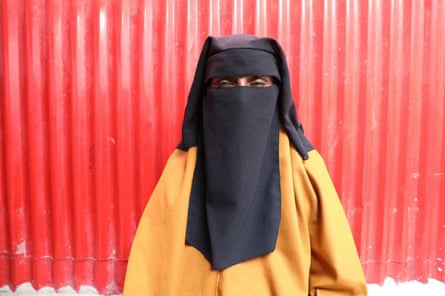
A woman in a full niqab veil
An X-ray of a boy’s thigh shows a foreign body near the hip socket
Two wounds on a child’s back
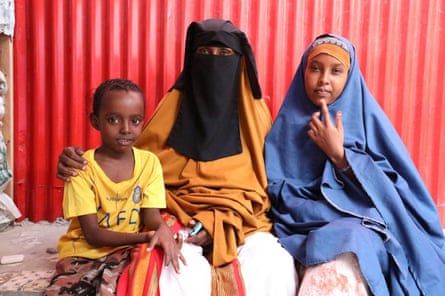
A woman in full veil sits between a young boy and a girl

Continue ReadingSeven-year-old Abdiqadir was hit in a US airstrike. Without a $750 operation, he may lose his ability to walk

Sierra Leone’s first lady refuses to condemn FGM without ‘reliable data’ on harms

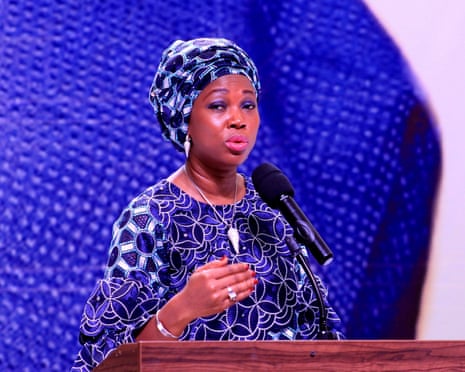
Sierra Leone first lady Fatima Maada Bio speaks into a microphone
theguardian.org

The first lady of Sierra Leone has denied that she supports female genital mutilation amid rising anger around her perceived approval of the practice.

But in an exclusive response to the Guardian, Fatima Maada Bio, the wife of President Julius Maada Bio, also said she would not openly condemn FGM until she saw “reliable data” that the practice was harmful.

Now, a group of health professionals, survivors, human rights activists and politicians has written to the Organisation of African First Ladies for Development (Oaflad) to raise concerns. Sent on 10 June, the letter demands clarification on public statements made by Maada Bio, currently president of Oaflad.

More than 20 signatories, including Amy Smythe, who served as Sierra Leone’s first minister of gender and children’s affairs, and Isha Dyfan, a human rights lawyer and UN expert, wrote that “perceptions of support for FGM, whether direct or indirect, risk undermining years of advocacy … and creating misalignment with national, regional and international commitments”.

Maada Bio, 45, a former film producer and actor who met her husband in the UK where she had fled as a teenager to escape a child marriage, has also attracted controversy for continuing her rental of a council flat in Southwark, London, for her children, who are British citizens. Southwark council this week confirmed it had repossessed the flat.

An advocate for women’s rights and against child marriage, Maada Bio leads a campaign called “Hands off our girls” in Sierra Leone. However, since her husband was elected in 2018, she has refused to condemn FGM.

FGM, or cutting, the partial or total removal of the external female genitalia, can have serious long-term health consequences, including infertility. The practice is considered to be a grave violation of human rights and in 2012 the UN general assembly passed a resolution for a global ban.

Sierra Leone has one of the highest rates of FGM in the world. A national survey found that the proportion of women who are cut decreased from 90% in 2013 to 83% in 2019; 71% of them were subjected to the practice before the age of 15.

There is no law in Sierra Leone that criminalises FGM. It is often performed as part of a ritual that marks a girl’s entry into womanhood and is carried out by women, known as sowei, of the influential and secretive Bondo and Sande societies. Every year, women and children are left with health complications, and some die, as a result of such rituals.

Ranya Kargbo, a senior UN professional and FGM survivor, who signed the letter, said she was concerned about the recent public appearance by Bio where she was filmed being supportive of FGM practitioners.

“When you are in a leadership position, your words matter,” said Kargbo. “When [Bio] said to the soweis [the cutters], not to be afraid of anything and that she stands with them, those were powerful words from the highest office in Sierra Leone.

“When somebody says that, it means ‘I have all the resources and support, do what you want’. It is an absolute slap in the face for all of us.”

Maada Bio said her comments had been taken out of context and were “intended to encourage dialogue and reassure women who felt marginalised”. In a statement to the Guardian she added: “I am not in favour of any form of circumcision that is forced upon an individual.”

She said she is “not using her voice to campaign either in favour of or against circumcision” and that as a circumcised woman, she expected to see reliable data demonstrating the extent of harm caused by FGM in Sierra Leone.

Last week, Maada Bio posted an article from September 2025 on her Facebook page, which has more than 600,000 followers, entitled “Harms of the current global anti-FGM campaign”. The piece, published in the BMJ Journal of Medical Ethics, argued that “a ubiquitous ‘standard tale’ obscures the diversity of practices, meanings and experiences among those affected” by cutting.

She named on Facebook several prominent anti-FGM campaigners, including Nimco Ali, an independent UK government adviser for tackling violence against women and girls, and Anita Koroma, founder of Girl Child Network Sierra Leone, and wrote “they do nothing for our country”. In another post, she called them “scammers”.

Maada Bio told the Guardian her comments were not “directed at survivors of circumcision or those genuinely working to improve the lives of women and girls”. She said: “My criticism has been directed at individuals whom I believe have misrepresented my position and sought to create a narrative that does not reflect my actual views.”

Last year, a ruling by the Economic Community of West African States (Ecowas) court of justice, described FGM as “one of the worst forms of violence against women” which “meets the threshold for torture”. The court ordered Sierra Leone “to enact and implement legislation criminalising female genital mutilation and to take appropriate measures to prohibit its occurrence and protect victims”.

The ruling came a few weeks after President Bio became chair of Ecowas. He has never acknowledged the ruling publicly, and in October last year signed the Child Rights Act 2025 into law, which did not contain any provision addressing FGM.

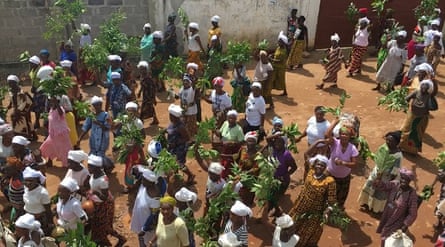
A crowd of women wearing white head wraps and holding branches walk down a street.
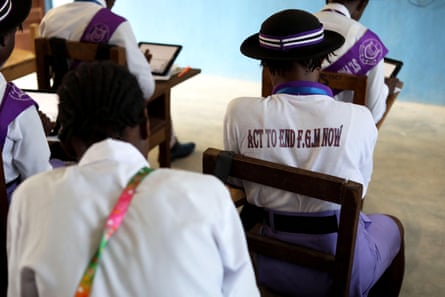
Teenage girls sitting on chairs in a classroom, facing away from the camera. One wears a shirt with ‘Act to end FGM now’ written on the back.

Continue ReadingSierra Leone’s first lady refuses to condemn FGM without ‘reliable data’ on harms

Ghana to advance reparatory justice at first major gathering since landmark UN resolution

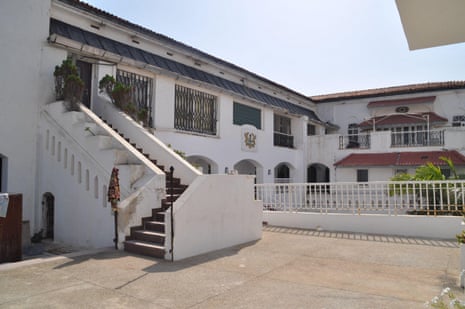
Osu Castle, also known as Christiansborg, the former house of the Ghanian president, in Accra, Ghana.

Ghana is hosting a conference to advance the continent’s push for reparatory justice after the adoption of the landmark United Nations (UN) resolution declaring the trafficking of enslaved Africans as the gravest crime against humanity.

Heads of state and government, ministers, civil society representatives, historians, researchers and legal experts representing more than 80 countries are converging in the capital, Accra, for the three-day event, billed Next Steps, which starts on Wednesday. It is the first major gathering on the issue since the resolution was adopted.

The conference will feature an event on 19 June at Osu Castle – a 17th-century fortress in the capital built by the Danish that served as a hub for the transatlantic slave trade – to honour Juneteenth, which marks the end of slavery in the US.

Expected speakers include the African Union commission chair, Mahamoud Ali Youssouf, prime minister Mia Mottley of Barbados and presidents John Mahama, Joseph Boakai, Netumbo Nandi-Ndaitwah, Bassirou Diomaye Faye and Emmanuel Macron of Ghana, Liberia, Namibia, Senegal and France, respectively.

Participants are engaging in dialogue around five objectives – including formulating a framework to advance the resolution’s objectives globally and establishing global panels on reparatory justice and restitution – to “transform political momentum into a common concrete institutional commitment for reparatory justice”, organisers say.

The conference comes nearly three months after the UN general assembly voted to adopt a proposal by Ghana on behalf of AU member states to recognise the trafficking of enslaved Africans and the racialised chattel enslavement of people from the continent as the gravest crime against humanity.

A total of 123 states voted in favour of the proposal while three – the US, Israel and Argentina – voted against it and 52, including the UK and all EU member states, abstained.

The transatlantic slave trade lasted about 400 years – from the early 16th century to the late 19th century.

Many previous initiatives by African countries to redress decades of injustices, such as the forced enslavement of their people, had been largely fragmented. The resolution marked a watershed moment for the continent’s campaign for reparative justice, after efforts including the Abuja Proclamation of 1993 that demanded reparations for colonialism and the transatlantic slave trade and helped lay the groundwork for the campaign.

Ghana says in its concept note for the conference: “This [resolution] represents a fundamental departure from the international community’s response to the transatlantic slave trade, replacing commemorative gestures with the pursuit of historical truth and dialogue, aimed at reconciliation and justice.”

The decision recognises that the legacies of enslavement continue today and calls for UN member states to have “inclusive, good-faith dialogue” on reparatory justice and “prompt and unhindered” restitution of cultural and other properties that are of value to their countries of origin.

The Accra conference seeks to expand on the UN success by deliberating on mechanisms to turn the resolution’s potential into actionable commitments.

The decision has had some knock-on effects. Last month, Macron called for France to address its role in the enslavement of Africans, notably using the term “reparations”, which previous French heads of state have avoided. Also last month, Pope Leo XIV made a historic apology for the Vatican’s role in legitimising slavery and for its delay in condemning the practice.

Kyeretwie Osei, the head of programmes at the Economic, Social and Cultural Council, the AU’s civil society policy organ, said the global discourse on reparatory justice was gathering momentum and at its most promising, adding that the conference offered an opportunity “to leverage this particular moment”.

“There is this slow but really substantive movement towards some sort of global reckoning on this issue,” he said. “This conference is really going to allow Africa to ensure that it has the structures that would be necessary [and] the political will that we’ve seen to be properly leveraged and channelled to ensure that we are able to best give practical meaning to this particular point in time.”

The conference has representatives from outside Africa, the Community of Latin American and Caribbean States, the Caricom Reparations Commission, the Congressional Black Caucus and the National Association for the Advancement of Coloured People.

Liliane Umubyeyi, the co-founder and executive director of African Futures Lab, a nonprofit that works to raise awareness of racial injustices, said the event presented an opportunity for the reparative justice movement to become a broader coalition involving other countries outside Africa and the Caribbean, another region with a growing reparations movement.

“This would significantly accelerate the reparations agenda, especially if other international institutions that have previously been hesitant to engage with the issue begin to do so,” she added.

The Guardian’s connections to enslavement: can an institution atone for its history?

On Thursday 2 July, join Maya Wolfe-Robinson, Ebony Riddell Bamber, Prof Verene A Shepherd and Ahmad Ward in this free event for a wide-ranging discussion on the Guardian’s Legacies of Enslavement programme. Book tickets here or at guardian.live

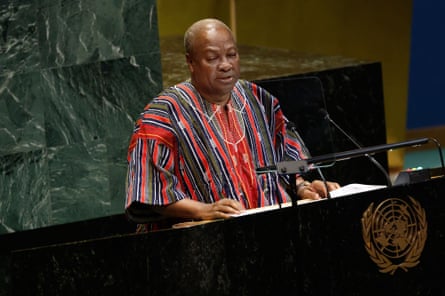
Ghana president John Mahama speaks at the UN general assembly hall in September.
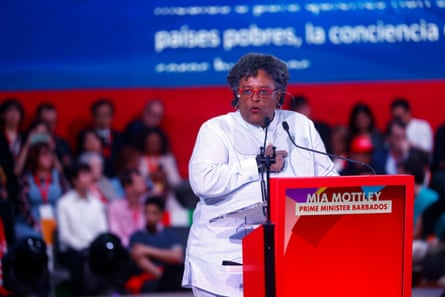
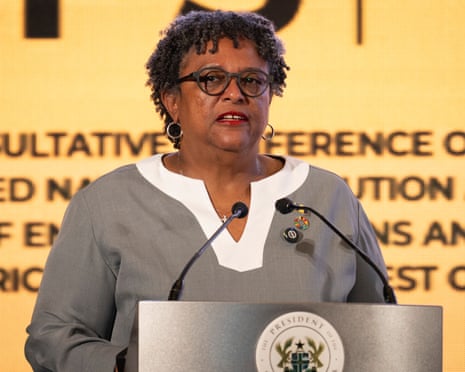
Barbados prime minister Mia Mottley delivers a speech during the Global Progressive Mobilisation in Barcelona, Spain.

Continue ReadingGhana to advance reparatory justice at first major gathering since landmark UN resolution

Lives and incomes lost as Ebola takes toll on Bunia’s public-facing workers

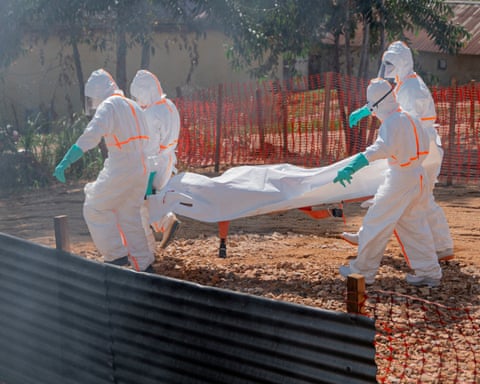
A body is carried by health workers in full hazmat outfits

Justin Keno watches more than 400 pupils stream through the Nelson Mandela school’s gate each morning, and wonders which of them might be carrying Ebola.

The institution’s principal has done everything he can to prevent the spread of the virus: installing hand-washing basins at the entrance, providing alcohol-based hand rub for parents, making pupils bring packed lunches instead of eating in the canteen, and banning food sellers from outside the gates.

But he knows the virus moves in ways he cannot control. “Children come from everywhere, including neighbourhoods declared epicentres,” he said in his office in Bunia. “We cannot know which child comes from a confined area. If one is infected, it could reach many children very fast.”

Nearly six years after the last Ebola outbreak in Ituri in the Democratic Republic of the Congo was declared over, residents of the province’s capital, Bunia, have for the past month found themselves reliving their fears as another epidemic takes hold.

The health ministries of the DRC and neighbouring Uganda announced outbreaks of Ebola on 15 May, but the virus is thought to have been circulating undetected for weeks before then.

The epidemic, which the World Health Organization has declared a public health emergency of international concern, is caused by the rare Bundibugyo virus, which has no vaccine or approved treatment.

Responders are racing to contain the virus, which has caused 136 deaths from 676 confirmed cases in the DRC as of 10 June, according to a government report. In Uganda, it had caused two deaths from 19 confirmed cases as of 6 June, according to WHO.

The DRC report also noted that the outbreak in the country had spread to three new health zones – all in North Kivu and Ituri provinces.

The previous Ebola outbreak in Ituri lasted from July 2018 to June 2020, and also affected neighbouring North Kivu province. Overall, it involved 3,470 cases and 2,287 deaths, making it the largest in the country and second-largest globally.

Modelling by the Centers for Disease Control and Prevention in the US shows that the current outbreak could affect more people than the largest on record, which occurred in west Africa from 2014 to 2016 and infected more than 28,000 people, killing more than 11,000.

First identified in 1976 in what is now the DRC, Ebola is a highly contagious and often fatal viral disease that affects humans and non-human primates. It spreads through body fluids or contaminated materials and causes organ damage, blood vessel impairment and sometimes severe internal and external bleeding.

Ebola’s economic cost

People living Bunia said the economic toll of the virus was beginning to bite.

Sylvie Guilaine was forced to close her used-clothes business because of the fear of contracting the disease in the high-contact operation. “Someone comes, touches a shirt, tries it on, throws it away. Another picks it up,” she said. “That can contaminate. I stopped completely.”

She’s now a bricklayer’s assistant, and she soaks her work clothes in bleach before entering her house, delaying greeting her children. “They can cry but will have to wait until I have washed,” she said at Bunia general hospital, where she and colleagues were constructing a new Ebola treatment centre. “[Ebola] does not want dirt. It wants cleanliness. But it kills entire families – five, six, seven people. That is what I fear,” she said.

Yves Buakya, a motorcycle taxi rider, has seen his earnings plunge since the outbreak started. He explained: “Before, two passengers could share the bike. Now they refuse. Some prefer to walk rather than take a moto [a motorcycle taxi]. I spend hours waiting [for passengers].”

Buakya says Ebola is real but he also suspects that some organisations are profiting from it. To protect himself, he prays every morning and drinks traditional remedies made from guava leaves. He has a message for fellow residents: “Respect the measures. Wash your hands. Avoid unnecessary contact. Even if you think Ebola is politicised, protect your life.”

Richard Ngongo, an airline travel agent, is counting losses as the outbreak affects movement in the province, a business centre and migratory hub that borders Uganda and South Sudan.

“Flights are blocked. My cash registers are empty. We were waiting for the high season, for holiday travellers. Now nothing,” he said from his office. At the workplace, he has a sanitiser gel and a non-contact infrared thermometer for customers, who he said complied without resistance. He said no health team had ever come to sanitise him at work and urged more effort: “The message must be spread in churches, in communities, everywhere.”

Georgette Kalume, who runs a secondhand clothes shop, said members of her Jehovah’s Witness congregation had stopped going door to door to preach to people, and were now using WhatsApp. She decried the fact that she had never received an Ebola awareness visit. “Not the government, not humanitarians,” she said.

As the outbreak continues, medics in eastern DRC are struggling with shortages of basic equipment to protect themselves and prevent the spread of the virus, partly due to aid cuts, logistical challenges and the large size of the outbreak.

Last week, the International Rescue Committee warned that basic protective equipment was likely to run out within days due to border closures with Uganda and Rwanda, where many supplies are sourced, and insecurity along transport routes.

Africa CDC said that, as of 4 June, only a quarter of the critical supplies needed for the next three months had arrived in the DRC and Uganda. Thirty-four healthcare workers so far have been infected with the virus, and seven have died from it.

Disinformation is fatal

At Elikya hospital, Dr Yazid Yassine said the isolation ward was full, despite the number of beds increasing from six to more than 18. He is relentless, despite the deaths of other Ebola responders in the line of duty: “A soldier does not fear the battlefield. Better to die there than at home.”

At ISIG University, academic secretary Maki Mugeni Sagesse has managed to prevent infections on the campus. He has installed chlorinated basins and does awareness sessions before lectures. He has lost five people close to him to Ebola in the past month alone.

He praises the government’s efforts in setting up treatment sites and doing public awareness announcements, but said more must be done. “Go to ordinary people. Use megaphones in neighbourhoods. Use local languages. Train neighbourhood chiefs to sanitise 10 houses each,” he said.

Dr Charles Kachindi, who works at CME Nyankunde hospital, told of a grim situation at the facility, saying it currently had 10 confirmed cases and 15 people had died. Testing, he said, was not as helpful as it might be as results for samples took up to three days to arrive – and sometimes not all of them came back. He appreciates the government’s efforts in trying to control the spread but warns: “We are not yet on a plateau.”

Despite the growing danger of the virus, information gaps mean that some Bunia residents are not convinced that it is real. Yassine has watched patients arrive too late after believing rumours that the outbreak is fake and visiting traditional healers. “Disinformation has been rife,” he said. “People say Ebola was created by health workers to get funding. Some say it is poisoning.”

People have become hostile, he said. “When we go into the community, people watch our movements. In this period, you cannot buy a motorcycle. They will say: ‘That is Ebola money,’” he said, smiling.

Yassine said he had received death threats. “A man told me: ‘My family member died in your care. One day we cross paths, you will follow the same path.’”

For Ngongo, the airline operator, the reality is beyond question. “I have never read in any manual that an epidemic can be invented. When you see doctors dying, do you think they would accept to die for a lie?”

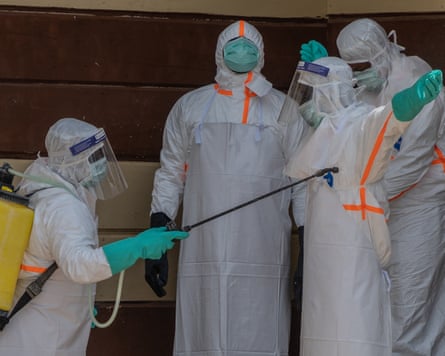
Healthcare workers disinfect themselves after preparing the body of an Ebola victim at Citadelle clinic in Bunia, Congo
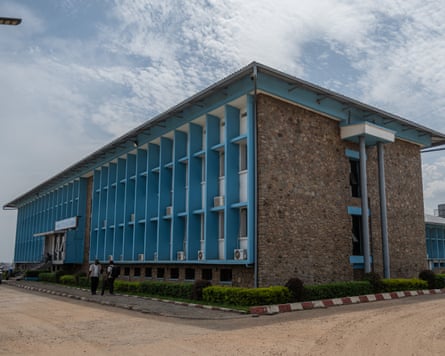
The Ituri provincial public health laboratory
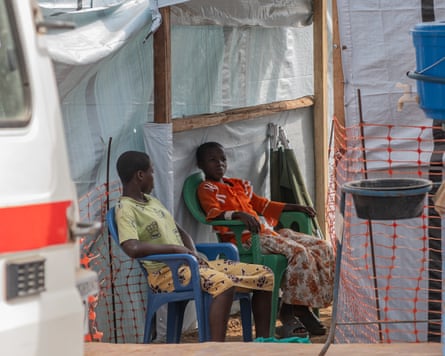
Two girls seated together under a fabric shelter by a van
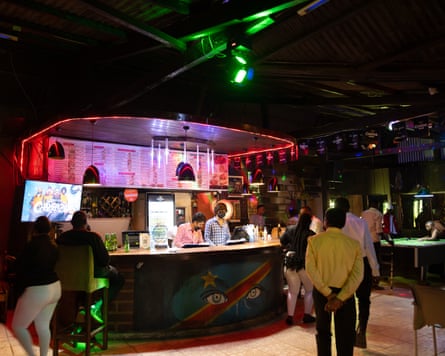
Interior of a nightclub in Bunia, not many customers visible
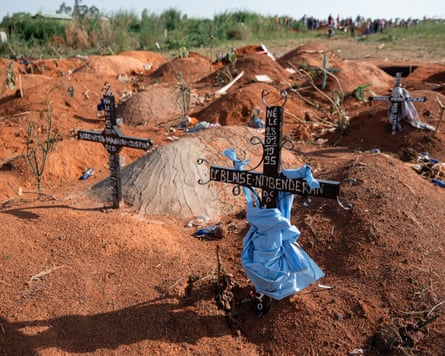
Makeshift graves at Nyamurongo cemetery in the Ndibakodu neighbourhood, Bunia
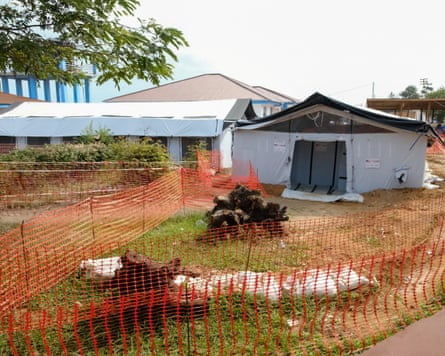
The Ebola virus disease treatment centre at the Bunia general reference hospital

Continue ReadingLives and incomes lost as Ebola takes toll on Bunia’s public-facing workers

South African jazz pianist Abdullah Ibrahim dies aged 91

a man plays piano

South African jazz composer and pianist Abdullah Ibrahim has died at the age of 91.

His family announced his death in a statement released Monday.

“Abdullah passed away peacefully with South Africa and its people in his heart,” wrote his partner, Dr Marina Umari. “His love for his country never wavered, no matter where in the world he found himself.”

Ibrahim died in Germany after a short illness.

The musician, born in Cape Town, once said he started composing music at the age of seven but made his professional debut at 15 and went on to become a known figure within local jazz circles in the 1950s before he recorded an album with a group known as the Jazz Epistles in 1960. Jazz Epistle Verse One was the first full-length jazz LP by Black South African musicians.

Their music was not explicitly political, but they were still targeted by the government.

Ibrahim moved to Europe in the 1960s where he met Duke Ellington, who he went on to record with before he moved to New York in 1965. “I always say we never thought of Ellington as an African American – we thought of him as a wise old man in the village,” Ibrahim said in 2024. “You have any musical problem or inspiration, you go to Ellington. And he has been that bulwark for many, many, many musicians.”

In the US, he performed at the Newport jazz festival and embarked on a solo tour, also stepping in for Ellington on a number of occasions.

“We don’t really leave, you know,” he said in 1984 about moving away from South Africa. “It’s a tactical retreat. We regard ourselves as cultural freedom fighters. And when our cadres, our young people, go outside the country for training, we don’t say that they left – it’s a tactical retreat.”

In his career, he would go on to record more than 70 albums, the most recent of which was released in 2023.

His most known piece Mannenberg was recorded in 1974 and became known as a major anti-apartheid anthem. The song reportedly inspired Nelson Mandela during his imprisonment.

“I realised at an early age that this system of apartheid was totally against the brain of everything because it was not just that they didn’t want you to record the music, it’s that they didn’t want you to think,” he said in 2017.

Ibrahim also worked on a number of soundtracks for films such as the Claire Denis dramas No Fear, No Die and Chocolat.

Throughout his career, he also won a number of awards including the German Jazz Trophy and a South African music lifetime achievement award.

The Guardian’s John Fordham wrote that Ibrahim has “written some of the most vividly beautiful themes to emerge from his culture’s special chemistry of African vocalised phrasing”.

His final solo performance was at the Cape Town international jazz festival in March.

a man with his arms crossed

Continue ReadingSouth African jazz pianist Abdullah Ibrahim dies aged 91