Five charged in Liberia after more than 200kg of cocaine seized in drug bust

President Joseph Nyuma Boakai Sr. of Liberia speaks at a podium bearing the presidential seal of Ghana

Authorities in Liberia have charged five suspects over one of the largest drug seizures in the country’s history, after police found more than 200kg of cocaine falsely declared as Maggi seasoning cubes.

The shipment, with an estimated value of $19m (£14.2m), was discovered at the international airport in Monrovia on 8 June, but the suspects were not named until a press briefing at the weekend.

“This was a serious transnational cocaine trafficking operation using Liberia’s aviation and logistics system as a channel for organised crime,” said Insp Gen Gregory Coleman late on Saturday. He added that his team had found evidence linking the shipment to a similar one processed in May.

News of the drug bust caused uproar in Liberia, and prompted President Joseph Boakai to order a combined investigation by the police and national anti-drug agency. “Liberia will not be used as a safe haven, transit point, warehouse, financial centre or operational base by criminal networks engaged in narcotics trafficking,” he said at the time.

But the delay in naming the suspects caused a row in parliament, where Coleman was summoned to a special senate hearing, and fed public speculation that the investigation was being tampered with to protect powerful Liberian citizens.

On Saturday, Coleman announced that his team had found evidence suggesting the complicity of the logistics company that handled the shipment. He then named the suspects who are being charged for the transportation, possession and illicit trafficking of controlled substances and criminal conspiracy.

The key suspect, the operations manager of the firm, is now in custody in Monrovia. Coleman said arrest warrants would be issued in collaboration with Interpol for the others who remain at large. Another suspect, believed to be attending an event in China at the time of the bust, has not been back to the country. Prosecutors also released the Dutch phone number of one UK-based suspect and his house address with a Birmingham postcode.

The bust has reinforced reports that west Africa, a region with porous land and sea borders, has become a major staging post for the movement of narcotics between South America and Europe.

In October 2022, authorities intercepted a shipping container at Monrovia seaport with 520kg of cocaine valued at $100m (£74.86m). One of the suspects named on Saturday was reportedly released from prison after being arrested in connection with another drug-related case in 2024.

In neighbouring Sierra Leone, one of Europe’s most wanted drug dealers has taken refuge since at least 2022 in the country’s capital, Freetown, and is in a serious relationship with the president’s daughter, a Guardian investigation showed in February 2025.

In May, Spanish police working with US and Dutch officials confiscated 45 tonnes of cocaine worth €812m (£694m) in what a Madrid court said was Europe’s ‌largest-ever cocaine bust. Authorities said the Comoros-flagged cargo vessel, which was raided near the Canary Islands, had left Freetown with Libya as its official destination. Another drug shipment out of Freetown was also seized en route to Spain in February.

Continue ReadingFive charged in Liberia after more than 200kg of cocaine seized in drug bust

Archaeologists uncover ancient Byzantine city in Egypt’s western desert

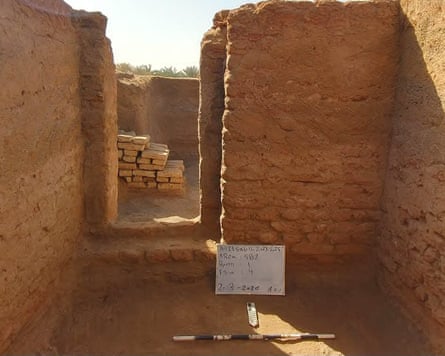
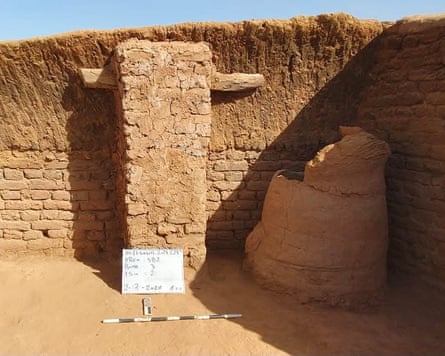
An archaeological site in the desert featuring several square rooms and a staircase behind walls

Archaeologists in Egypt have uncovered a well-preserved Byzantine-era city in the western desert.

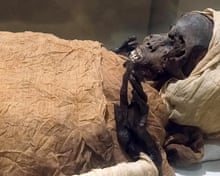
The fourth-century quarters had residential and religious structures, including a basilica-style church in the Dakhla oasis. Archaeologists also found coins, pottery fragments and tools.

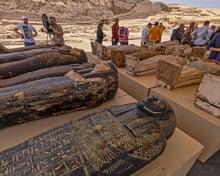
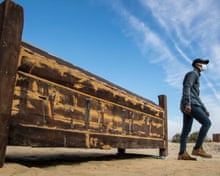
Separately, 18 ancient tombs were discovered at Marina el-Alamein, near Alexandria, which includes rock-cut and limestone tombs, pottery and a granite sarcophagus.

The tourism and antiquities ministry said the first discovery reveals details of daily life, urban development and economic activities when Egypt was part of the Byzantine empire.

The unearthed quarters included north-south thoroughfares intersected by east-west streets, forming open squares and public spaces, said Hisham el-Leithy, secretary general of the supreme council of antiquities.

A basilica dating back to the mid-fourth century stands at the settlement’s head, overlooking its main streets, along with remains of two watchtowers to safeguard the outskirts, according to Mahmoud Massoud, who chairs the archaeological mission.

The oasis, located in Egypt’s western province of New Valley, is on Unesco’s tentative list, a step away from being added to the agency’s world heritage list.

A heavily fortified structure with thick defensive walls, and many houses consisting of reception halls and vaulted roofs, were found in the area, Massoud added.

Among them were the house of Tisous, a church deacon, which dates to the second half of the 14th century. Archaeologists believe it served as a house church before the construction of the city’s basilica.

Archaeologists also uncovered bread ovens, kitchens, grinding tools and bronze coins bearing portraits of Byzantine emperors, Latin inscriptions and Christian symbols.

A group of gold coins unearthed dated to the reign of Roman emperor Constantius II, who ruled between 337 and 361, the ministry statement said.

Diaa Zahran, head of the Islamic, Coptic and Jewish antiquities department, said they found a collection of about 200 pottery fragments which would have been used as writing material. The fragments, known as ostraca, have inscriptions detailing commercial transactions, correspondence and other details of daily life, according to Zahran.

Archaeologists also found ancient tombs in the Marina el-Alamein archaeological site, which is about 62 miles (100km) west of the Mediterranean city of Alexandria.

The findings included 11 rock-cut tombs with an average depth of eight metres, and seven surface limestone-built tombs, the ministry said. It has brought the total tombs found at the site to 48.

In the site, archaeologists found pottery vessels, amphorae, lamps, plates, altars and limestone basins.

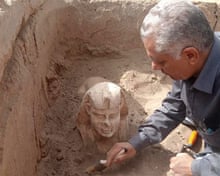
The mission chief, Eman Abdel-Khaliq, said they found a 2.5-metre-long granite sarcophagus, with skeleton remains that were being studied. Close to the sarcophagus, they found the remains of a plaster sphinx statue, she said.

Four gold pieces were placed inside the mouths of some of the deceased, known as “the golden tongue”, which had been a practice associated with funerary beliefs of that era, Abdel-Khaliq said.

Marina el-Alamein is an archaeological site close to the city of Alamein on Egypt’s northern coast, unearthed in 1986. Archaeologists believe the site was the ancient Greco-Roman port city of Leukaspis on the Mediterranean, which was built in the second century and thrived until the fourth century.
An archaeological site in the desert
A view through doorways inside the archaeological site


Continue ReadingArchaeologists uncover ancient Byzantine city in Egypt’s western desert

‘The situation is terrible’: aid workers on life in Sudanese city pummelled by drone strikes

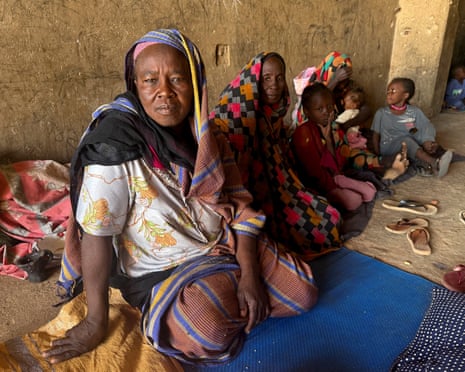
Displaced women and children sit on the ground
Carlos Mureithi

Fatima is losing count of the number of drone attacks on the besieged city of El Obeid in Sudan, but says the attacks this past weekend were the most violent so far.

The drones hit schools and fuel stations, killing more than 20 people, including students, she says. “Over the past few months, seeing 40 or 45 drones is the norm. You can literally count them,” said the aid volunteer, whose name has been changed for fear of retribution.

El Obeid, a city of half a million people, is a key battleground in the war between the Sudanese Armed Forces (SAF) and the paramilitary Rapid Support Forces. Attacks mounted by the RSF have prompted the UN and other agencies to warn of the risk of atrocities.

Located between RSF-held areas in the western Darfur region and army-controlled regions in the east, El Obeid has suffered repeated drone strikes on its infrastructure. The army is fighting to stop the paramilitary group setting up another blockade after a siege in February last year.

At least 45 people were killed and 41 injured in 15 drone strikes in the city and surrounding areas from 6 June to 28 June, according to the UN human rights office. There are growing fears of a repeat of the massacre in the city of El Fasher last year, when RSF fighters went on a rampage after capturing the city at the end of an 18-month siege.

Amnesty International released a report on Wednesday saying the RSF had committed ethnic cleansing and crimes against humanity in its campaign to capture El Fasher. An independent factfinding mission for the UN had already said the RSF’s seizure of the city showed the “hallmarks of genocide” against non-Arab communities.

On Friday, Volker Türk, the United Nations high commissioner for human rights, addressed delegates in Geneva during an urgent debate called by the UK and backed by Germany, Ireland, Norway and the Netherlands.

He said: “The ‌signs from El Obeid are ‌clear and unmistakable: another human rights catastrophe is unfolding in Sudan.

“This is not a drill. It is a red alert that needs to land on the desks of heads of state and government around the world. Their phones should be running hot in the coming days and weeks, with ideas on how to prevent atrocity crimes in El Obeid and in other places in Kordofan.”

El Obeid hosts an SAF infantry division and an airbase, in addition to about 100,000 refugees displaced by violence.

Experts have highlighted significant concentrations of RSF troops around the city and warn of an imminent ground offensive.

A report released on Monday by the Yale Humanitarian Research Lab found damage to electricity generation, fuel storage facilities and the main market that was “consistent with intentional bombardment of civilian infrastructure necessary for the sustainment of life”.

It said the SAF has constructed about 30 miles (50km) of defensive positions – suggesting it expected a siege.

Nohad Eltayeb, senior research assistant at the Acled conflict monitoring group, said it recorded 27 drone strikes last month around El Obeid, the highest monthly total since the start of the conflict in 2023.

In a diary voice note for the Avaaz human rights advocacy group, Fatima spoke of living life on the edge because of drone attacks on hospitals, fuel stations and other facilities. An attack last week struck the city’s main power station, causing blackouts in most of the city, she said. Drones have also hit people gathering to share Starlink internet connections when telecommunications networks are down, she added.

“I cannot begin to describe how terrible the situation is right now,” Fatima said. “Even the way people talk at funerals is different now. Instead of praying for the deceased, they would be talking about how they died.”

According to Fatima, merchants have increased prices, saying their goods are targeted by drones on the way to El Obeid from other parts of the country or simply looted.

Ahlam, a humanitarian worker whose name has also been changed, said residents had become accustomed to pain, loss and fear from constant drone attacks. “In just the past two weeks, nearly every essential service and piece of critical infrastructure has been hit,” she said.

She added that some people had considered leaving the city, but attacks on fuel stations have driven up prices, making transport much more expensive. She fears devastating consequences if the conflict escalates, noting the already huge number of displaced people in the city.

Will Davies, Sudan director at Avaaz, said the drone attacks had created an “extremely dire” situation in El Obeid.

He said the city lacked the ethnic dynamics that were a factor in the El Fasher killings and there was unlikely to be a major ground offensive because “the evidence isn’t there in terms of a force big enough to do it”.

Mohamed Badawi, director at the African Centre for Justice and Peace Studies, called for a ceasefire and for the international community to push for the creation of safe corridors for residents to flee El Obeid.

The war began in April 2023 when a power struggle between the SAF headed by Gen Abdel Fattah al-Burhan and the RSF led by Gen Mohamed Hamdan Dagalo erupted in violence in the capital, Khartoum.

The fighting has killed hundreds of thousands of people and displaced many more. It been fuelled by foreign powers with vested interests who are supporting sides in the conflict.

On Monday, the Raoul Wallenberg Centre for Human Rights and a coalition of civil organisations referred high-level officials based in the UAE, Iran, Turkey and Egypt to the international criminal court “for aiding and abetting atrocity crimes” in Darfur. They accused them of supplying arms, mercenaries, equipment, financing and logistical support.

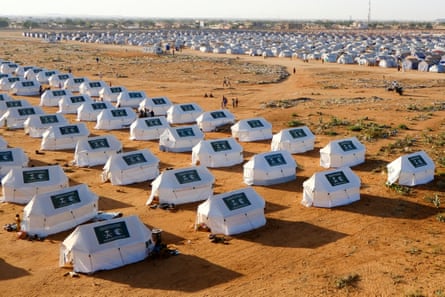
Lines of white tents display the logo of the Kingdom of Saudi Arabia
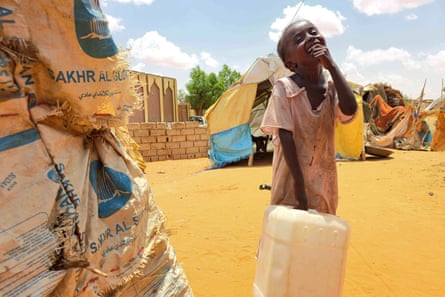
A girl laughs while carrying a plastic container
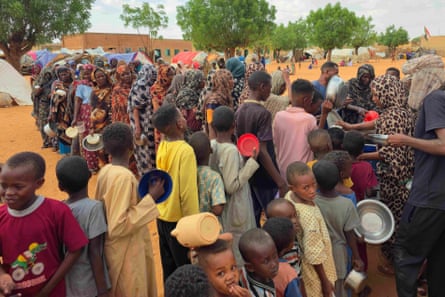
Dozens of women and children with bowls queue for food


Continue Reading‘The situation is terrible’: aid workers on life in Sudanese city pummelled by drone strikes

Overseas education project for women and girls axed by UK after two years

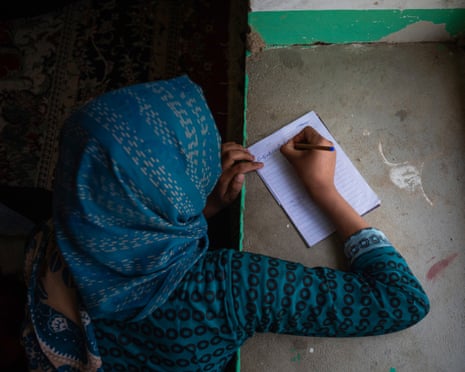
A girl in a blue patterned headscarf and dress writes in a lined notebook with a pen
theguardian.org

A leading higher education programme, aimed at keeping 1 million girls in school across Africa, Asia and the Middle East, has been axed by the British government just two years after it was announced.

The scheme, Strengthening higher education for female empowerment (SHEFE), which was unveiled with some fanfare two years ago by the outgoing Conservative government, had a £45m budget to increase access to higher education for 1 million students worldwide. It has now had its tender withdrawn, the Foreign, Commonwealth and Development Office (FCDO) said.

In May, Yvette Cooper, the foreign secretary, stressed her commitment to women and girls, declaring they were a priority at the FCDO and that she was “determined to work across borders to ensure women’s safety is a worldwide priority”.

Bambos Charalambous, the Labour MP who chairs the all-party parliamentary group on global education, said he was concerned. “I’m alarmed that a flagship higher education programme designed to empower women and girls and help them achieve their potential appears to have been scrapped because of the aid cuts,” he said.

“FCDO has acknowledged how such partnerships can transform lives, while also benefiting institutions here at home. It is vital to start thinking now about how to build back from the aid cuts to save similar projects.”

The programme was designed in part because girls who benefit from higher education are up to six times less likely to marry as children and are less likely to experience violence from a partner. Women who have advanced levels of learning also increase their earnings.

People working in the international development and education sectors claimed the move to axe SHEFE was the latest decision to severely undermine the UK’s professed commitment to women and girls.

The Home Office has blocked new study visas for applicants from Afghanistan, Sudan, Myanmar and Cameroon, meaning many women whose opportunities to study in their own countries were restricted will miss out on life-changing opportunities. British universities earn large amounts of money from foreign students, who pay much higher fees than UK-born students.

Joseph Nhan-O’Reilly, co-founder of the International Parliamentary Network for Education, said: “The government talks up its commitment to women and girls but at every turn it denies the world’s most marginalised girls the thing that everyone agrees has the biggest impact on their lives and that of their communities: access to higher education.”

Earlier this year, the FCDO announced it was cancelling the tender for its planned Education for All programme in South Sudan, Nhan-O’Reilly said. The £150m scheme had been designed to support the education of girls and children with disabilities in one of the world’s poorest countries, with one of the highest rates of children out of education and the world’s fourth-lowest literacy rate.

Last year, Charalambous wrote in the Independent that a UK programme in the Democratic Republic of the Congo, which had seen tens of thousands of girls going to school for the first time, was being abandoned. Educational work was also cut in Ethiopia, Sierra Leone, Nigeria and Zimbabwe, and the FCDO Girls’ Education Department lost 51% of its funding.

A spokesperson at Bond, a UK network for organisations working in international development and humanitarian aid, said: “Any cuts to programmes that support women and girls, including through education, threaten to reverse hard-won progress on ending gender-based violence and exploitation, and advancing gender equality worldwide.

“Last year, polling by More in Common found the majority of the UK public wanted programmes that protect women and girls’ safety to be shielded from cuts to the UK aid budget. We urge the foreign secretary to uphold her commitment to prioritising the safety, human rights and economic opportunity of women and girls around the world.”

According to analysis by Unicef, international aid to education is projected to fall by $3.2bn (£2.4bn) by 2026 – a 24% drop. It estimated that 6 million more children risk being out of school by the end of the year, with 30% of them in humanitarian settings. This is equivalent to emptying every primary school in Germany and Italy combined.

The UK had previously been one of the champions of global education, said Nhan-O’Reilly, and the cuts announced last year closely followed those in the US. “These cuts can’t be seen on their own; they’ve set the tone and influenced the posture and level of commitment from many other donors,” he said.

The prime minister, Keir Starmer, announced last year that the UK aid budget would be cut from 0.5% of gross national income to 0.3% in 2027, its lowest level since records began. The UN target is for countries to give 0.7%, something the Conservative former prime minister David Cameron pledged to do in 2012 despite protests from his own party.

The cut in 2025 was a reversal of Labour manifesto pledges and led to the resignation of Anneliese Dodds, the then international development minister.

“We’ve been absolutely flabbergasted and devastated by these cuts happening under Labour,” said Nhan-O’Reilly. “They’re clearly a break in the manifesto. This was a huge mistake and betrayal of the sector.”

An FCDO spokesperson said the aid cuts were to fund an increase in defence spending. “National security is the first duty of this government,” they said. “This does not mean stepping back from our values – protecting women and girls is now a Foreign Office priority … Funding to tackle violence against women and girls is protected this year.”

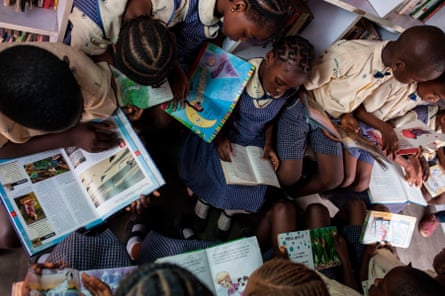
Eleven African children seen from above, all reading books while sitting in a small space

Continue ReadingOverseas education project for women and girls axed by UK after two years

‘Give him any award, and he’ll come running’: Narendra Modi racks up honours on overseas trips

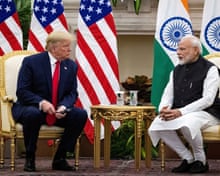
Narendra Modi stands formally with Patrick Herminie in front of the flags of their respective countries, a dark varnished wooden door, and a tall pedestal holding a pot of exotic orange and pink flowered plants. They hold the trophy between them. Herminie wears a dark suit and tie, and is much taller than Modi, who wears white with a dark sleeveless jacket.

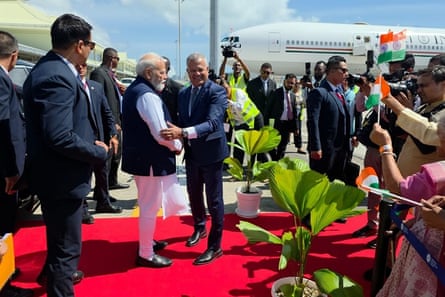
As Narendra Modi touched down in Seychelles over the weekend, the archipelago nation in the Indian Ocean swiftly bestowed one of its “highest” honours upon the Indian prime minister.

Modi beamed as he accepted the Guardian of the Blue Horizon award from Patrick Herminie, the Seychelles president, complete with a trophy and certificate.

Observers soon pointed out that several things appeared to be off about the award. The certificate misspelled “republic” as “repubblic”, and even “Seychelles” as “Seycheeles”. The award, it transpired, had only been created three days before Modi’s arrival and he was the first and only recipient.

To add to the furore, when run through software, the certificate was widely flagged as AI-generated.

The opposition Congress party were quick to jump on the controversy, claiming: “Give him [Modi] any award, and he’ll come running.”

“They were in such a tearing hurry that they even got the official name of the Republic of Seychelles wrong,” the Congress politician Supriya Shrinate said on social media.

Modi’s Bharatiya Janata party (BJP) hit back, saying it was a “proud moment for India” for him to receive the award for his “green leadership”.

As critics have pointed out, Modi has shown a notable penchant for receiving awards, at home and abroad, over his 12 years in power.

Last month, days before Modi’s visit to Israel, the Israeli parliament quickly created what it claimed to be one of the country’s highest honours, the medal of the Knesset, which was bestowed on Modi when he landed. Again, he is the only recipient to date.

In 2019, Modi also became the first recipient of India’s Philip Kotler presidential award, given to the prime minister for his “outstanding leadership of the nation”. According to the government’s press release, the honour was to be bestowed annually to the leader of a nation. However, no other leader has since been given the award and its website lies dormant.

It is privately acknowledged that accolades and awards have become an expectation during Modi’s foreign trips. Nilanjan Mukhopadhyay, the author of a biography of Modi, said the global push for prizes was symptomatic of the prime minister’s personality-driven politics.

“The intention behind collecting these awards – often bestowed in circumstances that raise eyebrows – is to convey to supporters and potential converts that Modi is being honoured across the world over because of his greatness and that India’s rising clout is because of Modi’s personality,” he said.

In the past year Modi has also become the first foreign head of state to receive Ethiopia’s Great Honour Nishan and the order of the Republic of Trinidad & Tobago.

The BJP says the awards are a recognition of Modi’s international stature.

Modi stands on a red carpet at the airport with a plane in the background as officials stand by and people wave Indian flags.


Continue Reading‘Give him any award, and he’ll come running’: Narendra Modi racks up honours on overseas trips

Côte d’Ivoire floods kill 59 as west Africa endures torrential rains

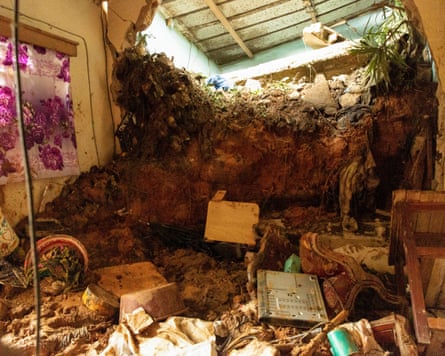
A crowd gathers in a damaged Abidjan neighbourhood with collapsed buildings, debris, and a warning sign on a green wall

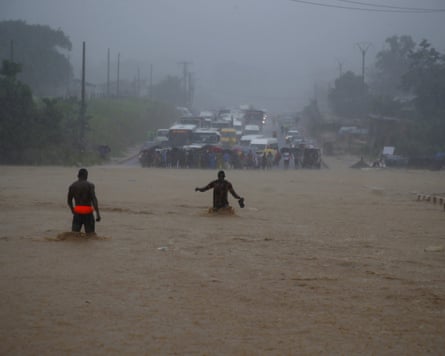
Floods in Côte d’Ivoire have killed 59 people since May, the communication minister told a cabinet meeting in Abidjan.

There are fears the toll could further rise as rescue teams continue to search for victims during the rainy season, which runs from May until July, the minister, Amadou Coulibaly, added.

The deaths are the latest in coastal west Africa, which is enduring relentless, deadly rains that authorities predict could intensify in the coming days. Footage emerged on social media of neighbourhoods submerged in water as residents waded through in search of drier areas.

In neighbouring Ghana, at least 13 people have died even as more than 400 others were rescued on Tuesday, the Ghana fire service said. The president, John Mahama, posted on X that the downpour had been approximately 140mm of rain”, significantly higher than the “highest single-day rainfall recorded last year [of] about 56mm”.

Authorities say the floods have become deadlier as climate breakdown exacerbates the frequency and impact of extreme weather. Despite Africa contributing only minimally to greenhouse gas emissions, the World Meteorological Organisation has said the continent is especially vulnerable to extreme weather events.

However, the impact of poor waste management and urban population growth on existing infrastructure has also been acknowledged as a factor.

After an aerial tour of affected areas on Monday, Mahama explained that Accra was built between the Akwapim mountain range and the Atlantic Ocean, which was not a problem when it had been a small city.

“As the population continues to increase and people continue to build, it restricts the path of the streams on the way to the Atlantic … there is also human behaviour [of] dumping garbage in the drains … Even in the air, we discovered many illicit dumping sites where wetlands are,” he added.

In Accra and the nearby city of Tema, rains submerged buildings and roads, cutting off access. In some areas fires started after electrical installations were flooded.

Floods also hit parts of Benin, Togo and Nigeria, with no confirmed casualties. In Lagos, Nigeria, where several islands are connected to a large mainland area, flooding halted operations at a transmission substation, disrupting electricity supply to several neighbourhoods.

The Nigerian Meteorological Agency (NiMet) has predicted “above normal” rainfall in Abuja and nine states this year. Some of the states are in the north, which experienced what was described as the worst flood in 60 years last year. Between last December and February, southern and northern Africa were similarly affected by deadly floods.

People wading waist deep across what looks like muddy river towards halted rows of cars
The interior of a house in Attecoube, Abidjan, damaged by floods

Continue ReadingCôte d’Ivoire floods kill 59 as west Africa endures torrential rains