Developing countries spend more repaying foreign debt than on education, UN reveals

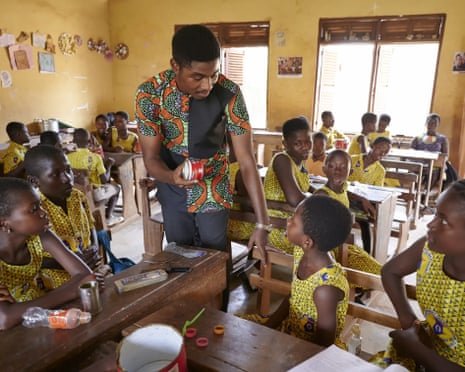
A teacher talks to children in a classroom in Ghana.
theguardian.org

Most developing countries spent less on education than they did repaying debt last year, according to the UN, at the same time as global aid to education is predicted to decline by up to 30%.

More was spent on servicing foreign debt than on education in 113 developing countries in 2025, according to research by the UN’s culture and education agency, Unesco. In sub-Saharan Africa, countries spent 3.6 times more on debt than education.

The situation is likely to be exacerbated by funding cuts, the agency warned. Low- and lower-middle-income countries have already lost 21% of the aid to education they were receiving in 2023 and could lose up to 30% by 2027. Some countries – including Afghanistan, Mali, Niger and Liberia – have already lost more than 40% in three years.

Min Jeong Kim, director of Unesco’s education division, said: “Current approaches really keep the countries trapped in a cycle of austerity, underinvestment and stalled development.

“This is really weakening countries’ stances on economic growth, eroding domestic revenue mobilisation and ultimately also diminishing their ability to handle their debt over time.”

Eighteen of the most indebted countries spent five times the amount they did on education on debt – and up to 16 times more in the case of Sri Lanka.

According to the UK-based campaign group Debt Justice, repayments by poorer countries hit a 35-year high last year, with 56 countries spending almost a fifth of their total revenue on servicing loans.

Tim Jones, policy director at Debt Justice, said: “Countries’ debt payments have ballooned following a series of shocks from Covid, energy price and interest rate rises and climate disasters.

“In the worst-affected [countries], this is leading to cuts in spending on essential services such as health and education.”

The situation has been made worse by aid cuts made by the US and Europe, which saw funding to education drop by $600m (£470m) in 2024, the last recorded figures, and is expected to have fallen further in 2025.

The combined impact of aid cuts and public spending being redirected to debt servicing has meant disruption to education systems, with schools often not receiving sufficient funds to operate and teachers not being paid.

In the long term, there is concern that weakened education systems affect indebted countries’ ability to develop their economies and better equip themselves to handle debt burdens in the future.

Unesco said there needed to be a change to how debt relief was structured, shifting away from short-term relief to long-term arrangements that allowed countries to continue funding public services.

Jones said that another key factor in changing debt relief was ensuring that private lenders, often based in Britain and the US, were not able to block agreements to extract more profit for themselves, as they recently did with Ethiopia.

“The UK needs to use its presidency of the G20 in 2027 to get major changes to the debt-relief process, including more debt cancellation and a faster process,” he said. “Central to this is incorporating the process into English law, so that private creditors can no longer disrupt and hold out from the debt relief.”
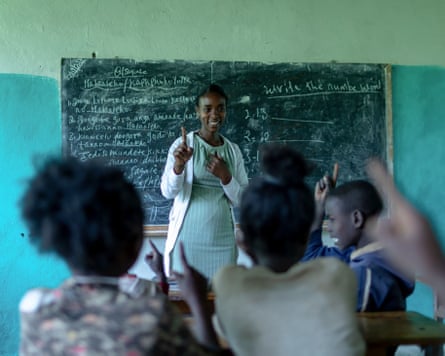
A female teacher stands in front of a blackboard teaching a class of children.

Continue ReadingDeveloping countries spend more repaying foreign debt than on education, UN reveals

Furore in Nigeria over fake federal agency set up in government HQ

President Bola Ahmed Tinubu in glasses and a traditional cap sits at a desk with a microphone, wearing white robes

A fictitious federal entity that was allocated 1.3 billion naira (£705,248) in Nigeria’s 2026 budget has precipitated a political storm in Africa’s largest democracy in the run-up to January’s general election.

The fake agency came to light last October when Femi Gbajabiamila, the president’s chief of staff, wrote to the police alleging that his signature, along with official seals and reference numbers, had been forged by Adeniyi Adeyemi Matthew, who was claiming to have been appointed by the presidency to head the presidential foreign intervention promotion council (PFIPC).

The case is due to be heard in a court in the capital, Abuja, on 27 July, more than six months after the police filed an eight-count charge including criminal forgery, impersonation and obtaining by false pretence against Adeyemi and two others.

In a 1 July statement, the Nigerian presidency also claimed Adeyemi had met ambassadors without the knowledge of the foreign affairs ministry and misled the country’s accountant-general’s office into opening accounts for PFIPC with the central bank and 33 commercial banks. The actual Nigerian investment promotion council had also reportedly raised an alarm about the similarities with the PFIPC.

Apart from being included in the budget, the PFIPC was also allocated office space in the federal secretariat in Abuja, a huge complex housing the headquarters of Nigeria’s civil service and many government ministries and agencies. That has raised questions about how Adeyemi was able to gain access, with some critics speculating collusion with officials at the highest echelons of government.

“Politicians and members of the public who are weaponising Adeyemi’s claim against the chief of staff should refrain from swallowing his narrative hook, line and sinker,” the presidency statement said, defending Gbajabiamila.

Local reports say Adeyemi has claimed he was given the appointment letter by Gbajabiamila, who has denied knowing him or ever being in touch.

On Monday, President Bola Tinubu directed the independent corrupt practices and other related offences commission (ICPC) to open a probe. Days later, a Senate motion to independently investigate the presidential foreign intervention promotion council (PFIPC) did not pass. Meanwhile the House of Representatives set up a committee to question Abubakar Atiku Bagudu, the minister of budget and economic planning.

The presidency and supporters of the ruling party have pointed out that Adeyemi had previously misrepresented himself as the newly elected president-general of a UN youth agency called World Youth Organisation back in 2017. His aides had said he was seeking permission from the UN security council to appoint staff across the world.

“The 967 nominees will work with my office across the globe,” one of his representatives was quoted as saying in Nigerian daily Punch. “This will enable the organisation to function effectively and bring coordination across the world.” It later turned out that the WYO was not affiliated with, or part of the UN.

Critics of the Tinubu administration have pointed to the controversial record of key government officials mentioned in the scandal.

In 2007, the supreme court of the US state of Georgia handed Gbajabiamila a three-year suspension from practising law in Atlanta after failing to pass on $25,000 awarded as an injury settlement to a client four years earlier. Gbajabiamila paid back the money in 2006, and later admitted he violated professional conduct rules, but blamed the incident on a paralegal who “closed the files as per my instruction, but unfortunately never paid the woman”.

Bagudu spent six months in a federal prison in Houston in 2003. According to the US Department of Justice, he was arrested for being an alleged accomplice to former dictator Sani Abacha who “embezzled, misappropriated and extorted billions of dollars from the government of Nigeria” amounting to more than $282m in one instance. Bagudu reportedly agreed to return $163m to Nigerian authorities, who in turn dropped all cases against him, leading to his release without admission of wrongdoing.

The latest scandal has piled pressure on Tinubu ahead of January’s election, thrusting endemic corruption in Africa’s largest economy back into the spotlight.

Former vice-president Atiku Abubakar, who is due to challenge Tinubu’s re-election bid in January, called on his rival to establish an independent commission of inquiry comprising neutral parties such as civil society leaders, opposition parties and the Nigerian Bar Association, to establish whether Adeyemi acted alone.

“Nigerians deserve the whole truth, not carefully scripted press statements,” his spokesperson Phrank Shuaibu said earlier this month, “We therefore demand a truly independent investigation that follows the evidence wherever it leads. No sacred cows. No political protection. No selective justice.”


Continue ReadingFurore in Nigeria over fake federal agency set up in government HQ

LGBTQ+ cruise ship refused entry to Egypt days after Turkey turned it away

The Scarlet Lady cruise ship towers over historic waterfront buildings in Portsmouth, dwarfing the structures along the shore

A LGBTQ+ cruise ship blocked from Turkish waters earlier this week has been refused entry into Egypt.

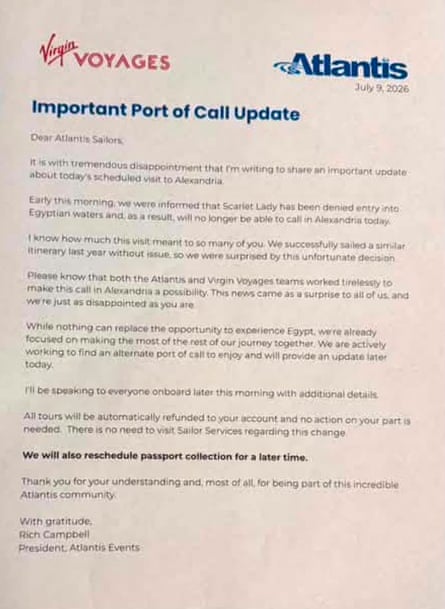
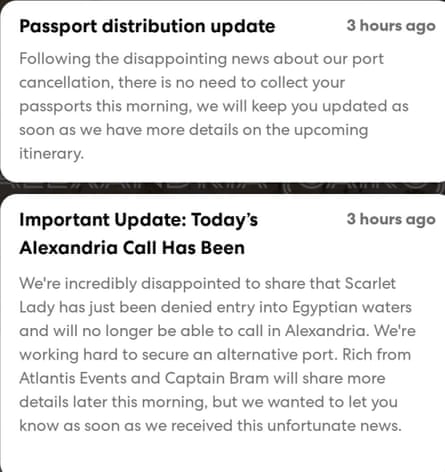
The Scarlet Lady’s 2,000 passengers, including the Broadway performer Patti LuPone, woke on Thursday morning to find a note placed under their cabin doors informing them that the ship was urgently looking for alternative ports.

“Early this morning, we were informed that Scarlet Lady has been denied entry into Egyptian waters, and, as a result, will no longer be able to call in Alexandria today,” Rich Campbell, the chief executive of Atlantis Events, the tour group that chartered the Virgin Voyages ship, informed passengers.

“I know how much this visit meant to so many of you. We successfully sailed a similar itinerary last year without issue. So we were surprised by this unfortunate decision,” he wrote.

The note concluded: “Please know that both the Atlantis and Virgin Voyages teams worked tirelessly to make this call in Alexandria a possibility. This news came as a surprise to all of us, and we’re just as disappointed as you are.”

The visit to Egypt was already a change to the planned tour, hastily arranged after the ship was refused entry to Turkey. No official reason has yet been given for the decision of the Egyptian government.

The 10-day “Athens to Venice” cruise was banned from Turkey after authorities published a statement online saying the cruise was chartered “by groups known for behaviours that do not align with the structure of our society and our moral values”.

The ship’s arrival had been cancelled after it “sparked significant public concern”, they added. “There is absolutely no possibility of the group in question visiting our province for an event of this nature.”

Randy Slovacek, who is on the cruise, wrote on his blog: “In the company’s 36-year history, Atlantis had never had a ship denied entry to dock. And now it’s happened in two countries in one week.

“Trust and believe, me and my fellow passengers will be fine: if they don’t want our tourism, we will sparkle and spend elsewhere. As my fellow blogger Joe Jervis once wrote: ‘They wish we were invisible. We’re not. Let’s dance.’”

Kyle Olsen, owner of Hermes Holidays, another LGBTQ+ tour company, said he believed that had Turkey not refused entry to the ship earlier this week, Egypt would not have issued its ban. “I worry that other countries are going to be emboldened in turn to ban gay cruises from their ports as well,” he said.

“This is a sad representation of the way the world is going. Successive governments are falling to rightwing groups and the rights of LGBT+ people are being taken away as a result across the globe.”

Olsen said that after the actions of Turkey and Egypt, he would not be recommending the countries to his customers. “But it’s important to note that the views of the government are not necessarily reflective of the views of the peoples of those countries,” he said. “We’ve been to Turkey and Egypt many times in the past and have found the people very warm, friendly and engaging.”

Olsen, who has friends onboard the Scarlet Lady, said the Egypt stop had been expected to be a high point of the tour by the passengers, who had got up at 6am to be ready for the day. “This was literally a last-minute call by the Egyptian government,” said Olsen. “The night before, everything was fine.

“Lots of passengers had paid a lot of money for private tours to see the pyramids and the museums. It was going to be the trip of lifetime but now they’re in limbo.”

The ship has now been rerouted a second time, and will be docking in Chania, Crete, on Friday and Montenegro on Sunday.

Campbell called the decision “stunning”, telling CNN: “The reasoning behind it is that it’s a gay group.”

Atlantis had chartered cruises to Turkey 13 times over the past 25 years without incident, he added, and said calls involving the US embassy in Turkey had failed to reverse the ban.

LuPone, the 77-year-old Tony award winner who is performing on the ship, went on Instagram to share her shock regarding the news on Saturday. “The Atlantis cruise I am performing on next week has been banned from entering Turkey,” she wrote. “A ship – a magnificent ship – full of gay men. And me. Denied entry to Turkey simply because of who is onboard.

“I am furious, but I am sailing, as the ship will make other ports of call. I am ready to perform for all the wonderful men on this Atlantis cruise, who deserve so much better than this.”

Atlantis Events and Virgin Voyages have been approached for comment.

The letter addressed to passengers
Updates sent to the Scarlet Lady’s 2,000 passengers


Continue ReadingLGBTQ+ cruise ship refused entry to Egypt days after Turkey turned it away

Species’ ingenious survival strategies no match for human destruction, red list reveals

A plump frog with large bulging eyes sits on sandy ground among yellow succulent plants

Life has colonised every corner of the planet by evolving ingenious survival strategies but these are increasingly being overwhelmed by destructive human activities, this year’s red list of endangered species has revealed.

Many snails, limpets and clams have adapted to life at crushing depths in the oceans on hydrothermal vents where water temperatures can reach 450C (842F). But an assessment for the red list found that two-thirds of the hundreds of mollusc species found only on deep sea vents were at risk of extinction because of deep-sea mining.

Mining for diamonds has put another extraordinary creature at risk of disappearing – the desert rain frog. Most frogs rely on water for survival but the bulbous desert rain frog has evolved to need almost none. It hides from the southern African sun by burying itself deep in the sand, coming out only at night to hunt insects.

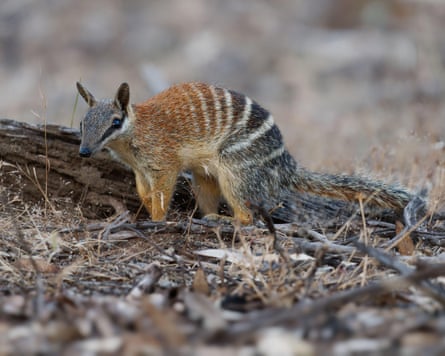
However, dwindling species can be saved, the International Union for Conservation of Nature (IUCN), which produces the red list, said. The new list shows the numbat, a stripy, termite-eating marsupial from Australia, has come back from the brink thanks to protection from feral cats and foxes.

“Life on Earth has adapted to survive in the most hostile and unusual habitats [but] as pressures on biodiversity mount across the planet, even the creatures with the most ingenious survival strategies are under threat,” said Dr Grethel Aguilar, the IUCN director general. “But there is a clear path out of the biodiversity crisis: nature conservation works. By protecting the astounding range of biodiversity on this planet, we can preserve a welcoming environment for humans and wildlife alike.”

An IUCN update in April declared emperor penguins officially in danger of extinction owing to the mass drowning of chicks as sea ice is melted by the climate crisis.

More than 200 species of mollusc are known to live only on hydrothermal vents, where water heated by volcanic rocks jets out from the seabed. Many have been discovered only in the last decade but already face extinction.

The exploration and extraction of deep-sea minerals throws up sediments that smother the animals. One snail, Lirapex felix, is classed as critically endangered because of mining activity in the Indian Ocean.

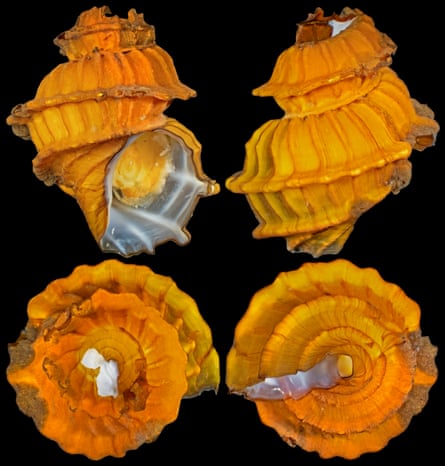
However, more than 30 vent species are not in danger, as they live in marine protected areas where mining is not allowed. These include an ornately shelled snail, Provanna exquisita, that lives only in the Mariana Arc of Fire national wildlife refuge in the Pacific Ocean.

“This global assessment reveals that [vent] molluscs are one of the most highly threatened of all animal groups,” said Prof Julia Sigwart at Senckenberg Nature Research, the IUCN red list partner that coordinated the assessment. “It provides important information as the International Seabed Authority meets in Jamaica this month.” The IUCN voted for a moratorium on deep-sea mining in 2021.

The desert rain frog is classed as vulnerable owing to diamond mining and energy infrastructure expansion into its range along the west coast of South Africa and Namibia. There is further pressure on the frog because of rising demand from the exotic pet trade following a viral video of the species squeaking its distress call.

The good news on the numbat comes after decades of conservation work, which has helped numbers rebound from a low of just 300 in the late 1970s to between 2,000 and 3,000 today. The numbat has moved from endangered to near threatened on the red list.

The impact of feral cats and red foxes has been reduced by baiting and predator-proof fencing, as well as captive breeding at Perth zoo and translocations from healthy groups. As a result, at least five more self-sustaining populations have been established. However, the species occupies only 0.04% of its original range across southern Australia, meaning continuing conservation work is essential, experts said.

Another five Australian marsupials have been confirmed as extinct on the red list, with no sightings for at least 60 years. The crest-tailed, southern, northern and little mulgaras were rat-sized carnivores, while the little bettong was a rabbit-sized jumping marsupial. They are likely to have fallen prey to feral cats and foxes. More than 40 modern mammal extinctions have been recorded in Australia.

“The [numbat] assessment shows that long-term conservation effort works; without it, invasive cats and foxes will continue to drive Australia’s small marsupials and native rodents to extinction,” said Prof John Woinarski, co-chair of the IUCN species survival commission group on Australasian marsupials and monotremes.

“Continued management is vital not only to maintain the numbat’s unique evolutionary line as the last surviving member of the Myrmecobiidae family, but also to support its role in maintaining a healthy ecosystem, as digging for the termites it eats increases rain penetration into the soil, helping protect woodlands,” he said.

The IUCN red list includes 175,909 species of which 49,505 are threatened with extinction, although many species have yet to be formally assessed.

Small four-legged marsupial with grey head and reddish-brown shoulders that changes along their back into grey/black body with white stripes. It has a bushy tail.
Snail with ornate orange-coloured shell

Continue ReadingSpecies’ ingenious survival strategies no match for human destruction, red list reveals

Catnip lotion as effective as Deet at repelling mosquitoes, study finds

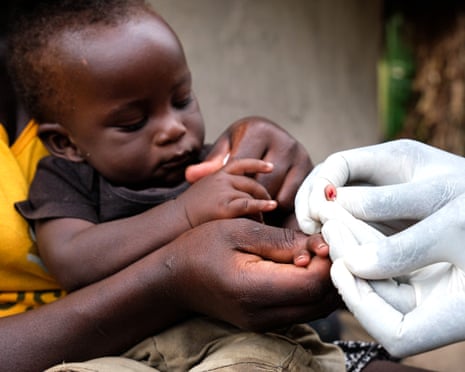
A small baby in uganda wearing a yellow dress, held by its mother while a health worker wearing white surgical gloves takes a small sample of blood from the baby's hand
theguardian.org

A homegrown catnip lotion has proven “just as effective as Deet” as a mosquito repellant in trials carried out in Uganda.

Catnip, or Nepeta cataria, is a common herb from the mint family. The chemical in the plant that causes feline euphoria – nepetalactone – also has insect-repelling properties but this has not previously been commercialised.

New tools are vital in the fight against malaria, the disease spread by mosquitoes that infects about 282 million people a year and killed 610,000 in 2024 – the majority of them young children in African countries. There are concerns about rising resistance to insecticides, as well as the frontline drugs used to treat the disease.

In a study presented at the Society for Experimental Biology conference in Florence on Tuesday, a team working between Uganda and Wales found mosquitoes seeking a blood meal were less likely to land on people wearing lotions made from catnip.

Dr Simon Scofield, a senior lecturer at Cardiff University, said: “We found that a 6% catnip oil was just as effective as Deet, and the 2% catnip oil was only marginally less effective than that.

“Deet is out of the price bracket for most rural Ugandan subsistence farmers, so buying commercially available mosquito repellents is just not practicable.

“We wanted to make a repellent, which is highly efficacious, but also allows local people to be involved in the production cycle so that it costs a minimal amount of money,” he said.

Whether or not local cats were more likely to follow lotion wearers was not part of the research, Scofield admitted. “We did not conduct any experiments to see if it is attractive to cats, but given that the active ingredient [nepetalactone] has well-known cat-attractive properties, I would expect they would quite like it,” he said.

In the first part of the evaluation, laboratory tests confirmed that catnip oil could be an effective insect repellent. Researchers then successfully tested the catnip repellent in the field in eastern Uganda by checking how many mosquitoes landed on volunteers’ legs over an evening.

Some volunteers used Deet (the world’s most widely used and effective insect repellent), some used a lotion with 2% concentration of catnip, others a 6% catnip lotion, while others used placebo creams.

The research also established that the lotion could be made locally by a community enterprise. So far it has been distributed for free, using grant funding, but the next phase of the project will see production increased and the lotion sold to create a sustainable income for workers.

“Once we know that we can sell and distribute the repellent at a low cost, that should generate a self-sustaining system where the money is flowing back to everybody at each stage in the development,” said Scofield.

The Deet (N,N-Diethyl-meta-toluamide) lotion used for comparison in the trial contains 15% Deet and is the most widely available in Uganda. Travellers from the UK visiting malaria-endemic regions are advised to use stronger repellents of at least 50% Deet.

Swai Kyeba, a research entomologist from the Ifakara Health Institute in Tanzania who was not involved in the study, said: “New vector-control tools are necessary in the fight against malaria, especially those that are cheap and locally produced, to help improve accessibility.

“However, a challenge with topical repellents is low compliance because they require regular application. This is why they remain a complementary tool in the fight against malaria.”

He urged further research on Ugandan households using currently available repellents before the catnip lotion production was scaled up.

A mint-like plant in flower.
A cat lying amid flowers

Continue ReadingCatnip lotion as effective as Deet at repelling mosquitoes, study finds

What will define Elon Musk’s legacy? Doge cuts to USAID Ebola programs

four people in protective clothing hold the lid of a casket

Elon Musk has an Ebola problem. SpaceX stock dropped precipitously after its initial public offering, and Tesla faces a wave of lawsuits. But instead of focusing on his companies, Musk has posted frequently on X about the US Agency for International Development (USAID), which he helped dismantle – or, in his words, feed into the woodchipper – last year.

“Elon’s USAID crash-out over the past week has been a thing to behold,” said Jeremy Konyndyk, a former top USAID official who oversaw the agency’s Ebola response in 2014-2015 and the president of Refugees International. “In a way, it’s helpful that Elon is doing this, because it’s putting attention back on the issue of what he did last year.”

Musk has said his critics “cannot cite a single name of someone who died” and “If there were, it would be worldwide headline news!” When confronted with the names – including those of children who died because of the cuts – Musk called a journalist “an utter piece of shit and a liar” and “utterly evil”. Musk has claimed, without evidence, that US tax dollars went to arming militants and “corrupt politicians”.

Musk’s cuts, through the short-lived US “department of government efficiency” (Doge), have come under renewed scrutiny during the Ebola outbreak in the Democratic Republic of the Congo (DRC). Last year, Musk admitted to “accidentally” cutting Ebola detection and response programs.

“This is one of the reasons why there was not enough surveillance and preparedness for the outbreak of Ebola,” said Davide Rasella, a research professor at the Catalan Institution for Research and Advanced Studies and head of the Global Health Impact Assessment and Evaluation Group at the Barcelona Institute for Global Health (ISGlobal) in Spain.

If global health programs hadn’t been slashed in the DRC and elsewhere, the Ebola outbreak would have been detected much earlier, Konyndyk said. “I’m very confident about that,” he added.

The cuts have affected global health, nutrition and education around the world.

One Lancet study estimated there would be 14 million deaths, including 4.5 million child deaths, if USAID were abolished entirely. When Ro Khanna, a Democratic congressman from California, cited the study, Musk threatened to sue, and he doubled down on his claims that Doge did nothing wrong.

Rasella, one of the authors of the Lancet study, was unfamiliar with the Khanna-Musk conflict, but he stood by the estimates.

Musk “uses science for launching rockets”, Rasella said. “When we speak about public health and global health, we use the same statistical mathematical tools that we use to launch rockets into space.”

It’s difficult to pinpoint exactly how many people will die as a result of these cuts, said Rasella.

“But the important thing is the scale,” he said. There will probably be millions of deaths over the next several years, he added. “This is really unquestionable.”

Some of these losses are already occurring.

“People are absolutely dying. They’re dying in significant numbers in some places,” Konyndyk said.

Musk’s demolition of USAID, and the resulting suffering and death, “is going to be a defining part of his legacy, and I do wonder if that’s why he’s scrambling so hard to rewrite that history now”, Konyndyk said.

Musk took a model he used in his companies to “cut until people scream, and then when people scream, you’ve cut too far, and then you restore”, Konyndyk said. “That’s not how public funding works. Here the cost is literal human lives.”

If not for Musk, USAID would probably still exist, Konynydk said. Without him, and administrators like Pete Marocco, USAID would have taken “some huge hits”, but would have survived in some form, like other health and science agencies – “much diminished, much weaker, but still existing”, Konyndyk said.

“His personal investment in that project gave it the reach all the way up to the White House,” he added.

Congress could have stopped the dismantling of USAID – and it still could, Konyndyk said. USAID is required to exist by law, and what few aid programs still operate have been choked by the slow release of funding from the state department, he said.

After the Covid pandemic caused about 20 million deaths around the globe, it was “absurd” to cut programs that would prevent and prepare for the next pandemic, Rasella said.

“When you disrupt a single piece of that [aid], you can really create more and larger damage to the entire system,” Rasella said. “This is just the beginning.”

But that means there’s still time to act and avert some of the worst effects of ending foreign aid, Konyndyk said.

“We have a window here to try and bring some of this back before the worst of the harms set in,” he said.

Continue ReadingWhat will define Elon Musk’s legacy? Doge cuts to USAID Ebola programs