Uganda copying Russia and China with new bill designed to crush dissent, say critics

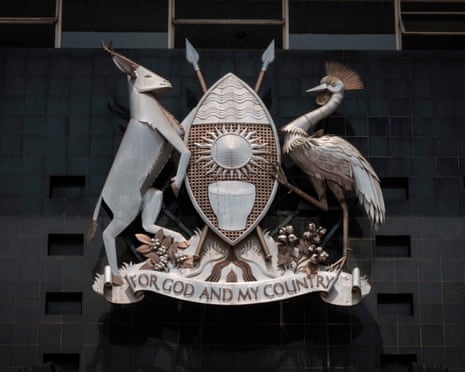
Uganda's coat of arms displayed on the Parliament building in Kampala
theguardian.org

Ugandan opposition figures, human rights organisations and legal experts have condemned a sweeping bill that proposes up to 20 years in prison for promoting “foreign interests”, and imposes restrictions on a broad range of people and organisations that work with or receive funding from overseas partners.

The protection of sovereignty bill 2026 is being fast tracked through parliament, with debate expected to conclude before the presidential swearing-in on 12 May.

Internal affairs state minister Gen David Muhoozi told a parliamentary committee on 23 April that the bill would strengthen safeguards against foreign influence that could destabilise national security, economic stability and social cohesion. But critics have said that, like similar foreign agent laws brought in by other authoritarian governments, the proposed legislation is designed to restrict civil society, media and dissent by cutting off funding that supports activities such as legitimate political opposition and holding the government to account.

“This law is a copy and paste of Russian and Chinese laws adopted to liquidate opposition and civil society organisations,” said Joel Ssenyonyi, Uganda’s leader of the opposition.

“Passing this bill will not protect Uganda’s sovereignty, it will kill multiparty funding, plunge thousands more Ugandans into absolute poverty, chase away foreign investment, and turn our country into an international pariah. Clearly this bill is intending to stifle dissent,” he said.

The controversial bill’s vague language and broad definitions puts a wide range of activities, people and organisations at risk of criminalisation, including those involved in advocacy, journalism, or public discourse and as well as private corporations. An earlier draft defined Ugandan citizens living outside the country as foreigners. That has now been removed after attorney general Kiryowa Kiwanuka tabled a number of amendments to the bill on 30 April in response to the public outcry.

The bill comes at a time of heightened political tension, with opposition figures facing charges linked to foreign support, and the suspension of human rights, media and election organisations before the January general election.

President Yoweri Museveni has repeatedly warned against what he describes as foreign interference in Uganda’s affairs, linking external actors to political unrest and efforts to influence the country’s direction.

“Uganda is not a neo-colony where foreign entities can dictate its path,” Museveni said after the 2024 youth protests.

Asuman Kiyingi, a former government minister and advocate, said the bill would further restrict legitimate protest and crush dissent. “This is not regulation; it is encirclement. Having long utilised the Public Order Management Act to throttle physical assembly, the state now seeks to seize the financial and intellectual lifeblood of civic engagement. The objective is clear: to ensure no independent centre of mobilisation can attain the capacity to challenge the status quo.”

Human Rights Watch said the bill threatens fundamental rights and called on Uganda’s parliament members to reject it.

Key provisions within the bill include a cap on financial assistance above 400m Ugandan shillings (£79,000) within any 12-month period; and the authorisation of inspections of premises and access to documents.

In a letter to parliament dated 23 April, the World Bank warned that some provisions could criminalise a broad range of its “routine development activities”.

“By classifying international organisations as ‘foreigners’ without qualification, the bill subjects them to all of its substantive restrictions … and criminal penalties,” the letter read.

Uganda receives hundreds of millions of dollars in external financing that supports health, education and civil society, making foreign funding a central pillar of the country’s development model.

Julius Mukunda of the Civil Society Budget Advocacy Group warned that wide scale restrictions imposed by the bill could significantly reduce inflows, with ripple effects across the economy.

“Restrictions of this magnitude risk weakening the shilling and slowing economic activity, particularly where foreign capital fills critical domestic gaps [through loans, private sector investment and infrastructure financing],” Mukunda said.

In response to the fierce backlash against the bill Museveni said in a statement on X on 30 April that concerns over remittances and foreign investment were “a lot of noise” and not what he intended for the bill, but defended its core mission. “Independence means the right to make our own decisions if necessary and learn from them. Sovereignty means please leave us alone. Do not fund groups to influence our decisions as a country.”

Other amendments tabled by the attorney general exempted financial institutions supervised by the Central Bank, medical and education facilities, and faith-based organisations. . Education and health organisations had warned that the legislation could disrupt partnerships underpinning research and services targeting HIV, tuberculosis, malaria and maternal health, many of which rely on overseas donor funding. NGOs and other international partners could still come under scrutiny if they are deemed to be furthering “the interests of a foreigner against Uganda’s national interest”.

Critics have strongly rejected the government’s reassurances, calling the proposed change to the law a constitutional coup. “The bill replaces ‘power belongs to the people’ with ‘power belongs to government’. It does not adapt to a changing world; it adapts the constitution to the fears of those in power. That is not legislation for sovereignty – it is legislation against the sovereign people of Uganda. The very definition of a coup d’état,” said Anthony Asiimwe, the vice-president of Uganda Law Society.

Additional reporting by Samuel Okiror

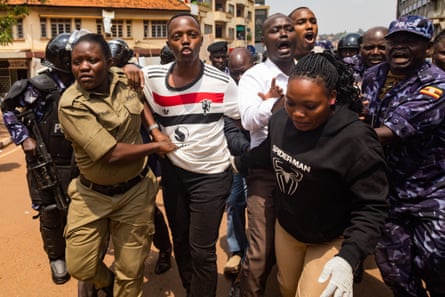
A group of shouting men are lead away by polie officers
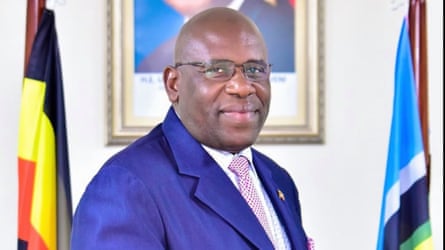
Portrait of Asuman Kiyingi wearing suit and glasses, standing between two flags
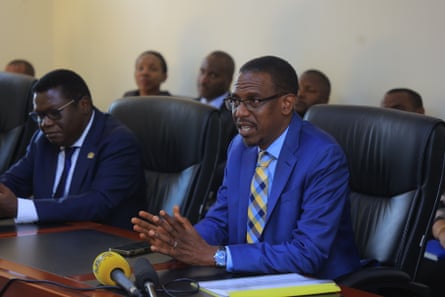
Kiryowa Kiwanuka sitting in front of a microphone in a conference room.

Continue ReadingUganda copying Russia and China with new bill designed to crush dissent, say critics

Iran war may cause food shortages in Africa, world’s largest fertiliser firm says

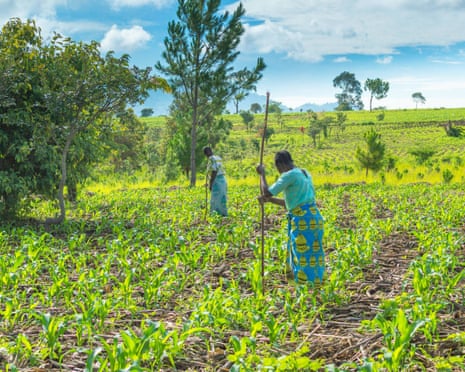
Farmers add fertiliser to a maize field using traditional methods.

The Iran war could have “dramatic consequences”, causing food shortages and price rises in some of Africa’s poorest and most vulnerable communities, the head of the world’s largest fertiliser company has said.

Svein Tore Holsether, the chief executive of Yara International, said world leaders needed to guard against soaring prices and shortages of fertiliser causing a de facto global auction that would leave the poorest countries, particularly in Africa, scrambling for supplies they could ill afford.

“The most important thing we can do now is raise the alarm on what we are seeing right now – that there is a risk of a global auction on fertiliser that means it becomes unaffordable for those most vulnerable,” he said.

“Africa is actually quite well positioned to be a major food producer, not only for self-sufficiency, but even for exports to the rest of the world, but the reality is that they are massive food importers.

“But we need to be aware in this part of the world of the potential consequences that if we get to a global auction on food, there will not be a famine in Europe – but we need to be aware of who we are taking the food away from.”

Yara International is a Norwegian multinational with plants in 60 countries and sales in 140.

Holsether stopped short of predicting actual food shortages in parts of Africa but said he was in London to draw attention of world leaders to the possibility of things spiralling before action was taken.

“It is important to communicate the message about the danger of what potentially could happen before it is too late,” he said.

The financial intelligence company S&P Global said the impact of the war was already deepening into supply chains.

Chris Rogers, the head of supply chain research at S&P Global Market Intelligence, said: “Food supply chains face both direct and indirect challenges from fuel and fertiliser restrictions.

“The variability in Africa’s dependence on Middle East nitrogenous fertilisers is high, with Ethiopia and Kenya heavily exposed in sub-Saharan Africa.”

With 35% of the world’s supply of urea, a key ingredient in fertiliser coming from Gulf states, Yara has already seen supplies choked and the price of urea up by between “60% and 70% since the US and Israel launched their war on Iran at the end of February”.

The increase in price “has some rather dramatic consequences for those that cannot afford them”, Holsether said.

Then there is the issue of squeezed reserves and production.

“At some point you run out of inventory space,” said Holsether. “And there’s a limit to how much you can store within the production plants.”

In a double whammy, supplies of ammonia, a foundational raw material for nitrogen-based fertilisers, have also been torpedoed by the war.

Ammonia is a toxic substance that can cause serious respiratory tract damage and keeping inventories in war is so risky, some countries like Qatar have suspended production entirely.

“We are losing production every day. It will take weeks or months to restart,” said Holsether in relation to the general fertiliser production.

Fertilisers used for the sowing season, which is starting soon in sub-Saharan Africa, is one challenge for local farmers but then they face the issue of building stockpiles this summer for 2027’s crops, a routine practice in farm planning.

The EU was already taking action to help farmers, but the same support must be given in sub-Saharan Africa, Holsether said. “We need to treat farming like a business.”

Only this week the EU announced it was loosening state subsidy rules for industries along with grant aid of up to €50,000 (£43,200) for individual farmers for the extra cost of fuel or fertiliser caused by the Iran war. But in Africa those supports do not exist. They are also started from a point of compromised soil health and lack of food reserves.

“In Europe soil conditions and farming are quite optimised already, so farmers are able to reduce fertiliser consumption somewhat without dramatic consequences on the yield,” Holsether said.

“But that’s not the same in other parts of the world. You are under-fertilising to begin with. Africa, that’s where I’m most worried right now. Yet again, we are in a situation where the most vulnerable will pay the highest price.”

Continue ReadingIran war may cause food shortages in Africa, world’s largest fertiliser firm says

BAE faces £120m lawsuit over decision to scrap support for aid aircraft

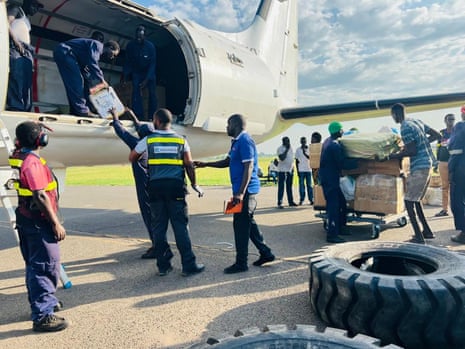
Ground crew unloading cargo from Kenyan startup Encomm Aviation's BAe ATP aircraft
theguardian.org

Britain’s biggest weapons manufacturer, BAE Systems, is facing a £120m lawsuit after scrapping support for aircraft used to deliver aid to some of the world’s neediest countries.

EnComm Aviation, a Kenya-based aid cargo operator, claims the decision forced the cancellation of humanitarian contracts and reduced supplies to South Sudan, now threatened by famine, Somalia and the Democratic Republic of the Congo (DRC), among others.

BAE Systems recently announced record sales of more than £30bn, driven by escalating defence spending as global conflicts and heightened military tensions fuel demand.

EnComm announced it is taking legal action against BAE, alleging a breach in its duty of care after the company withdrew support for its Advanced Turbo-Prop (ATP) aircraft.

Between March 2023 and last September, EnComm’s fleet of ATP aircraft delivered 18,677 tonnes of aid to Somalia, South Sudan, Tanzania, the DRC, Central African Republic and Chad.

The aircraft was ideal for aid missions to remote locations because it could operate on short airstrips. Each aircraft could carry a load of 8.2 tonnes.

EnComm cancelled several large humanitarian contracts after BAE’s decision, including a UN programme to fly aid to 12 destinations across Somalia where 6.5 million people are facing acute food insecurity.

EnComm Aviation’s director, Jackton Obuola, said: “BAE’s pursuit of profit has cut off humanitarian aid for those most in need, destroying lives and our business in the process.”

Obuola described the arms manufacturer’s decision to surrender the certificate that revoked the airworthiness of the ATP as “virtually unprecedented in aviation history”, and came at a time when humanitarian relief was being slashed globally.

A pre-action letter sent by lawyers acting for EnComm to BAE Systems had referenced emails and meetings with BAE’s senior leadership that it says had led the cargo operator to believe the arms manufacturer would provide continued support for its ATP for at least five years.

“In order to get answers we have been forced to bring this claim and hear BAE’s explanation in court,” Obuola added.

In its claim with the UK high court, EnComm Aviation alleges BAE’s decision rendered its aircraft fleet as of no real value beyond scrap and is seeking £120m in losses and damages.

A BAE Systems spokesperson said: “We do not comment on ongoing litigation.”

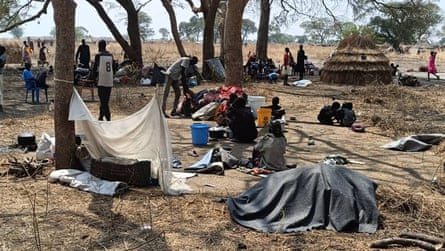
People sit under makeshift shelters in a sparsely-wooded area

Continue ReadingBAE faces £120m lawsuit over decision to scrap support for aid aircraft

South Africa deports Mugabe’s son for unrelated offences after employee shot at family home

Bellarmine Chatunga Mugabe appears in court in Johannesburg for sentencing.

Two months after an employee was shot in the back at the Mugabe family home in a wealthy suburb of Johannesburg, a South African court has fined and ordered the deportation of Robert Mugabe’s youngest son over two unrelated charges.

Bellarmine Chatunga Mugabe, 28, and his cousin Tobias Mugabe Matonhodze, 33, were initially both charged with attempted murder after the incident on 19 February.

Earlier this month, Matonhodze pleaded guilty to attempted murder, firearms offences, defeating the ends of justice – as the gun was never found – and contravening immigration law. He was sentenced on Wednesday to three years in prison.

Mugabe was ordered to pay a fine of 400,000 rand (£17,851) for pointing a toy gun in a way that was likely to be seen as real firearm, over a separate 2023 incident. He was also fined 200,000 rand (£8,919.50) for breaking immigration law. He had pleaded guilty to both offences. The judge ordered police to take him to Johannesburg’s international airport to be deported to Zimbabwe.

Magistrate Renier Boshoff told Mugabe: “I do not know whether the second accused took the rap for you, and I can only act on what is before me.”

The magistrate said the sentences were mitigated by the two men pleading guilty to the offences they were convicted of, the time they had spent in prison since the shooting on 19 February, and because the victim, 23-year-old Sipho Mahlungu, wanted to withdraw the charges after being paid by Mugabe and Matonhodze. Prosecutors had asked for lengthy jail sentences for both men.

Investigating officer Raj Ramchunder told the 24 April sentencing hearing that Mahlungu was paid 250,000 rand (£11,150), with a further 150,000 (£6,690) promised.

Robert Mugabe ruled Zimbabwe for almost 40 years, initially as a hero, having ended white minority rule in Zimbabwe. His rule turned authoritarian, and he presided over hyperinflation and economic collapse. He was deposed in a coup in 2017 and died two years later aged 95.

Mugabe and his older brother, Robert Junior, 34, became notorious in the 2010s for sharing their lavish lifestyles online.

In 2017, their mother, Grace Mugabe, avoided a court case in South Africa by invoking diplomatic immunity. The model Gabriella Engels accused the former first lady of hitting her with an electric cable until she bled.

The magistrate said he also took into account the fact that Mugabe and his cousin were first-time offenders. Mugabe has previously been in trouble with authorities in Zimbabwe.

According to Zimbabwean media reports, in 2024 he was arrested for allegedly assaulting a police officer at a roadblock. In June last year, he was arrested and bailed for allegedly assaulting a security guard at a goldmine. It was not immediately clear what the status of those two cases was.


Continue ReadingSouth Africa deports Mugabe’s son for unrelated offences after employee shot at family home

South Africa deports and fines Mugabe’s son after employee shot at family home

Bellarmine Chatunga Mugabe appears in court in Johannesburg for sentencing.

Two months after an employee was shot in the back at the Mugabe family home in a wealthy suburb of Johannesburg, a South African court has fined and ordered the deportation of Robert Mugabe’s youngest son over two unrelated charges.

Bellarmine Chatunga Mugabe, 28, and his cousin Tobias Mugabe Matonhodze, 33, were initially both charged with attempted murder after the incident on 19 February.

Earlier this month, Matonhodze pleaded guilty to attempted murder, firearms offences, defeating the ends of justice – as the gun was never found – and contravening immigration law. He was sentenced on Wednesday to three years in prison.

Mugabe was ordered to pay a fine of 400,000 rand (£17,851) for pointing a toy gun in a way that was likely to be seen as real firearm, over a separate 2023 incident. He was also fined 200,000 rand (£8,919.50) for breaking immigration law. He had pleaded guilty to both offences. The judge ordered police to take him to Johannesburg’s international airport to be deported to Zimbabwe.

Magistrate Renier Boshoff told Mugabe: “I do not know whether the second accused took the rap for you, and I can only act on what is before me.”

The magistrate said the sentences were mitigated by the two men pleading guilty to the offences they were convicted of, the time they had spent in prison since the shooting on 19 February, and because the victim, 23-year-old Sipho Mahlungu, wanted to withdraw the charges after being paid by Mugabe and Matonhodze. Prosecutors had asked for lengthy jail sentences for both men.

Investigating officer Raj Ramchunder told the 24 April sentencing hearing that Mahlungu was paid 250,000 rand (£11,150), with a further 150,000 (£6,690) promised.

Robert Mugabe ruled Zimbabwe for almost 40 years, initially as a hero, having ended white minority rule in Zimbabwe. His rule turned authoritarian, and he presided over hyperinflation and economic collapse. He was deposed in a coup in 2017 and died two years later aged 95.

Mugabe and his older brother, Robert Junior, 34, became notorious in the 2010s for sharing their lavish lifestyles online.

In 2017, their mother, Grace Mugabe, avoided a court case in South Africa by invoking diplomatic immunity. The model Gabriella Engels accused the former first lady of hitting her with an electric cable until she bled.

The magistrate said he also took into account the fact that Mugabe and his cousin were first-time offenders. Mugabe has previously been in trouble with authorities in Zimbabwe.

According to Zimbabwean media reports, in 2024 he was arrested for allegedly assaulting a police officer at a roadblock. In June last year, he was arrested and bailed for allegedly assaulting a security guard at a goldmine. It was not immediately clear what the status of those two cases was.


Continue ReadingSouth Africa deports and fines Mugabe’s son after employee shot at family home

‘It will never cover what’s authentic’: African music industry weighs up AI risks and rewards

Members of Sambaiana performing on stage
Eromo Egbejule

Last July, the Nigerian singer-songwriter Fave found herself caught up in a viral moment: an unauthorised version of a track featuring an AI choir had been released, quickly becoming an internet sensation. To get ahead of the situation, she recorded her own remix that integrated the AI-assisted song and added it to her discography.

“In my view, [that] was smart and very business aware,” Oyinkansola Fawehinmi, a Lagos-based entertainment lawyer, observed a few months later. “She essentially reclaimed the ‘AI version’ and released it as her own official expression.”

Many of Africa’s music markets are seen as particularly vulnerable to the threat of AI-generated music plagiarising the work of real-life artists, due to comparatively weak legal frameworks around intellectual property protection.

There are similar fears over the wider deepfake market. On Monday, South Africa withdrew the draft of its national AI policy after revelations, ironically, of AI-generated citations within it.

AI was the focus of the Atlantic Music Expo held this month in Cape Verde, one of the few African states with a dedicated AI policy. Benito Lopes, the expo’s director since 2024, said the discussions were meant to give performers “more knowledge to explore [AI] the best way without losing their human identity and their creativity”.

For the country’s culture minister, Augusto Jorge de Albuquerque Veiga, who has a goal of making Cape Verde “a hub of world culture, especially in music”, the priority is ensuring local artists get the financial support to eke out a living in today’s world.

“You have to work with it, not to be eaten by it,” Veiga told the Guardian. “I think that AI will never cover what’s authentic … AI is the present already, so we have to discuss this and find ways to work with AI for the country, for the culture and for the future.”

Given that the culture ministry’s budget, at $6m, is less than 1% of the national budget, Veiga has been lobbying to get allocations to the sector from Cape Verde’s tourism tax and has created diaspora bonds targeting the large diaspora spread across places such as Boston and Lisbon.

The expo, which precedes the Kriol jazz festival, has long sought to be a bridge between Africa, Europe and the Americas but also emphasises the place of live music and human interaction in an era of synthetic sounds.

The veteran Bissau-Guinean singer Patche di Rima, who performed on the last day, said: “I am glad to be here … an artist without media and networking is nothing.”

Most delegates highlighted how AI-driven tools for mixing, mastering and data-driven marketing offered a way for indie artists with shoestring budgets to compete globally. Entrepreneurs working in the sector were keen to stress that AI was not a replacement for talent.

José Moura, a co-founder of Sona, an AI startup that helps artists use text prompts to polish songs, said the technology could empower artists in the global south to extend their reach without compromising the uniqueness of the music.

“Homogenisation happens when the tool doesn’t know where you’re from,” he said. “Unlike conventional AI that trains on global averages, Sona is built on local music, governed by local artists, so when it amplifies your sound, it amplifies exactly what makes it yours. It’s the opposite of erasure … artists decide what gets preserved before the AI touches anything.”

Sambaiana, a seven-woman ensemble from Brazil, gave their first performance outside their home country at the expo. For the group – a rarity in the male-dominated samba genre – it was a chance to plug in to a new but familiar world.

“We feel honoured to represent the Brazilian music style,” said Ju Moraes, the lead singer. “We recognise ourselves here, the energy, the people, the culture and even the architectures are very similar to Bahia.”

Rayra Mayara, a vocalist who also plays the four-stringed cavaquinho, said technology was no match for the emotion of being on stage. “We are seven women and no technology can substitute the feeling we give when we play, sing and talk about our daily lives,” she said. “AI can complement the production process but it is not as a substitute to the human.”

People dancing in a crowd under pink lights
Patche di Rima performs on stage

Continue Reading‘It will never cover what’s authentic’: African music industry weighs up AI risks and rewards