Flaws in Kenya’s AI-driven health reforms driving up costs for the poorest

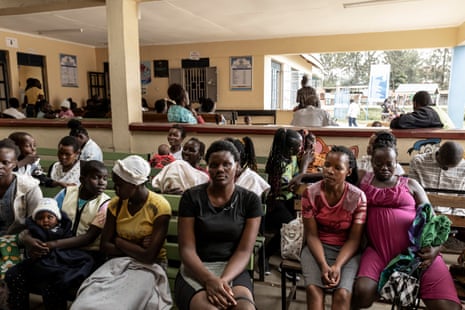
Mothers with children waiting at Kuoyo Sub-county hospital in Kisumu, Kenya.
theguardian.org

An AI system used to predict how much Kenyans can afford to pay for access to healthcare, has systemically driven up costs for the poor, an investigation has found.

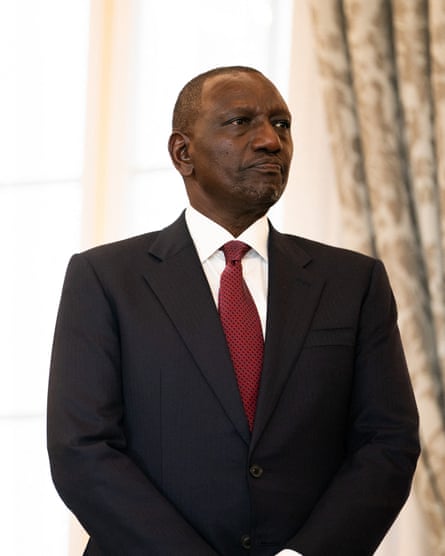
The healthcare system being rolled out across the country, a key electoral promise of President William Ruto, was launched in October 2024 and intended to replace Kenya’s decades-old national insurance system.

Billed as “accelerating digital transformation”, it aimed to expand access to care to Kenya’s large informal economy: the day labourers, hawkers, farmers and non-salaried workers that make up 83% of its workforce.

“No Kenyan will be left behind,” Ruto told a crowded stadium in Kericho during his 2023 presidential campaign, announcing that every citizen would soon have access to affordable healthcare.

But his solution has instead sparked protests and anger, as healthcare contributions for millions of people are now calculated via a formula described as “flawed” and which sources have said has almost no transparency.

That solution, which Ruto has described as AI-powered, does not rely on the recent advances in artificial intelligence which underpin large language models such as ChatGPT – instead it uses a predictive machine learning algorithm.

It now determines healthcare contributions for millions of people through a means-testing process.

Through months of investigation, reporters at Africa Uncensored, in collaboration with Lighthouse Reports and the Guardian, were able to obtain key details of this system and audit how it worked. The findings reveal how, from the start, it was systematically overcharging the poorest Kenyans, overestimating their incomes, while undercharging the wealthiest by underestimating their incomes.

Every day, Grace Amani* sits in people’s homes to ask them questions from the odd to the intrusive. What type of toilet do you use? What is your roof made of? Do you own a radio?

She helps the occupants answer dozens of these questions – pit latrine, iron-sheet roof, no radio – on a digital questionnaire on their phones. People are often confused; some fear they are under investigation. When the form is complete, a number comes back as the algorithm calculates the sum the household must pay that year for public health insurance.

The mother of 10 is also among those who claim the system is not working as it should and is punishing the least well-off.

The people Amani registers are some of the poorest in Nairobi, Kenya’s capital, yet most are charged fees they cannot afford. She has watched families struggling to feed themselves charged a premium far beyond their means, many facing a sum of between 10% and 20% of meagre incomes.

Amani has also seen critically ill people who cannot get treatment because they have not been able to pay the amount the AI system says they should.

“People are dying, people are suffering,” she said.

The people she sees are exactly those the government promised would benefit most from the AI-driven health reforms. Those with the lowest incomes were supposed to be charged the minimum premium, or have their costs covered entirely. “They thought it was something that would help them,” Amani said.

Since its launch, the Social Health Authority (SHA) has been met with a barrage of criticism for misclassifying people, and setting unaffordable or incomprehensible premiums.

Kenyans without private insurance who do not pay their SHA premiums risk being turned away from health facilities or presented with steep hospital bills. For some, this has meant they can no longer access treatment. “People are dying at home,” Amani said. “Many people have been unable to go to hospital. Will they pay SHA, or pay for food, or pay for the small house they live in?”

On social media, Kenyans have flooded comment sections with accounts of charges they cannot pay. “From struggling to pay 500 Kenyan shillings [£2.90] previously to being billed 1,030 Kenyan shillings,” one wrote.

“God have mercy on me,” wrote one single mother, after her monthly contribution was set at 3,500 Kenyan shillings.

David Khaoya, a health economist who advised Kenya’s health ministry, said that when faced with the known flaws in the SHA’s formula, a choice was made.

The system’s constraints meant that it could either correctly assess poor households, or correctly assess rich ones. Khaoya said the government chose to prioritise accurately evaluating the wealthy, even if that meant overcharging the poor.

“If you identify a richer person as poor and therefore ask him to pay less, this person will never own up and say, ‘I’m actually supposed to be paying more,’” he said.

Kenya’s algorithmic healthcare system is structured on a decades-old World Bank bugbear: proxy means testing (PMT), a way of estimating the incomes of the poor based on their possessions and other life circumstances, such as how many children they have or whether they live alone.

PMT has been used in World Bank-funded programmes “all over Africa, all over Asia and the Pacific”, said Stephen Kidd, a development economist. It has often been set as a condition for a government to receive a loan.

In Kenya, this has meant deploying government volunteers such as Amani to households across the country to register their roofing materials, livestock and children – and feeding those details into an opaque algorithm to decide how much they earn and how much they must pay.

The audit tested the system against thousands of real households. For family after family, the system overestimated their means. For two farmers, their income was predicted as twice what it actually was 0 based on the fact that they have electricity and own their house.

Systems similar to the one built by SHA have been quickly spreading around the world in recent years – often pushed by the World Bank or other international donors.

Across Africa, Asia and Latin America, PMT algorithms have become popular in determining which households are “poor enough” to receive cash transfers, food subsidies and other benefits. These systems aim to expand the services of the state to people who have historically gone uncounted; the informal workforce whose inconsistent earnings do not fit neatly into income-based healthcare schemes.

But Kidd and other researchers have found that these systems simply do not work. In attempting to categorise a population as “poor” or “not poor”, most make significant errors. One poverty-targeted scheme in Indonesia that Kidd tested excluded 82% of the population it aimed to serve; another in Rwanda had an error of 90%.

In Kenya’s case, the SHA system appears to overcharge more than half of poor households, according to the investigative audit by Africa Uncensored and Lighthouse. The incomes of higher-income households are underestimated.

There is not a single reason for these inaccuracies, said Kidd. Poverty is a fluid category – and using factors such as an iron roof or a pit toilet to estimate a family’s wealth is an intrinsically imprecise undertaking.

But means-testing algorithms such as Kenya’s introduce a separate problem: they are opaque, and reduce a population’s faith in government services.

“It feels like a lottery,” said Kidd. “The lottery is not a great way of building trust.”

In Kenya, the system has led to widespread frustration. Yet its failings appear to have been anticipated by a report, authored by the international data consultancy IDinsight, and shared with the government before the system was implemented.

That report, obtained by reporters, found SHA’s system was flawed and “inequitable, particularly for low-income households”. Its basis for determining wealth “over-represents middle-income households and has very few data points from poverty pockets”. It was also “out-of-date with the current socioeconomic condition” in Kenya given the “multiple economic shocks” that had affected the country.

Despite this, Kenya deployed the SHA system anyway. Of more than 20 million people registered for SHA, only 5 million are regularly paying their premiums. Some hospitals are reporting large deficits as promised reimbursements from SHA remain unpaid.

In March, a former deputy president, Rigathi Gachagua, predicted that “SHA will collapse in another six months”.

Dr Brian Lishenga first heard of PMT at a conference in Naivasha, listening to a discussion among government officials and international donors. The chair of Kenya’s Rural and Urban Private Hospitals Association, Lishenga wanted to understand how the government planned to get tens of millions of informal workers to pay into the system.

He is now one of the system’s most vocal critics. “This is an experiment that has failed,” he said. “It’s a really poor tool for identifying poor households. It’s a great tool for helping the government run away from responsibility. A very great tool for that.”

* Name has been changed to protect her identity
A middle-aged African man in a suit
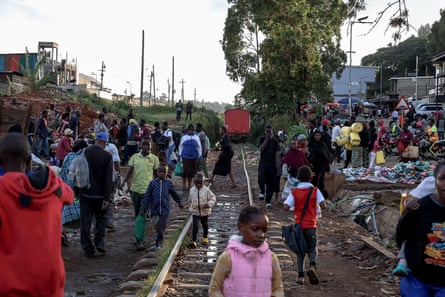
Africans walk along a railway track that runs through a shantytown
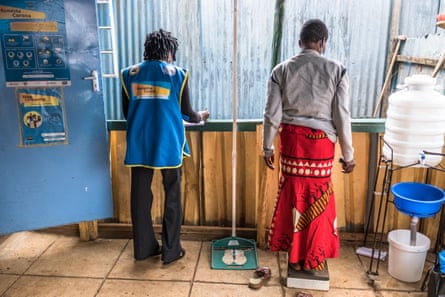
An African woman stands on scales beside another woman
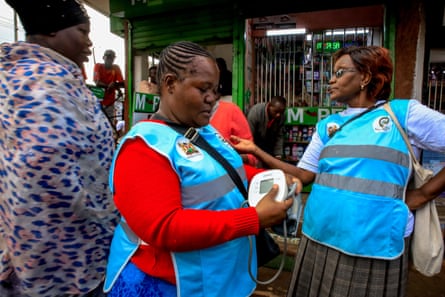
Three middle-aged African women, one holding a blood pressure monitor
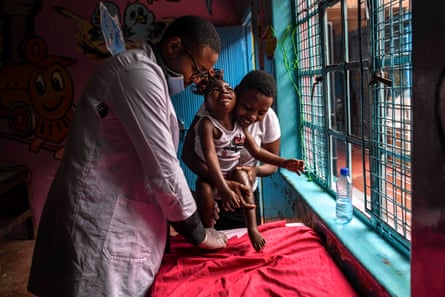
An African man and a woman with a small child

Continue ReadingFlaws in Kenya’s AI-driven health reforms driving up costs for the poorest

Three passengers dead after suspected hantavirus outbreak on cruise ship

The MV Hondius seen off the port of Praia in Cape Verde in 2025.

Three people have died after a suspected hantavirus outbreak on a cruise ship sailing in the Atlantic.

One case of hantavirus infection had been confirmed and there were five additional suspected cases, the World Health Organization told Agence France-Presse on Sunday.

Of the six people affected, three had died and one is in intensive care in South Africa, the WHO added. Two of those who died were a husband and wife aged 70 and 69.

The person in intensive care is a 69-year-old British national, according to the BBC.

The outbreak was reported on the MV Hondius, which was travelling between Argentina and Cape Verde.

The ship is operated by the Dutch tour company Oceanwide Expeditions. The company has not responded to a request for comment.

Earlier on Sunday, South Africa’s health ministry told AFP there had been an outbreak of a “severe acute respiratory illness”, which had killed at least two people, with a third in intensive care in Johannesburg.

The patient treated in Johannesburg tested positive for a hantavirus, a family of viruses that can cause haemorrhagic fever, South African spokesperson Foster Mohale said.

Hantavirus is usually caught through contact with urine or faeces from infected rodents, but in rare cases can spread between people. It can lead to severe respiratory illness.

The first person to develop symptoms was a 70-year-old passenger. He died onboard the ship and his body was currently on the island of Saint Helena, a British overseas territory in the South Atlantic, Mohale said.

The man’s 69-year-old wife also fell ill onboard and was evacuated to South Africa, where she died in a Johannesburg hospital.

Their nationalities had not yet been established but a source close to the case, speaking on condition of anonymity, said a Dutch couple were among the dead.

The third fatality was still onboard the ship on Sunday evening.

Another passenger, a 69-year-old Briton, was also evacuated to Johannesburg, where he was being treated in intensive care.

Discussions were under way to decide whether two other sick passengers should be placed in isolation in hospital in Cape Verde, an archipelago off the west coast of Africa, after which the ship would continue to Spain’s Canary Islands, the anonymous source said.

The WHO said it was “facilitating coordination” between national authorities and the ship’s operators to organise the medical evacuation of two passengers with symptoms.

The MV Hondius is listed as a polar cruise ship on the websites of several travel agencies. One of the cruises offers an itinerary departing from Ushuaia in Argentina and sailing to Cape Verde, with stops in the islands of South Georgia and Saint Helena.

The vessel can accommodate about 170 passengers and has 70 crew members. According to several online ship-tracking sites, the MV Hondius was just off the port of Praia, the capital of Cape Verde, on Sunday.

The UK’s Foreign Office said: “We are closely monitoring reports of a potential hantavirus outbreak on the cruise ship Hondius and stand ready to support British nationals if needed. We are in touch with the cruise company and local authorities.”

Continue ReadingThree passengers dead after suspected hantavirus outbreak on cruise ship

Two US service members missing after military exercises in Morocco

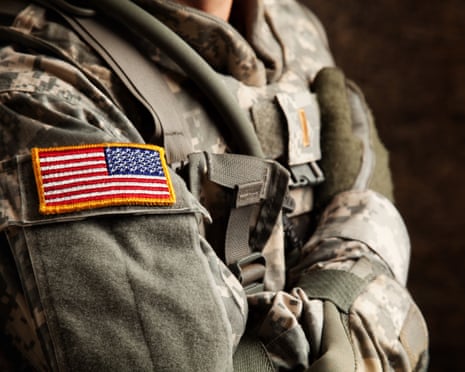
US army soldier in universal camouflage uniform.

Two US service members are missing in south-western Morocco after taking part in annual multinational military exercises in the North African country, the United States Africa Command (Africom) said Sunday.

The US, Morocco and other countries participating in the African Lion exercise have launched a search and rescue operation, Africom said.

“The incident remains under investigation and the search is on-going,” it said in a statement.

The incident happened on 2 May near the Cap Draa training area near Tan Tan, close to the Atlantic Ocean. The war games exercise started in April and runs across four countries, including Tunisia, Ghana and Senegal. It is scheduled to end in early May.

African Lion, which has been running since 2004, is the largest US annual joint military exercise on the continent and usually features high-ranking military officials from the US and its top African allies.

US military officials have said the annual multinational engagement serves as a venue for strengthening regional security cooperation and refining the readiness of participating forces for global crises.

Continue ReadingTwo US service members missing after military exercises in Morocco

Zambia cancels world’s largest human rights and tech summit days before start

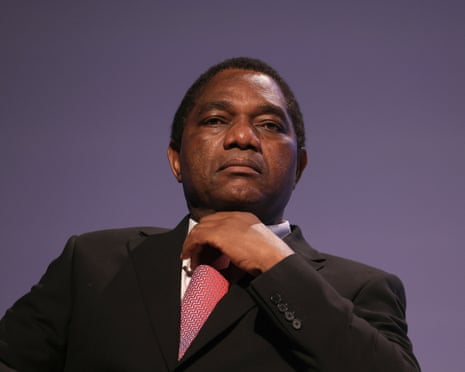
A middle-aged African man in a dark suit
theguardian.org

The world’s largest conference on human rights and technology has been cancelled just days before it was due to start after the Zambian government told organisers it did not align with “national values”.

Zambia’s government had originally welcomed the RightsCon 2026 summit on “human rights in the digital age”, due to be held in the capital, Lusaka, on 5-8 May, but Thabo Kawana, permanent secretary for the Ministry of Information & Media, said last week that the conference would not go ahead to allow time to ensure the gathering “aligns with Zambia’s national values, policy priorities, and broader public interest considerations”.

More than 2,600 activists, technologists, academics and policymakers were expected to begin arriving in Lusaka over the weekend. The event was to address issues of human rights in the digital age, including online hate, internet shutdowns, AI, surveillance, the militarisation of tech and disinformation at a time when democratic, women’s and LGBTQ+ rights are under intense assault.

Rights campaigners have called the decision a blatant act of censorship and part of a broader pattern of suppression of legitimate debate.

Zambian news reports have suggested pressure from China could be behind the surprise move – several Taiwanese delegates had been due to attend and the conference was being held in a venue donated by China. The conference, now in its 14th year, was held in Taipei last year.

Linda Kasonde, a prominent Zambian lawyer and civil society activist who founded the LCK Freedom Foundation, said the decision showed a disregard for human rights. “When the current administration came into power, they were a government of rule of law and democracy. What we are seeing is a slow degradation of rights – of freedom of expression and the right to assemble.”

Kasonde suggested the move was linked to the forthcoming general election. “We go to the polls in August 2026,” she said “In the run-up, the government has steadily been putting in place laws that make it easier to win and entrench power post-election. Political parties and civil society have been denied the opportunity to meet in public.”

It was a blow for Zambia’s reputation, she added. “This was the first time RightsCon was being held in southern Africa and it was a showcase for our region.

“It is highly unfortunate that it was cancelled at the very last minute for an extremely disingenuous reason, especially as the government had been involved in the planning process, which took over a year,” she said. “It really dents the image of our country.”

In a statement issued on Friday RightsCon organiser, the New York-based organisation Access Now, said it had spent months liaising with government relationships to ensure transparency and mutual understanding around the conference. “We see this unilateral decision, and the way it was taken, as evidence of the far reach of transnational repression targeting civil society, and effectively shrinking the spaces in which we operate. At a time when this sector is already under immense financial and political strain, what we and our community forcefully experienced is unprecedented and existential,” it said.

Most delegates had already booked and paid for their travel. Karna Kone, from Côte d’Ivoire, who was due to join a panel on digital censorship, had spent months organising his visa to Zambia. “Travelling from west Africa is very expensive and a lot of logistical work. It’s a loss in terms of money and of energy.”

It was also a loss of opportunity, added Kone, who works for the ODAS Centre, a coalition of reproductive health organisations.

“Security was the reason we were going. Our members face online harassment and physical threats because of their focus on [strengthening access to] safe abortion. RightsCon was one of very few global spaces we could connect and share our work. This was a chance to give voice to Francophone Africa. Now this conversation has been silenced.”

Chioma Agwuegbo, director of TechHer, a Nigerian organisation mentoring girls in technology, was also due to speak and said RightsCon was a rare opportunity for organisations to come up with solutions to pressing challenges.

“At a time when civic space across the continent is increasingly shrinking, this incident reflects a troubling pattern where compliance mechanisms are weaponised to restrict convening, dialogue and dissent,” she said.

“These constraints silence voices and weaken ecosystems working to protect fundamental human rights, including the safety and dignity of women and girls online.”

A significant number of speakers were lined up to address issues around the online censorship of sexual and reproductive health rights (SRHR).

“It is deeply ironic that a conference dedicated to strengthening rights and participation in digital spaces is being shut down in this way,” said Martha Dimitratou, director of Repro Uncensored, which has conducted research showing how tech companies regularly restrict or close SRHR-related online accounts.

Luca Stevenson, of the International Planned Parenthood Federation, said RightsCon was a “critical” space for communities already pushed to the margins, “including sex workers, LGBTQIA+ people, and those seeking sexual and reproductive healthcare”.

Sibongile Ndashe, a South African lawyer and human rights activist who founded the Initiative for Strategic Litigation in Africa, said the Zambian government’s move set a dangerous precedent. “If cancellation of conferences becomes normalised, it is human rights groups that will progressively find it hard to convene,” she said. “Restrictions on human rights harm those without power.”

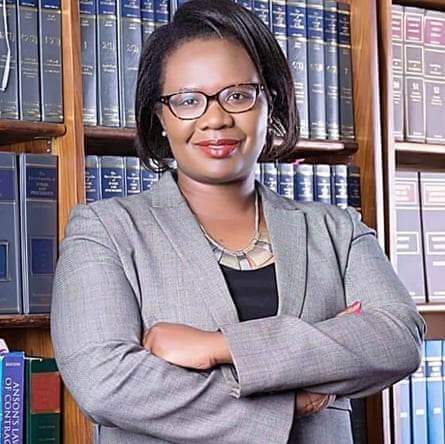
A middle-aged African woman in a suit standing before a law library bookcase
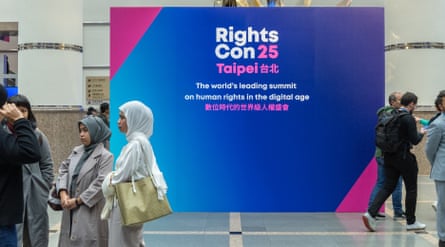
A group of women talking in a large public building before a sign saying RightsCon 25 Taipei
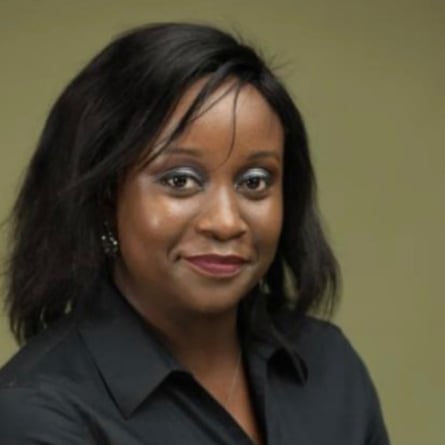
A middle-aged African woman in a dark shirt

Continue ReadingZambia cancels world’s largest human rights and tech summit days before start

First malaria drug for babies is approved in ‘major public health milestone’

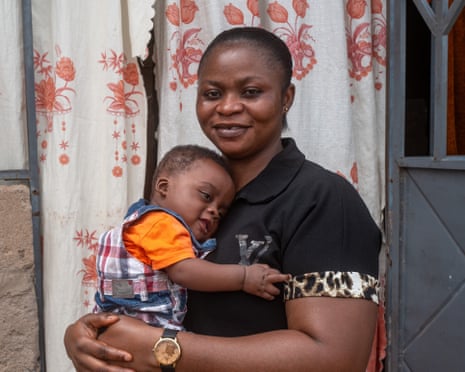
A woman and a baby
theguardian.org

The first malaria treatment for babies has been approved by the World Health Organization, opening the door to widespread use around the globe.

In parts of Africa, up to 18% of children under six months will be infected with malaria, but there has historically been no safe treatment for the smallest of them. There were 610,000 deaths from malaria in 2024, about three quarters of which were under-fives in Africa.

The WHO said infants with malaria had until now been treated with formulations designed for older children “which increase the risk of dosing errors, side effects and toxicity”.

Medical leaders hope that Coartem Baby, which can be used to treat infants as small as 2kg (4.4lb), will fill the treatment gap. The drug comes as sweet cherry-flavoured tablets that can be dissolved into liquids, including breast milk.

“For centuries, malaria has stolen children from their parents, and health, wealth and hope from communities,” said Dr Tedros Adhanom Ghebreyesus, the WHO director general. “But today, the story is changing.”

Coartem Baby now has WHO prequalification, which indicates it meets international standards of quality, safety and efficacy, and will enable public-sector procurement for many countries with high rates of malaria, particularly in sub-Saharan Africa.

Ghebreyesus said new vaccines and diagnostic tests, alongside next-generation mosquito nets, were helping to turn the tide against the mosquito-borne disease.

Coartem Baby contains two antimalarial drugs, artemether and lumefantrine, and was developed by the multinational pharmaceutical company Novartis and the Medicines for Malaria Venture (MMV).

The development follows increasing research challenging the historical misconception that young babies cannot be infected with malaria because they retain immunity passed on by their mothers during pregnancy and breastfeeding.

Dr Martin Fitchet, chief executive of MMV, said: “For too long, newborns and young infants with malaria have fallen through the cracks because existing treatments were not designed with them in mind.” He said the WHO ruling was “a major public-health milestone”.

The treatment has already been introduced in Ghana. Baby Wonder, now eight months old, was among the first patients to receive the drug, when he was 12 weeks old. He had been taken to hospital with a high fever, and tests confirmed elevated levels of the malaria parasite in his blood.

“I was very scared when my son got malaria because he was born underweight,” said his mother, Naomi.

Doctors at the hospital managed to coordinate access to Coartem Baby, and today Wonder is healthy and thriving.

“As doctors we have tended to look for malaria in older children, but when newborn babies got sick nobody seemed to know what to do,” said Dr Emmanuel Aidoo, a paediatrician at Methodist hospital in Ankaase, Ghana. “Having a new treatment tailor-made for infants that is well tolerated gives us confidence.”

Novartis said it would make the treatment available “on a largely not-for-profit basis in malaria-endemic regions”.

The Gates Foundation, which contributes funding towards the independent journalism produced on the Guardian’s Global development site, is also among the donors to the Medicines for Malaria Venture

Continue ReadingFirst malaria drug for babies is approved in ‘major public health milestone’

Sabastian Sawe receives hero’s welcome in Kenya after sub-two hour marathon feat

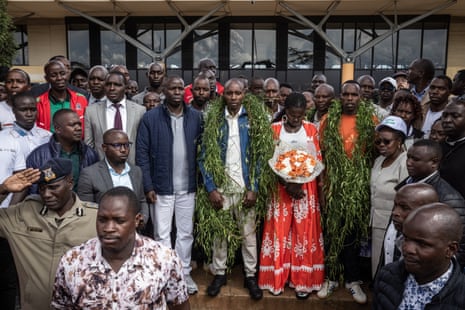
Sabastian Sawe wearing a large green garland stands at the centre of a crowd posing for a photo
theguardian.org

Hugged, cheered and adorned with garlands, the first man to run an official marathon in under two hours has returned as a hero to his home village in Kenya.

Sabastian Sawe, who stunned the world when he clocked 1h 59m 30s in the London Marathon last weekend, flew in a Kenyan military plane normally reserved for special operations on Thursday to his home region of western Kenya.

Waiting on the runway at a small airport perched on an escarpment 2,150 metres above sea level, Lydia Sawe was trembling with anxious excitement, hands clasped around a huge bouquet of orange roses, as her husband’s aircraft touched down.

The plane door opened and the 31-year-old runner locked eyes with his wife and, beaming, made a beeline for her arms. “Congratulations, darling,” she whispered in his ear, tears streaming down her face.

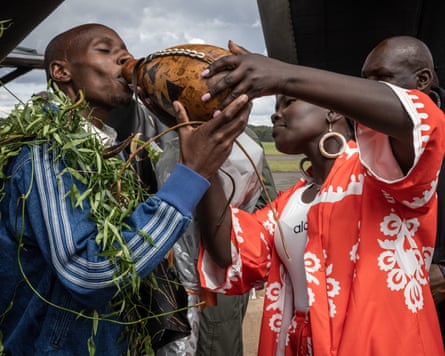
Sawe, who broke the world record by 65 seconds, signed a visitor book in the little VIP lounge at Eldoret airport and hugged a line of ecstatic friends and locals. He was given a wreath made from the sinendet plant, which symbolises victory within his Kalenjin ethnic group, and fed fermented milk from a gourd by Lydia to celebrate his win.

“The victory that took place last Sunday was not just my victory, it was a victory for all of us,” he said in Kiswahili, addressing the jubilant local community that had gathered to welcome him at the airport entrance.

“I’m so happy to be home and … welcomed this much, I’m so grateful,” he told the Guardian.

Famous runners are nothing new to this high-altitude part of Kenya. In the towns and villages around the city of Eldoret, in the Great Rift Valley, life is about farming crops, tending to livestock and nurturing the next generation of world record-breaking distance runners.

Every day, the red dirt roads that weave between modest homesteads and maize fields are pounded by the trainers of thousands of hopeful, driven young runners.

People living in and growing up in Eldoret are often able to become good distance runners because people living and training at altitude produce more red blood cells to deal with the lower-oxygen environment. When competing at lower altitudes, the greater number of red blood cells can boost oxygen delivery to muscles, resulting in better endurance and performance.

Sabastian’s grandmother Vivian Kimaru had also had sporting success. “I competed in Munich’s 1972 Olympic Games in 1500 and 800m and reached the semi-final,” she said. “I’m so proud,” she said of her grandson, speaking from his parents’ home in Ndonyongaria village where the celebrations continued.

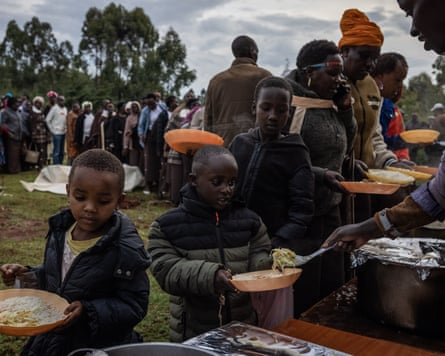
People sat under marquees and women danced on grass in between bursts of torrential rain while traditional music boomed from a sound system. After speeches and prayers, mounds of rice, sauteed cabbage, beef stew and chapati were served.

Sawe’s victory on Sunday was followed by days of rushing around, and he arrived in Kenya on Wednesday night to chaotic crowds at Nairobi’s international airport.

At a lavish welcome event and breakfast at the presidential residence, the president, William Ruto, who is also from Eldoret and of the same Kalenjin community, said Sawe’s achievement was “not merely a sporting triumph, it is a defining moment in the story of human endurance”.

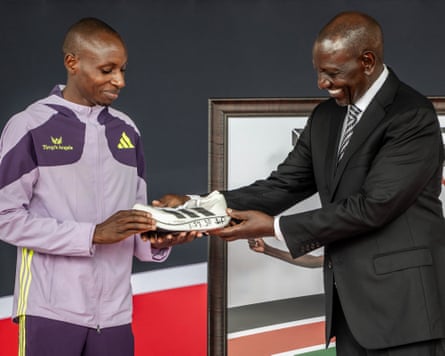
He presented Sawe with two cheques totalling 8m shillings (£46,000), one for winning the race and the other for breaking the world record. Sawe also received car number plates showing his record time. In return, Sawe gave the president one of his racing shoes with 1.59.30 written in marker pen on the sole.

Running is not a hobby or pastime in and around Eldoret; it is seen as a route to wealth that is often unattainable by other means. Runners are spurred on by a desire for a better life through sponsorship deals, race wins and athletics scholarships at foreign universities and prestigious academies.

Emmy Biwott, 45, the director of Uasin Gishu county government primary school, who had come to the airport to welcome Sawe, said athletes were “our cash crop”. In the area, “90% of those people who are doing well are athletes”, she said.

Toby Tanser, an author of books on Kenyan running and the founder of Shoe4Africa, a running and Aids awareness charity, said money was the motivation behind the region’s running success. Six of the 10 fastest male marathoners in history and four of the fastest females marathoners have come from Kenya.

In Sawe’s village, Tanser said: “You’ll not see a single fun runner, a charity runner or just running for health. People around here run for a way out of poverty. Nearly every famous Kenyan runner has come from a village setting.”

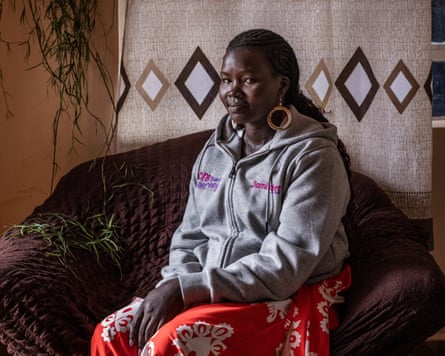
Away from the crowd, in the living room of her parents-in-law, Lydia, sat with close family and friends. How would life change for her family, which includes three sons? “I can’t even imagine,” she said.

“It will be so strange,” she said of the future. “We will be [going] somewhere. I will be someone.”

Lydia Sawe helps to tilt a gourd as her husband drinks from it
Children receive spoonfuls of food on their plates
Sawe presents William Ruto with a shoe
Lydia Sawe sits for a portrait


Continue ReadingSabastian Sawe receives hero’s welcome in Kenya after sub-two hour marathon feat