Guardian reporter and colleagues detained and beaten by Somali police

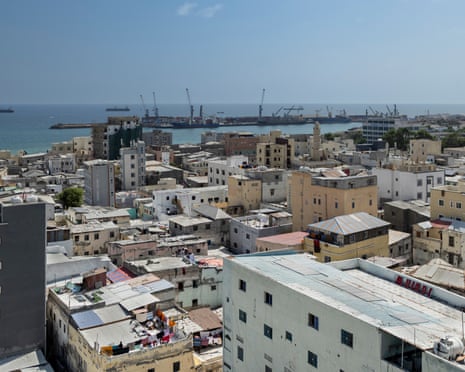
Rooftops in Mogadishu.
theguardian.org

A journalist who covered the case of a woman who said she was being tortured in prison was detained and beaten with pistols by Somali authorities, along with two others, for his reporting for the Guardian.

Mohamed Bulbul was arrested with the journalists Abdihafid Nor Barre and Abdishakur Mohamed Mohamud on Friday evening while in a restaurant in the centre of the Somali capital, Mogadishu. They said they were assaulted by members of Somalia’s US-trained counter-terrorism police unit and taken to be questioned by police. All three were released in the early hours of Saturday morning.

Media outlets and MPs said the arrests were unlawful and politically motivated. They come amid an intensifying crackdown as public anger grows with the ruling establishment, and the presidential term is due to end on 15 May.

Abdirahman Abdishakur, an MP and leader of the opposition Wadajir party, condemned the arrests of the journalists. He wrote in a post on X that the president of Somalia’s administration “appears consumed by fear, confusion as the end of its mandate approaches”.

He added: “Instead of addressing the growing public anger over forced displacement, land grabbing, and pursuing an inclusive political settlement to guide the country through this fragile transitional period, the administration has intensified repression against journalists, activists and outspoken young people.”

It is believed Bulbul’s detention was linked to reporting on the case of Sadia Moalim Ali, a 27-year-old rickshaw driver who is in prison for peaceful protest and her activism on social media. He has also been speaking out about security forces’ violations and forced evictions in Mogadishu.

On Thursday, the Guardian published a story by Bulbul, where Ali spoke about being tortured in Mogadishu central prison. She said she was stripped naked by two male guards in a room monitored by CCTV, kicked, beaten with a baton and left for two days in a small cell without food. The article was shared widely across Somali media, Facebook and X.

He and the two other journalists had been facing sustained threats and intimidation in recent weeks. Their detention happened at a time of heightened political pressure surrounding planned protests expected to take place on Sunday.

At the police headquarters, the three reporters said they were threatened by Mahdi Omar Mumin, Mogadishu police chief, should they continue to report on the protests.

In a statement released by Somali Journalists Syndicate (SJS), the journalists said that Mumin told them he was “tired of arresting journalists” and that if they did not remain silent about the protests and other developments in Mogadishu, including the case of Ali, the only option remaining for them would be “death”.

Somali Stream, the media organisation which Mohamud works for, condemned the arrests as “an illegal and politically motivated attack on independent journalism”.

AbdiKani Hamud Abokor, the outlet’s managing director, said: “Somali Stream strongly condemns the unlawful detention of Abdishakur [Mohamed] Mohamud, Abdihafid Nor [Barre], and Mohamed Bulbul. This is a deliberate attempt to terrorise journalists, suppress independent reporting and instil fear across Somalia’s media community.”

The news follows the arrest of several journalists earlier this week. On 6 May, at least five local journalists were arrested and had their equipment confiscated, according to SJS. Two other broadcast journalists, Ja’far Mohamed Jim’ale and cameraman Nur Hasan Ali remain in detention – their whereabouts are unknown, the organisation added.

According to the World Press Freedom Index, Somalia ranks 126 out of 180 countries. Journalists in the country work in an environment of great insecurity, according to Reporters Without Borders, which runs the index. With more than 50 media professionals killed since 2010, Somalia is one of the most dangerous countries for journalists in Africa.

The Somalian authorities have been approached for a response.
Continue ReadingGuardian reporter and colleagues detained and beaten by Somali police

Two Britons evacuated from hantavirus-hit ship ‘improving’ in hospital

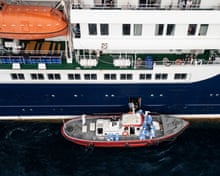
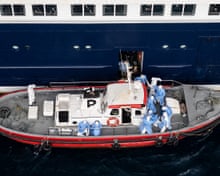
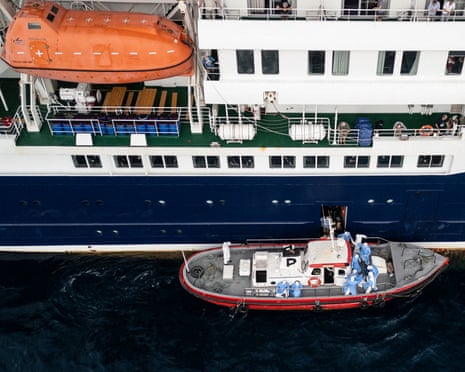
A small boat with crew in blue protective suits beside a large white cruise ship with an orange lifeboat.

Two Britons who were medically evacuated from the hantavirus-hit cruise ship are improving, global health officials have said.

A British passenger, understood to be a 69-year-old man, was taken to South Africa on 27 April and is receiving care at a private health facility in Sandton, Johannesburg.

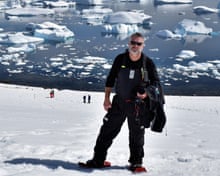
Another Briton, Martin Anstee, 56, an expedition guide, was taken off the MV Hondius on Wednesday and flown to the Netherlands to receive specialist medical care.

Dr Maria Van Kerkhove, from the World Health Organization (WHO), said two patients – known to include a Briton – remained in hospital in the Netherlands and another Briton was in intensive care in South Africa.

She told a WHO press briefing: “I am very happy to say the patient in South Africa is doing better, and the two patients in the Netherlands we hear are stable. So that is actually very good news.”

As of Thursday there are eight suspected cases, five confirmed by lab tests as hantavirus, a rare family of viruses carried by rodents.

The outbreak, linked to three deaths, has been connected to a birdwatching trip to Argentina, Chile and Uruguay that two of the passengers went on before boarding the ship.

Spanish authorities have given permission for the ship to anchor in the Canary Islands, despite concerns from locals and officials, and the boat left the shores of Cape Verde at 3.15pm local time on Wednesday, the tour operator Oceanwide Expeditions said.

It is estimated to arrive at the port of Granadilla in Tenerife in the early hours of Sunday.

Morale on board has improved since the ship started its journey to Tenerife, the WHO said. Two doctors are on board along with infectious disease experts from the WHO and the European Centre for Disease Prevention and Control, who are conducting a medical assessment of everyone on board.

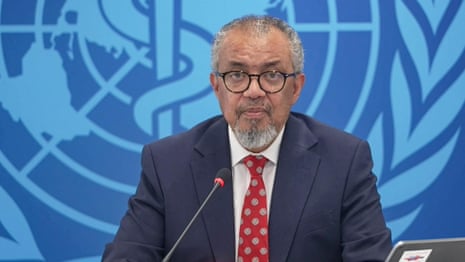
While the risk to the public is low, Dr Tedros Adhanom Ghebreyesus, the director-general of the WHO, said there could be more cases due to the incubation period of the Andes virus – the variant of hantavirus linked to the outbreak – which can be up to six weeks.

He said: “While this is a serious incident, WHO assesses the public health risk as low.” He thanked the ship’s operator for its cooperation, and the passengers and crew, “who are going through a very difficult and frightening situation”.

The WHO is not expecting the outbreak to be an epidemic, according to Dr Abdirahman Mahamud, the director at the alert and response coordination department. He highlighted a similar outbreak in Argentina in 2018-19 which led to 34 cases.

Seven British people were among 30 from 12 nations who left the ship when it docked in the remote South Atlantic island of Saint Helena, including a Dutch woman who became unwell during onward travel and died. The woman was accompanying her husband’s body, which was being repatriated after he died on the ship on 11 April.

On Thursday, a woman in Amsterdam, reported to be a flight attendant who came into contact with the woman who died, came forward with potential symptoms.

Oceanwide Expeditions said guests who had disembarked have been contacted.

The UK Health Security Agency (UKHSA) has been asked whether it can confirm it has been in touch with all seven Britons who left the ship on 24 April.

It has previously announced that two Britons who had already returned from the vessel are isolating at home and do not have symptoms. Contact tracing is happening for anyone who may have sat next to them on the flight home. The two people contacted health officials when they heard about the cases on the ship.

Nineteen British nationals were listed as passengers on the MV Hondius, which was sailing from Argentina to Cape Verde, with four British crew members.

UK health experts said British passengers on board will be asked to self-isolate in the UK for 45 days. Prof Robin May, the chief scientific officer at the UKHSA, said: “For the broader public, not directly involved in this cruise ship, the risk here is really negligible.”

The Foreign Office is arranging a charter flight so the remaining Britons on board the ship who are not displaying symptoms can be repatriated once they dock in Tenerife in the next few days.

According to the UKHSA, none of the British citizens on board are reporting symptoms, but they are being closely monitored.

May said the “most extreme case of incubation” of hantavirus “may be up to eight weeks”, but the general consensus was that people needed to isolate for “probably six weeks, and so that’s the period of isolation, 45 days, that we’re likely to be recommending”.

Three people were taken off the ship on Wednesday to the Netherlands for treatment, including Anstee, an expedition guide and former police officer. Speaking from hospital, he told Sky News: “I’m doing OK. I’m not feeling too bad. There are still lots of tests to be done.

“I have no idea how long I’ll be in the hospital for. I’m in isolation at the moment.”

Aerial view of a private health facility in Johannesburg, South Africa
WHO: hantavirus cruise outbreak is 'not the start of a Covid pandemic' – video
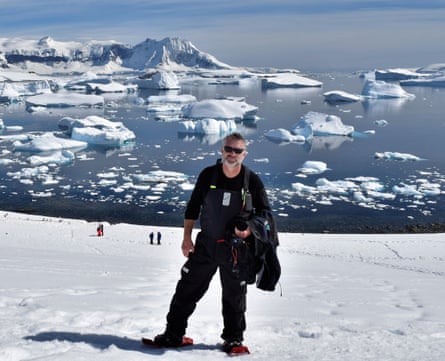
Martin Anstee in the snow and possibly glaciers
Woman rides a bicycle in front of Leiden University medical centre


Continue ReadingTwo Britons evacuated from hantavirus-hit ship ‘improving’ in hospital

Woman jailed in Somalia for peaceful protest ‘stripped, kicked and beaten’

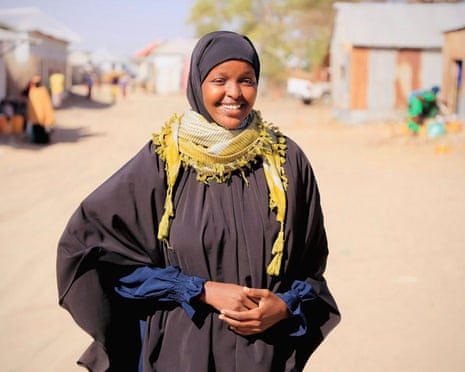
A young Somali woman smiles, standing in a village street.
theguardian.org

A woman being held in prison in Somalia for taking part in peaceful protests has described how she was tortured by her guards.

Sadia Moalim Ali, 27, told the Guardian she was stripped naked by two male guards in a room monitored by CCTV, kicked, beaten with a baton and left for two days in a small cell without food.

In an exclusive interview from prison, she said: “I was tortured. I was forced to lie face down on the ground, and water was poured on me. I was kicked by guards with boots on. They stood over me and beat me with a baton.

“I was taken into solitary confinement and kept there for two days. I was deprived of food and basic necessities while I was locked in that cell. I wasn’t allowed to leave to go to the toilet.”

Torture – defined as any act by which severe pain or suffering, physical or mental, is intentionally inflicted – is prohibited under international law and by the UN Convention against Torture in all circumstances.

Ali, a nursing graduate who works as a rickshaw driver, was arrested and detained in a police station on 12 April for her anti-government activism. She used Facebook and TikTok to criticise the federal government, speaking out against alleged corruption and nepotism, forced evictions, youth unemployment, taxation and high fuel prices.

On 14 April, she was transferred to Mogadishu central prison, where she remains. She said she had not been formally charged and had been denied access to a lawyer appointed for her. While in police detention, she said, she was pressed into signing a document she did not understand, and then taken to court.

According to Amnesty International, the police have been granted permission from the court to hold her for 90 days pending further investigation.

In an interview from prison that was aired on Shabelle Media, a Somali radio and television news organisation, on 20 April, Ali said she was being held without due legal process and appealed for her freedom.

It was because of that interview that she was tortured, she said. “Before when I spoke to the media, I was punished the same day … Truly a lot of pain was inflicted on me.”

The room she was kept in is known as cellula della morte – cell of death – named so because the prison was built during Italian rule, which ended in 1941. Former prisoners who have spent time in it say it is reserved to punish people and for those facing execution. The floor is said to be doused in engine oil and salt, and covered in faeces. It measures about two square metres and is extremely hot. The stench is overwhelming and has caused people to vomit.

Ali, the main breadwinner for her extended family including her 11-month-old daughter, now shares another cell with 38 other women.

“It is a very difficult life,” she said. “No human being deserves to be put in here. It is a place with no ventilation. Even a healthy person gets sick. It is very noisy and very crowded.”

She said she struggled to sleep and had kidney problems as well as numbness in her hand and foot, and just wanted to go home to her family, saying she would end her activism.

“I have endured severe violations and I deeply plead for justice, for my rights and my freedom to be restored by those responsible.”

Dalmar Dhayow, of the Coalition of Somali Human Rights Defenders, said women imprisoned in the country routinely faced a litany of human rights violations.

“We know sexual assault or violence is systematically used as a tool to force women [to make false confessions], humiliate and harass them inside prison,” said Dhayow. “We know a lot of cases of women being shackled while they are detained, with their legs and hands bound.”

Human rights organisations, former government officials and a Somali MP have said Ali’s detention is unlawful and are calling for her immediate release. Abdirahman Abdishakur, the leader of an opposition party, posted on X that Ali’s detention was “a national disgrace and a damning indictment of President Hassan Sheikh’s administration”.

“Her only ‘offence’ was speaking out against corruption and nepotism within government institutions,” he wrote. “That is not a crime; it is a fundamental civic right. Mr President, failing to tolerate the voice of a single young woman is not a sign of strength, it is a clear display of insecurity.”

Since 2022, Somali authorities have been accused of engaging in a systematic and escalating crackdown on human rights, using arbitrary arrests, detention, harassment, threats and intimidation to silence journalists, activists and other people who express dissenting views.

The Somali government was approached for comment but did not respond.

Sadia Moalim Ali wearing a headscarf sitting in a vehicle in traffic
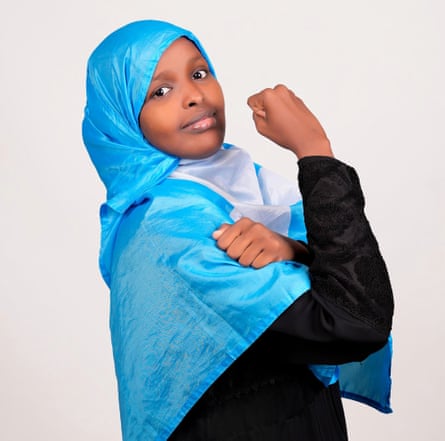
Portrait of Sadia Moalim Ali wearing a blue headscarf and raising her arm in a fist

Continue ReadingWoman jailed in Somalia for peaceful protest ‘stripped, kicked and beaten’

Three evacuated from hantavirus-hit ship as Spain says vessel can dock

Health workers in protective clothing help patients on to a boat from the cruise ship MV Hondius

Three people with suspected hantavirus have been medically evacuated from a cruise ship.

They include a British man who was an expedition guide onboard the ship, the MV Hondius. He was named on Wednesday evening as Martin Anstee, 56.

He told Sky News: “I’m doing OK. I’m not feeling too bad. There are still lots of tests to be done. I have no idea how long I’ll be in the hospital for. I’m in isolation at the moment.”

Anstee was removed from the vessel along with a Dutch colleague, 41, who was the ship’s doctor, and a 65-year-old German passenger, the Telegraph reported.

The three were taken from the Dutch-flagged cruise ship for onward travel to the Netherlands, the World Health Organization (WHO) said.

Spanish health officials said the Briton was in a more stable condition, having previously been in a critical condition.

The WHO said there were eight cases, five of them confirmed.

The evacuation means the ship, with close to 150 people onboard, can continue on its three-day journey to the Canary Islands after Spanish authorities gave permission for the vessel to dock. But a row has erupted, with the regional president expressing concern over the ship docking in Tenerife.

The ship was anchored off Cape Verde while arrangements were put in place to evacuate the crew members but on Wednesday evening the ship was on its way to the Canaries.

An aircraft carrying two of the three individuals taken from the ship landed in the Netherlands late on Wednesday, the tour operator Oceanwide Expeditions said. However, the operator said another aircraft “is currently experiencing a delay” and the person onboard “remains in a stable condition”.

Tedros Adhanom Ghebreyesus, the director general of the WHO, posted on X: “Three suspected hantavirus case patients have just been evacuated from the ship and are on their way to receive medical care in the Netherlands in coordination with WHO, the ship’s operator and national authorities from Cabo Verde [Cape Verde], the United Kingdom, Spain and the Netherlands.

“WHO continues to work with the ship’s operators to closely monitor the health of passengers and crew, working with countries to support appropriate medical follow-up and evacuation where needed.

“Monitoring and follow-up for passengers onboard and for those who have already disembarked has been initiated in collaboration with the ship’s operators and national health authorities. At this stage, the overall public health risk remains low.”

A Dutch couple and a German national who were on the ship have died.

The foreign secretary, Yvette Cooper, said the UK had been working with other countries to facilitate evacuations and Foreign Office staff were in direct contact with British nationals onboard.

“The Foreign Office is working urgently to support the UKHSA’s [UK Health Security Agency’s] work overseas and to make sure British nationals on the MV Hondius can all get safely home with proper protection for public health,” she said.

Two people who returned to the UK independently having been onboard the ship had been advised to isolate, the UKHSA said. “Neither of these individuals is currently reporting symptoms. They are receiving advice and support from UKHSA and have been advised to self-isolate,” it added.

The health authority said that it was helping to trace people who may have been on the same flight as a confirmed case and that once the ship docked in Tenerife, the remaining British nationals onboard could be sent home if they had no symptoms.

“None of the British citizens on board are currently reporting symptoms but they are being closely monitored,” the UKHSA said in a statement. It stressed that the risk to the general public “remains very low”.

Authorities in Switzerland said a former passenger who tested positive was being treated at a Zurich hospital. The passenger had left the ship at St Helena and it was unclear how he had travelled to Switzerland or which countries he might have passed through. Swiss authorities said there was “no risk” to the public.

Since the start of the outbreak, the WHO has emphasised that the risk to the public is low. People usually become infected with hantavirus through contact with infected rodents or their urine, their droppings or their saliva, and human-to-human transmission is rare. But a limited spread among close contacts has been observed in some previous outbreaks with the Andes strain, which has spread in South America, including Argentina, where the cruise trip started in March.

Health officials in Europe and Africa are trying to identify people who may have had contact with people who earlier left the ship, which departed on 1 April from South America for stops in Antarctica and several remote Atlantic islands.

South Africa’s health ministry said 62 contacts had been identified, including flight crew and healthcare workers. The contacts will be monitored until an incubation period has passed. None have been diagnosed with the hantavirus so far.

Two Argentinian officials investigating the origins of the outbreak said the government’s leading hypothesis is that a Dutch couple contracted the virus while birdwatching in the city of Ushuaia before boarding. They said the couple visited a landfill during the tour and may have been exposed to rodents, according to a report by the Associated Press.

Cape Verde was meant to be the ship’s final destination but the country off west Africa has not allowed the vessel to put passengers ashore because of the outbreak.

Late on Tuesday, the Spanish health ministry said it had been asked by the WHO and the EU to accept the MV Hondius and had agreed “in accordance with international law and humanitarian principles”.

Oceanwide Expeditions said the ship was expected to arrive in the Canary Islands in three days.

“Oceanwide Expeditions remains in close and continual discussion with relevant authorities regarding our exact point of arrival, quarantine and screening procedures for all guests, and a precise timeline,” a spokesperson said. “We are unable to confirm the details of onward travel for guests at this stage. This is dependent on medical advice and the outcome of stringent screening procedures.”

The UK Foreign Office said it had been in touch directly with all British passengers onboard the ship.

Martin Anstee standing on a snowy field in front of icebergs
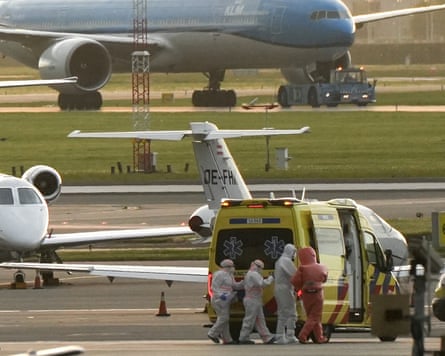
A person in a hazmat suit is escorted to an ambulance from a medical aircraft carrying evacuees from the MV Hondius at Schiphol airport, Amsterdam.
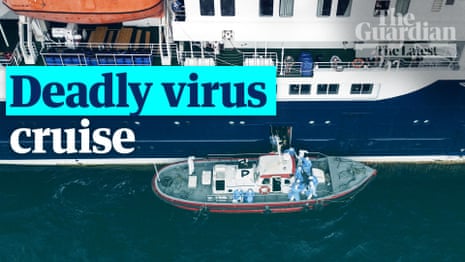
Hantavirus hell: passengers stuck on cruise ship with deadly virus – The Latest


Continue ReadingThree evacuated from hantavirus-hit ship as Spain says vessel can dock

British crew member in need of urgent medical care amid suspected hantavirus outbreak on cruise ship

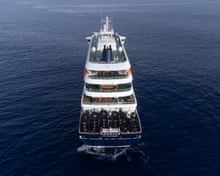
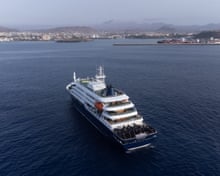
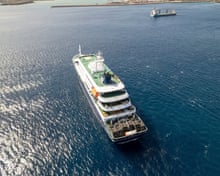
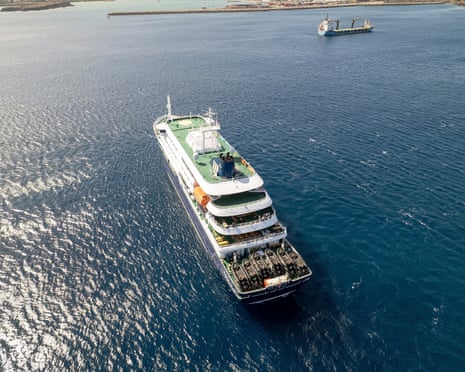
Vessel in glistening ocean

Officials in Cape Verde have said they will not allow a cruise ship believed to be harbouring an outbreak of a rare respiratory virus to dock in its ports, after the deaths of three passengers onboard.

The statement on Monday came hours after global health officials said they were scrambling to investigate the suspected outbreak of hantavirus, a disease primarily found in rodents, on the cruise ship in the Atlantic.

The hantavirus is suspected of killing three people, including a married couple from the Netherlands, sickening at least two others on the ship and sending a 69-year-old British tourist to intensive care in South Africa.

Cape Verde health authorities said they had been monitoring the situation of the ship anchored off its coast and would not authorise its docking “with the aim of protecting national public health”.

Cape Verde said it was in contact with authorities in the Netherlands and the UK about the Dutch-flagged ship, which it said was carrying 147 passengers and crew. “This coordination has enabled a swift, safe and technically appropriate response, ensuring the clinical monitoring of patients and the preparation of all necessary precautionary measures, including a possible medical evacuation by air via air ambulance for patients under observation,” it added.

The MV Hondius, which left Argentina around three weeks ago before making several stops as it crossed the Atlantic, made international headlines on Sunday after the World Health Organization (WHO) said it was involved in a “public health event” onboard.

The risk to the wider public remained low, a Europe-based official later said, adding that there was no need for panic or travel restrictions. “To date, one case of hantavirus infection has been laboratory confirmed, and there are five additional suspected cases,” the UN health agency said in a statement on Sunday. “Of the six affected individuals, three have died and one is currently in intensive care in South Africa.”

It said it was working to have two symptomatic passengers on the ship medically evacuated.

South African officials said the British national had been sent to a private health facility in Johannesburg after falling ill near Ascension Island in the Atlantic. “His laboratory test results came back positive for hantavirus,” a spokesperson told PA Media.

South Africa’s health department said two of the victims were a Dutch couple. The man, 70, had suffered from fever, headaches and stomach pains before he died on the ship. A spokesperson for the department said it was working to verify reports that his body had been removed in the British territory of St Helena.

His wife, 69, later collapsed at an airport as she was attempting to return to the Netherlands; she died at a nearby hospital.

The cruise ship operator, Oceanwide Expeditions, said late on Sunday that two crew members onboard the vessel were in need of urgent medical care. It was waiting for Cape Verde officials to authorise the disembarkation of guests requiring medical care, it added.

It said it was working with Dutch authorities to organise the repatriation of the two crew members. “The body of the deceased individual is also planned to be included in this repatriation, along with a guest closely associated with the deceased,” it said, noting that the accompanying guest was “not symptomatic.”

It warned that the repatriation hinged on several authorities working together. “This repatriation depends on many factors, including the authorisation and support of local Cape Verdean health authorities for the transfer of individuals requiring medical attention from MV Hondius.”

The Netherlands ministry of foreign affairs confirmed the deaths of two Dutch citizens, noting both were “previously onboard a cruise ship near Cape Verde”.

Because the ship is sailing under the Dutch flag, the Netherlands is coordinating consular assistance for passengers, including those with other nationalities, a spokesperson said in a statement. “The ministry of foreign affairs is currently working, together with all involved partners, to review the possibility of medical evacuations for a few passengers,” it added.

Hantavirus infections, which are usually spread by infected rodents’ urine or faeces, can lead to severe respiratory illness and can be fatal.

South Africa’s National Institute for Communicable Diseases was carrying out contact tracing in and around Johannesburg in order to assess whether people had been exposed to the infected passengers.

The UK’s Foreign Office said it was also closely monitoring reports of the suspected outbreak. “We are in touch with the cruise company and local authorities,” it said.

While it is rare, hantavirus infections can spread between people, according to the WHO. The family of viruses made headlines around the world last year after the actor Gene Hackman’s wife, Betsy Arakawa, died following a hantavirus infection in New Mexico.

Continue ReadingBritish crew member in need of urgent medical care amid suspected hantavirus outbreak on cruise ship

Nigerian refinery accused of sacking union members is key to UK plan to tackle jet fuel shortage

A flame rises from a gas flare at the Dangote refinery

A refinery in Nigeria accused of dismissing workers for joining a union has emerged as key to the UK government’s hopes of saving the summer holiday amid a jet fuel shortage.

Heidi Alexander, the transport secretary, said at the weekend that part of the answer to the strait of Hormuz crisis was to import more fuel from the US and west Africa.

The main refinery on the west coast of Africa exporting fuel to the UK for commercial flights is Dangote in Lagos, which started producing aviation fuel in January 2024. According to the market data company Kpler, about 130,000 tonnes of jet fuel was imported into the UK in March from the huge Nigerian plant.

Owned by reputedly the richest man in Africa, Aliko Dangote, the refinery has been accused by unions of being a “plantation of exploitation”.

Last autumn, the Nigerian government had to mediate in a dispute when the company was accused of sacking workers after they had joined the Petroleum and Natural Gas Senior Staff Association of Nigeria (Pengassan) union.

It was alleged that more than 800 Nigerian workers had been fired after voluntarily joining the union and that some had been replaced with foreign nationals, mostly from India.

This was denied by the company, which said a limited reorganisation had targeted a small number of workers who were disrupting operations and undermining the stability of the facility.

Dangote maintained that more than 3,000 Nigerians remained employed and that the company did not block union participation.

At the time of the dispute, Pengassan directed its branches at oil firms to enforce an immediate halt to crude oil and gas deliveries to the refinery.

The Nigerian Labour Congress claimed that Dangote had a “consistent record of union-busting, exploitative labour practice”. “We have it on good authority that Dangote refinery pays one of the lowest wages in the oil and gas sector in Nigeria today and treats its staff members beneath acceptable standards,” it claimed at the time.

The government stepped in and confirmed the right to union membership, adding in a statement that it had been agreed that the “management of Dangote Group shall immediately begin the process of redeploying the disengaged staff to other companies within the Dangote Group, with no loss of pay”.

An internal company memo was reportedly sent last week confirming that affected staff were being recalled.

A spokesperson for Dangote Industries said the workers had been reabsorbed into the company in different sectors within the firm, including salt, sugar and cement, and denied that they had been dismissed for union membership.

He said: “We have free association and we respect it.

“Unions can use any foul language to appeal to the masses that their rogue [leadership] claim to protect. Such buzzwords attract headlines and try to mask their ineptitude. We don’t have problems with unions.

“The picture is clear today. The same unions are extolling our industrialisation strategy and expressing positive sentiments over our vision for rescuing the country from perennial fuel shortage, long queues at the fuel stations, wasteful man-hours, substandard and dirty fuel imports.”

Fossil fuels from the Gulf have effectively been at a standstill since 28 February, after the de facto closure of the strait of Hormuz shipping channel, through which a fifth of the world’s oil and gas flows.

British refineries have already been asked to maximise jet fuel supply as part of government contingency planning, amid growing fears that planes will be grounded this summer.

There are four remaining refineries in the UK, after closures at Grangemouth and Lindsey in 2025: Fawley in Hampshire, owned by ExxonMobil; Humber in Lincolnshire, owned by Phillips 66; Valero’s Pembroke refinery near Milford Haven; and Essar’s Stanlow site in Cheshire.

Speaking over the weekend, the transport secretary conceded that the output from these refineries would not be sufficient and that other sources were being sought, but that she was confident that it would be a normal summer for the majority of holidaymakers.

Alexander said: “We’re importing a lot more jet fuel from the US. We have also asked the refineries here to maximise production. We’ve got fuel for refineries that produce jet fuel here, we’ve got more oil, jet fuel coming from refineries on the west coast of Africa as well.”

Matt Stanley, the head of market engagement at Kpler, said Dangote was producing aviation fuel to its maximum capacity after recent internal problems.

He said: “In March, [the UK] bought 130,000 tonnes. There is 60,000 tonnes that is on the way now and should arrive [on Tuesday]. The main import hub for … Heathrow is in the Isle of Grain.

“With jet fuel, you will pay what you have to pay. I think the winners, if you like, those who will pick up market share, will be the US refineries, for sure, and Dangote. You go to whoever has got the barrels. It’s less about pricing, it’s about volume, and they just want to keep the wheels turning.”

Continue ReadingNigerian refinery accused of sacking union members is key to UK plan to tackle jet fuel shortage