Infectious diseases such as hantavirus and Ebola becoming more frequent and damaging, say experts

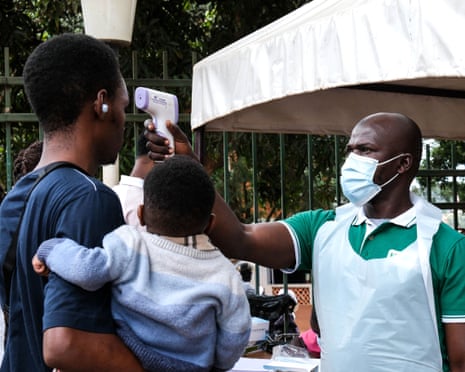
A person in a surgical mask and plastic apron holds a  thermometer to the head of a man carrying a child.
theguardian.org

The world is becoming less resilient to outbreaks of infectious diseases, experts have warned, as health authorities in the Democratic Republic of the Congo and Uganda scramble to contain an outbreak of Ebola.

The Global Preparedness Monitoring Board (GPMB) said in a report published on Monday that “as infectious disease outbreaks become more frequent they are also becoming more damaging”, warning that pandemic risk is outpacing investments in preparedness and “the world is not yet meaningfully safer”.

Disease outbreaks are becoming more likely due to the climate crisis and armed conflict, while collective action is being undermined by geopolitical fragmentation and commercial self-interest, the report said.

The GPMB is a group of experts established in 2018 by the World Bank and the World Health Organization (WHO) after the first large scale Ebola outbreak in west Africa and just before Covid-19. Its latest findings come amid global attention on the hantavirus outbreak on a cruise ship and a day after the declaration of an international public health emergency after at least 87 Ebola deaths in the DRC.

The two outbreaks “are just the latest crises in our troubled world”, WHO chief Tedros Adhanom Ghebreyesus told the opening of the UN agency’s World Health Assembly in Geneva.

WHO’s representative in the DRC, Anne Ancia, told Reuters that in responding to the Ebola outbreak it had emptied its stocks of protective equipment in the capital, Kinshasa, and was preparing a cargo plane to bring additional supplies from a depot in Kenya. The International Rescue Committee and Médecins Sans Frontières aid groups said they had teams responding to the outbreak.

In Geneva, Prof Matthew Kavanagh, director of the Georgetown University Center for Global Health Policy & Politics, said aid cuts may have played a role in leaving the world “playing catch-up against a very dangerous pathogen”.

He said: “Because early tests looked for the wrong strain of Ebola, we got false negatives and lost weeks of response time. By the time the alarm was raised, the virus had already moved along major transport routes and crossed borders.

“This crisis didn’t happen in a vacuum. When you pull billions out of the WHO and dismantle frontline USAID programmes, you gut the exact surveillance system meant to catch these viruses early. We are seeing the direct, deadly consequences of treating global health security as an optional expense.”

The GPMB report finds that new technologies, including novel vaccine platforms such as mRNA, have “advanced at unprecedented speed” and billions of dollars have been invested in pandemic preparedness and response.

But the world is “moving backwards” on measures such as ensuring equitable access to vaccines, tests and treatments, it found. During recent mpox outbreaks, vaccines took almost two years to reach affected countries in Africa, which is even slower than the 17 months it took for Covid-19 vaccines to be distributed.

Outbreaks had damaged trust in government, civil liberties and democratic norms, amplified by politicised responses and attacks on scientific institutions, the GPMB warned. These had outlasted the crises themselves and left societies “less resilient to the next emergency”, it said.

Kolinda Grabar-Kitarović, GPMB co-chair and former president of Croatia, said: “The world does not lack solutions. But without trust and equity, those solutions will not reach the people who need them most.

“Political leaders, industry and civil society can still change the trajectory of global preparedness – if they turn their commitments into measurable progress before the next crisis strikes,” she said.

Countries failed to meet a deadline to finalise the pandemic agreement treaty before this week’s World Health Assembly in Geneva, after disagreements over guarantees of access to medical tests, vaccines and treatments in exchange for sharing information on any pathogens emerging on their territories.

The GPMB called on political leaders to establish a permanent, independent monitoring mechanism to track pandemic risk, conclude the pandemic agreement to ensure equitable access to vaccines, diagnostic tests and medicines, and put in place financing to secure preparedness and immediate responses to outbreaks.

Joy Phumaphi, the GPMB co-chair and a former health minister in Botswana, said: “If trust and cooperation continue to fracture, every country will be more exposed when the next pandemic strikes.”

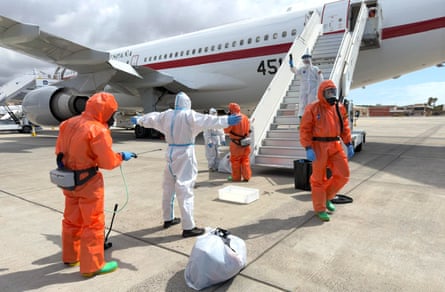
A person in a white hazmat suit and visor stands on the tarmac next to an aircraft and is sprayed by a person wearing an orange protective suit and visor while others in protective clothing look on.
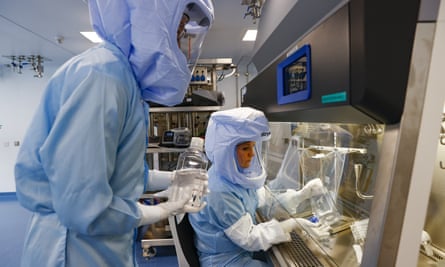
Two people in a protective clothing and full helmet-type face masks in a laboratory

Continue ReadingInfectious diseases such as hantavirus and Ebola becoming more frequent and damaging, say experts

Trump says Islamic State ‘second in command’ killed by US and Nigerian forces

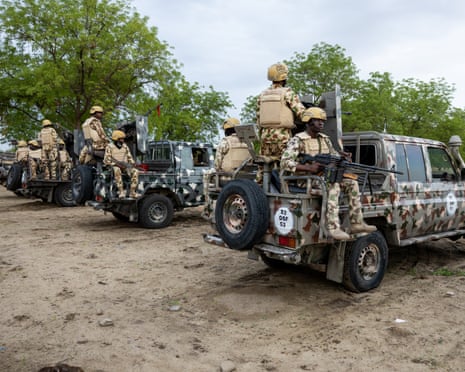
Nigerian soldiers during training at a military base in Monguno, in Nigeria’s Borno state, last year

Donald Trump has said US and Nigerian forces killed the “second in command” global leader of the Islamic State.

“Tonight, at my direction, brave American forces and the Armed Forces of Nigeria flawlessly executed a meticulously planned and very complex mission to eliminate the most active terrorist in the world from the battlefield,” the US president said on his Truth Social platform Friday.

“Abu-Bilal al-Minuki, second in command of ISIS globally, thought he could hide in Africa, but little did he know we had sources who kept us informed on what he was doing,” Trump added.

Al-Minuki had been placed under US sanctions in 2023 for ties to the Islamic State group.

“He will no longer terrorize the people of Africa, or help plan operations to target Americans,” Trump said. “With his removal, ISIS’s global operation is greatly diminished.”

Trump thanked the government of Nigeria for its “partnership” on the operation, while not disclosing exactly where it took place.

Al-Minuki, a Nigerian national, was designated as a “specially designated global terrorist” by the former Biden administration in 2023, according to the US federal register.

Trump has previously accused Nigeria of failing to protect Christians from Islamist militants in the north-west.

Nigeria denies discriminating against any religion, saying its security forces target armed groups that attack both Christians and Muslims.

The US carried out strikes targeting Islamic State-linked militants in Nigeria in December. Since then, Washington has deployed drones and 200 troops to provide training and intelligence support to the Nigerian military against Islamic State and al Qaeda-linked insurgencies that are spreading across west Africa.

The US forces were operating in a strictly non-combat role, Nigerian military officials said earlier this year.

With Agence France-Presse and Reuters

Continue ReadingTrump says Islamic State ‘second in command’ killed by US and Nigerian forces

Ebola outbreak kills 65 people in eastern Democratic Republic of the Congo

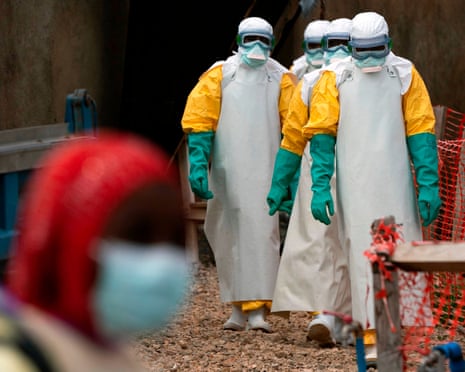
Health workers in protective gear walk toward the camera at an Ebola treatment centre
theguardian.org

An outbreak of Ebola has killed 65 people in the Democratic Republic of the Congo, according to African health officials.

There have been 246 suspected cases of the deadly haemorrhagic fever reported so far in Ituri province, which shares borders with Uganda and South Sudan.

Officials at the Africa Centres for Disease Control and Prevention (Africa CDC) said they were concerned about the risk of further spread. The area is home to mining towns where people are constantly coming and going, making infectious disease control challenging.

Ebola is a severe illness with a high fatality rate that spreads through direct contact with body fluids such as the blood or vomit of infected people, or dead bodies, such as during funeral preparations.

The DRC’s national research laboratory has detected the Ebola virus in 13 of 20 samples tested, Africa CDC said on Friday.

The DRC has had 16 outbreaks of Ebola since the virus was identified there in 1976.

Typically they have had the Zaire strain of Ebola, for which vaccines are available. However, Africa CDC said early testing suggested the current outbreak was a different type, with fuller genetic sequencing results due within 24 hours.

The health watchdog said it was convening an urgent meeting on Friday with authorities from the DRC, Uganda and South Sudan as well as the World Health Organization and pharmaceutical companies.

“Africa CDC stands in solidarity with the government and people of the Democratic Republic of the Congo as they respond to this outbreak,” said Dr Jean Kaseya, director general of Africa CDC. “Given the high population movement between affected areas and neighbouring countries, rapid regional coordination is essential.”

Cases have been reported mainly in Mongwalu and Rwampara health zones, with suspected cases also reported in neighbouring Bunia.

Dr Michael Head, senior research fellow in global health at the University of Southampton in the UK, said: “The Democratic Republic of the Congo often sees fatalities from Ebola. There is likely a perfect storm of factors that cause these regular outbreaks. Close human contact with animal reservoirs, most likely bats but possibly also primates, is one factor. Other concerns include the movement of people between rural and urban environments, the tropical climate, and the high rainforest coverage.”

During the 2014-16 outbreak in west Africa there were an estimated 28,000 cases and 11,000 deaths.

Continue ReadingEbola outbreak kills 65 people in eastern Democratic Republic of the Congo

Judge orders Trump administration to return Colombian woman deported to DRC back to the US

A Kinshasa cityscape with modern high-rise buildings, construction cranes, and lush green vegetation under an overcast sky

A federal judge has ordered the Trump administration to bring a Colombian woman back to the US from the Democratic Republic of Congo, after she was deported to the African country that had refused to accept her.

The deportation of Adriana María Quiroz Zapata “was likely illegal”, the US district judge Richard Leon ruled on Wednesday.

Quiroz Zapata, 55, who has diabetes and a thyroid condition, “has been sent to a country that refused to accept her because they cannot provide sufficient medical care”, the ruling said. “As a result, she faces a daily risk of medical complications, up to and including death.”

Black spots began to grow on Quiroz Zapata’s back and foot while she was in detention, her skin started to peel and her nails blackened, according to a declaration that Quiroz Zapata submitted in court, and which was provided to the Associated Press by her lawyer.

“She’s not doing well and does worry that she’s going to die,” her lawyer, Lauren O’Neal, said.

Quiroz Zapata entered the US from Mexico in August 2024 and was taken into Immigration and Customs Enforcement (ICE) custody. Since being deported, she has lived in a hotel in Kinshasa, the Democratic Republic of Congo’s capital. The hotel gates are locked, O’Neal said. Quiroz Zapata and other deportees are rarely allowed out, and only with supervision, she said.

Quiroz Zapata was among thousands of immigrants living legally in the US, waiting for rulings on asylum claims, when they were suddenly issued deportation decrees that ordered them expelled to countries where most had no connections.

More than 15,000 third-country deportation orders were issued in the White House push for ever more immigrant expulsions, advocacy groups say, though only a fraction of the orders have been carried out.

Few details are known about the agreements to accept these deportees, though the US has signed them with a range of countries, including Ecuador, Honduras, Uganda, Cameroon and the Democratic Republic of Congo. Advocacy groups estimate only a couple of hundred third-country deportations, at most, have been carried out.

Continue ReadingJudge orders Trump administration to return Colombian woman deported to DRC back to the US

UN urges Equatorial Guinea to halt plans to return US deportees to home countries

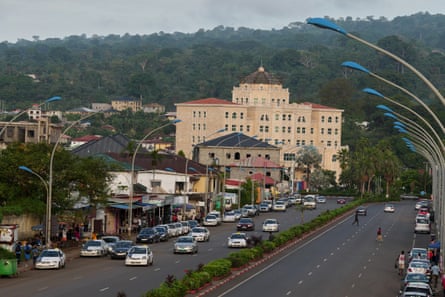
Densely built Malabo cityscape with colorful rooftops spreads across a valley with forested mountains behind.

Human rights experts at the United Nations issued a rare public appeal to Equatorial Guinea, urging the West African country to halt its plans to return US deportees to their home countries where they face political violence, torture and death.

The statement, cosigned by a representative of the African Commission on Human and People’s rights, adds diplomatic pressure on Equatorial Guinea, one of the world’s most repressive regimes, to comply with international human rights standards and avoid refoulement, or the expulsion of people to countries where they face persecution.

“States must ensure that no one is returned, directly or indirectly, to a situation where their life, freedom or physical or mental integrity would be in danger,” the experts implored in a statement on Wednesday.

The Trump administration made deals with dozens of countries to receive US deportees, as part of the president’s goal of “mass deportation”. The US gave Equatorial Guinea $7.5m to take in third-country nationals, who had been granted protections against expulsion to homelands where they faced persecution.

The UN’s public plea came after several deportees sent by the US to Equatorial Guinea said security officials presented nine of the US deportees with salvo-conductos – temporary travel documents – and told them they would be deported imminently to their home countries.

“Equatorial Guinea should never be treated as a safe country for migrants or asylum seekers. This is a highly repressive authoritarian state,” said Tutu Alicante, director of the human rights group Equatorial Guinea Justice. “Vulnerable migrants are being transferred into a country where they have no legal status, no family networks, and no meaningful protection mechanisms.”

Esther, who landed in Malabo, Equatorial Guinea, weeks ago, said the conditions at the hotel where she has been detained are not unlike a prison. She and at other deportees had been held without access to soap, toothbrushes or clean clothes.

“I have cried. I have struggled. I have done everything,” she said in a phone call with the Guardian from the hotel room where she has been confined. “I have fought and fought. Now I don’t have anything left in me.”

Esther is from a different West African country. The Guardian is using a pseudonym for her, and not naming her home country in order to protect her safety. She said she fled in 2024, after she was arrested and tortured at the behest of government officials – first making her way to South America, and then migrating north through Mexico before arriving at the US southern border. She spent 14 months at a US immigration detention center before a judge heard her case, and granted her a “withholding of removal” – a special immigration status guaranteeing she wouldn’t be sent back to her home country where she faced violence.

She moved in with her uncle, in New York, and had complied with requirements to regularly check in with Immigration and Customs Enforcement, she said. It was during a check-in appointment that she was arrested, she said, denied access to her lawyer, moved to Louisiana and then eventually shackled and placed on a plane to Equatorial Guinea. Officials repeatedly declined to tell her where she was being sent, she said, until she boarded the flight and an airline employee informed her of the destination.

Since then, she has been confined to a hotel in Malabo, guarded by armed officials. Her only access to the outside world is through her hotel room window, she said, and via her cell phone, which she managed to retain even after officials in the US and Equatorial Guinea confiscated her travel documents and other belongings.

Lawyers were repeatedly blocked from delivering her and other deportees phone chargers, soap, fresh clothes and pads. Eventually, she was able to receive a charger and pads, she said – but she was wearing the same clothes she had on when she was arrested in the US. She has also been unable to get medication after catching the flu, she said, or any treatment for the pain she feels in her hands and ankles from being shackled for hours during her journey.

On Saturday, Esther said, officials told her at least eight others that they would be expelled. “I know what awaits me if they send me where they want to send me. I will be locked up, I will be in jail,” she said. Two years ago, she said, authorities arrested and disappeared her father, then arrested, beat and starved her until she was at the brink of death. Her mother, who begged officials to let her escort Esther to the hospital, had also arranged for her daughter to escape.

Lawyers from a coalition of legal and human rights non-profits who are advocating for at least 28 people sent to Equatorial Guinea said the deportees were granted protections under US immigration laws or the international Convention Against Torture – meaning that they proved, before an immigration judge, that they would likely face severe pain and suffering at the hands of the government in their home countries. Nonetheless, officials in Equatorial Guinea had already refouled several of them – including a West African man who had been persecuted for his sexual orientation. He is now in hiding, his lawyers said.

These sorts of secondary and tertiary expulsions have become increasingly common.

The Trump administration has made deals with at least 25 countries – including Panama, Costa Rica, Eswatini and Cameroon – to receive third-country nationals from the US, according to a report released by Democratic members of the Senate foreign relations committee in February.

Some countries, such as El Salvador, agreed to incarcerate deportees from the US; that is how more than 250 Venezuelan nationals ended up at a notorious Salvadoran megaprison for four months last year. In other cases, foreign governments have been holding migrants in hotel rooms or temporary accommodations before sending them onward to their home countries.

“The Trump Administration is utilizing all lawful options to carry out the largest deportation operation in history, just as President Trump promised,” a spokesperson for the US Department of Homeland Security told the Guardian. The agency did not respond to detailed questions about its policies on third-country deportations, and why US officials had declined to inform Esther and other deportees of where they were being sent prior to their expulsions.

The Trump administration was empowered by a supreme court ruling last summer that cleared the way for the US government to send deportees to South Sudan. In many cases, US deportees are being sent to countries with troubling human rights records, active civil conflict or repressive leadership. Many of these agreements have been conducted in a “secretive” manner, said Beatrice Njeri, the Africa Regional Litigator for the Global Strategic Litigation Council, which is representing Esther and several other migrants sent to Equatorial Guinea.

“Our clients, like Esther, had been granted protection in the US, including survivors of female genital mutilation, women subjected to various forms of sexual violence, LGBTQ+ persons, and individuals facing political or religious persecution,” Njeri said. Instead of receiving protection, she added, the deportees have been subject to “prolonged, inhumane detention” and onward journeys where they face grave danger.

The Global Strategic Litigation Council and a coalition of other human rights groups have been working to stop these “third country” deportations and help those who have already been forcibly expelled to these countries find asylum or safety.

“What we are seeing in Equatorial Guinea is not an isolated issue. It is the expansion of a deliberate system designed to outsource cruelty and erode protections for people seeking safety in the US,” said Bella Mosselmans, director of the Global Strategic Litigation Council. “These agreements are causing immense human suffering and flagrantly violating international law. They must end.”

In September, the United Nations human rights office called on Ghana to stop the removal of migrants sent there from the US to their home countries where they faced torture. In their statement on Wednesday, human rights experts from the UN and African Commission said they were alarmed by the Trump administration’s tactic of expelling migrants, including asylum seekers, to third countries without any arrangements for their long term safety.

“We are also concerned that these developments appear to reflect broader trends of migration externalisation arrangements involving transfers of migrants, asylum seekers and persons in need of international protection to third countries, including African States, without sufficient human rights safeguards.”

For now, Esther said, she is surviving by trying her best not to think about the future. She has been able to call her uncle and her mother, she said, who are panicked. “My mother told me I am still young, I have so much life to live – that is why she has helped me escape,” she said.

When they last parted, her mother thought she might never see her daughter again. Now she worries they will reunite, “but she’ll see me as a corpse, to bury”, Esther said.

Malabo, Equatorial Guinea, where one deportee described being confined to a hotel.

Continue ReadingUN urges Equatorial Guinea to halt plans to return US deportees to home countries

Remains of second US soldier who went missing during military exercises in Morocco have been recovered

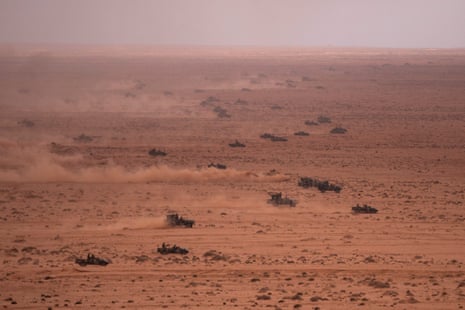
Military vehicles drive across a sandy desert terrain kicking up dust trails.

The remains of the second US army soldier who went missing during military exercises in Morocco have been recovered, the army said on Wednesday, ending a multinational search operation that deployed air, naval and artificial intelligence assets.

The soldier was identified as Spc Mariyah Symone Collington of Taveres, Florida, the US Army Europe and Africa said in a statement. She was 19 years old.

“Royal Moroccan Armed Forces transported the soldier’s remains by a Moroccan helicopter to the morgue of Moulay El Hassan military hospital in Guelmim, Morocco,” the statement said.

Collington served as an air and missile defense crew member and was assigned to Charlie battery, fifth battalion, fourth air defense artillery regiment, 10th army air and missile defense command, US Army Europe and Africa said.

Collington entered the Regular Army’s Delayed Entry Program in 2023 before beginning active-duty service in 2024. She completed basic combat training and advanced individual training at Fort Sill, Oklahoma, as a 14P air and missile defense crew member. She reported to Charlie battery, fifth battalion, fourth air defense artillery regiment, in Ansbach, Germany, in February 2025 and was promoted to specialist on 1 May 2026.

Her awards and decorations include the army service ribbon.

The announcement came days after the military said the remains of another soldier, 1st Lt Kendrick Lamont Key Jr, a 14A air defense artillery officer, had been recovered. The two soldiers fell off a cliff during an off-duty recreational hike in Morocco. Their remains are en route to the United States.

A spokesperson for the US Army Southern European Task Force, Africa (SETAF-AF) told the Associated Press that the circumstances surrounding the incident remain under investigation.

The two soldiers were reported missing on 2 May after participating in African Lion, an annual multinational military exercise held in Morocco. Their disappearance triggered a search operation involving more than 1,000 US and Moroccan military and civilian personnel, the SETAF-AF spokesperson added.

African Lion 26 is a US-led exercise launched in April across four countries – Morocco, Tunisia, Ghana and Senegal – with more than 7,000 personnel from more than 30 nations. Since 2004, it has been the largest US joint military exercise in Africa.

In 2012, two US marines were killed and two others injured during a helicopter crash in Morocco’s southern city of Agadir while taking part in the exercises.

Continue ReadingRemains of second US soldier who went missing during military exercises in Morocco have been recovered