As WHO sounds alarm over Ebola in DRC, what can be learned from previous outbreaks?

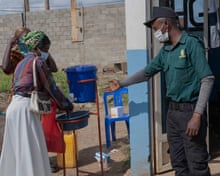
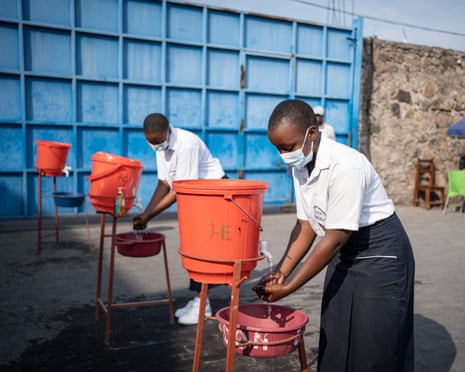
A student washing their hands under water running into a red bowl
theguardian.org

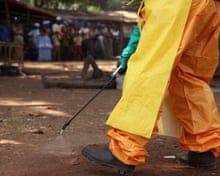
To be around the centre of an Ebola outbreak is to become used to the smell of chlorine. At hospitals and government buildings, surfaces are sprayed with it and hands washed in a 0.05% solution that can kill the virus in 60 seconds.

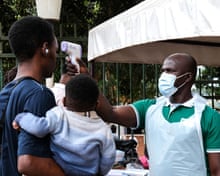
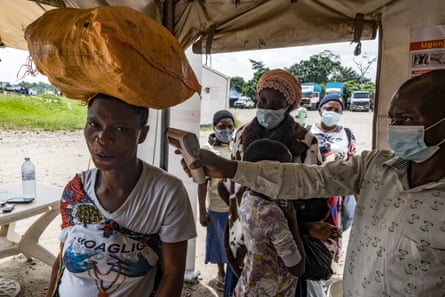
Infrared handheld thermometers take temperatures at airports and border crossings. Any indication of a fever prevents passage. Contact-tracing teams crisscross the countryside.

From 2018 to 2020, Butembo, in the Democratic Republic of the Congo’s northern Kivu province, was the setting for the largest Ebola outbreak the country had seen. The complexities of the crisis were not confined to the ravages of the virus itself – they were intensified by social, political and economic pressures of an area in the midst of a conflict.

As global health officials wrestle with a serious new Ebola outbreak in the DRC, which has shocked the World Health Organization with its speed and scale, the question is what lessons have been learned from previous outbreaks?

Ebola, unlike Covid, is not a particularly efficient virus. As it is not airborne it requires physical contact with bodily fluids, including blood and vomit, to spread. That makes it particularly risky for healthcare workers, who need full-body PPE and stringent disinfection processes.

Social practices including physical contact with the dead and dying in poor rural communities accelerated the spread in eastern Kivu and Ituri province.

A second critical factor that hampered the response six years ago was the history of political tension between the country’s government in Kinshasa and the Nande ethnic group in eastern Kivu amid an insurgency. The outbreak was exploited by cynical actors during elections, who either suggested Ebola did not exist or had been brought in by outsiders.

That, in turn, led to armed attacks, some lethal, on health workers and Ebola clinics, including one in Butembo while the Guardian was visiting.

While a new vaccination programme was available during that outbreak, there is no vaccine for the current strain of the Ituri outbreak, which is caused by Bundibugyo variant of Ebola. It is the least well known of the three forms of the disease and has caused only two outbreaks before – in 2007 and 2012 – which killed about 30% of those infected.

Another reason for concern in the current outbreak is the suggestion that the cases may have been missed early on, potentially enabling unrecognised transmission.

One key difference from previous major outbreaks in west and central Africa is the speed with which this time the WHO has declared it a public health emergency of international concern (PHEIC).

In 2018, the WHO was roundly criticised for delaying for four months before declaring a PHEIC, defined as “an extraordinary event that may constitute a public health risk to other countries through international spread of disease and may require an international coordinated response”.

In the current outbreak, a PHEIC was declared within 48 hours, and the WHO’s head, Tedros Adhanom Ghebreyesus, said his concern was so great he had decided to act without an emergency committee meeting.

Despite that, Daniela Manno, a clinical epidemiologist at the London School of Hygiene and Tropical Medicine, has warned the current Ituri outbreak shares some of the complicating elements of the 2018 to 2020 outbreak.

“First, the number of suspected cases reported before confirmation suggests transmission may have been ongoing for several weeks before the outbreak was formally recognised,” she said.

“Second, the outbreak is occurring in a region affected by insecurity, population displacement and high population mobility, all of which can complicate surveillance, contact tracing and delivery of healthcare.

“A previous Ebola outbreak affecting North Kivu and Ituri provinces between 2018 and 2020 lasted for nearly two years, with insecurity and community mistrust repeatedly disrupting contact tracing, vaccination and response activities.

“In addition, the outbreak is now thought to be caused by Bundibugyo virus, a rare Ebola-causing virus for which there are currently no licensed vaccines or therapeutics specifically approved. There are also no vaccines in late-stage clinical development that could be readily deployed during the outbreak.

“However, it is important to emphasise that the DRC has extensive experience responding to Ebola outbreaks, and outbreak response capacity is significantly stronger today than it was a decade ago.”

Anne Cori, an associate professor in infectious disease modelling at Imperial College London, said the spread of the disease across an international border had probably influenced the quick declaration of an international public health emergency.

“A PHEIC is an official declaration made by the WHO under the international health regulations, recognising the international nature of a public health threat. It aims to help mobilise attention and resources, and coordinate response efforts at international level.

“The last PHEIC for an Ebola outbreak was declared in July 2019 during the 2018 to 2020 Ebola epidemic in the North Kivu province of the DRC. At the time, the PHEIC was declared a year into the outbreak after it reached the urban area of Goma, threatening to spread internationally to nearby Rwanda.

“The current epidemic already comprises confirmed cases across both the DRC and Uganda, which likely influenced the declaration of a PHEIC as its focus is really the international nature of the threat.”

Peter Beaumont reported from Butembo for the Guardian in 2019, visiting Ebola treatment centres and vaccination efforts.
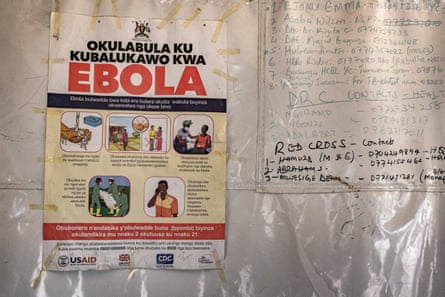
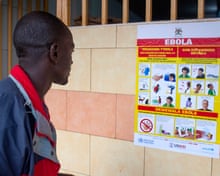
A poster displaying information to contain Ebola.
A woman balancing a sack of belongings on her head stands for a check from a man holding an infrared thermometer


Continue ReadingAs WHO sounds alarm over Ebola in DRC, what can be learned from previous outbreaks?

US claims ‘emergency refugee situation’ as it admits 10,000 more white South Africans

Newly arrived South Africans near Washington Dulles International Airport in 2025

The US government has said it will increase the number of white South Africans it admits as refugees this year from about 7,500 to 17,500, claiming that “unforeseen developments in South Africa created an emergency refugee situation.”

Since starting his second term in office last year, Donald Trump has repeatedly made false claims that white Afrikaners are racially targeted and face a “white genocide”, which South Africa’s government has furiously rebutted.

His administration also cut aid to South Africa, boycotted the G20 summit in Johannesburg last year and disinvited South Africa from this year’s G20, which will be held at one of Trump’s resorts in Miami.

The US began admitting white South Africans as refugees in May 2025, while suspending the refugee settlement programme for people fleeing war and persecution in countries including Afghanistan, the Democratic Republic of the Congo and Sudan. In the year ending in September 2024, the last full fiscal year before Trump took office, the US admitted more than 100,000 refugees.

On Monday, the US state department sent Congress an emergency notice, stating that it would take up to 17,500 Afrikaners as refugees in the year ending in September. In October, the government had said it would admit just 7,500 refugees in total, mainly white South Africans.

It said the cost of resettling 10,000 more white South Africans would be about $100m (£75m), according to the Associated Press, which saw a copy of the notice.

The state department said the South African government’s rhetoric “across multiple ministries and political parties has sought to undermine the US resettlement program and attacked Afrikaners”.

It also cited a South African raid of a US refugee processing centre in December, which the US government said at the time was “unacceptable”. South Africa’s government defended the action, saying that it had deported seven Kenyans who were working illegally in the country without permits.

“This escalating hostility heightens the risks to Afrikaners in South Africa, who are already subject to far-reaching government-sponsored race-based discrimination,” the state department notice said.

Afrikaners are descended from Dutch and French settlers and ruled South Africa during apartheid. They repressed the black majority, keeping them in poverty, while ensuring the white minority was safe and wealthy.

Affirmative action policies since the end of apartheid helped to create a black elite and middle class. However, more than 30 years after Nelson Mandela came to power as South Africa’s first black president, South Africa remains deeply unequal. About 12% of white South Africans are unemployed, according to official data, compared with 48% of black South Africans.

Nonetheless, “black economic empowerment” policies, along with high crime rates that affect everyone, have nurtured a feeling among some white South Africans that they are now the victims of racial discrimination.

The conspiracy theory of a white genocide has also long been a staple of the racist far right, which highlights incidents where white farmers were murdered. In recent years, this has also been amplified by the South Africa-born billionaire Elon Musk and the rightwing media personality Tucker Carlson.

Associated Press contributed to this report

Continue ReadingUS claims ‘emergency refugee situation’ as it admits 10,000 more white South Africans

Calls for release of Sierra Leonean singer jailed in ‘crackdown on free speech’

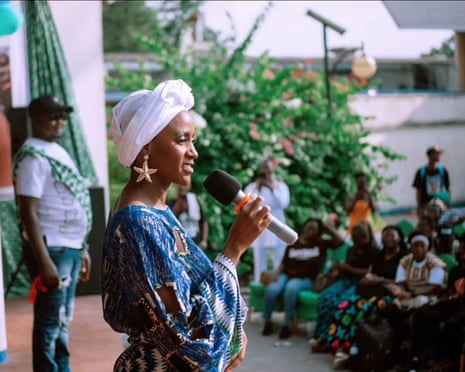
A young African woman in a headdress and loose gown speaks into a mic at an outdoors rally
theguardian.org

Lawyers, politicians and activists have called for the release of one of Sierra Leone’s best-known celebrities, who they said was unjustly imprisoned as part of a government crackdown on free speech and political dissent.

Zainab Sheriff, a singer and reality-TV show contestant who became a political opposition figure, was sentenced in April to four years and two months’ imprisonment for incitement and using threatening language.

Sheriff’s charges stem from a speech she made in January, a video recording of which was played at the trial. According to prosecutors, Sheriff made statements during a rally saying that anyone who rigged an election had stolen the people’s vote, committed treason and they and their families should be killed.

During the last election in Sierra Leone in 2023, organisations including the Carter Center, a US election monitoring group, expressed concern about the transparency of the tabulation process.

“A lot of us feel this isn’t about Sheriff’s words,” said Yvonne Aki-Sawyerr, mayor of the capital, Freetown, and a member of the All People’s Congress opposition party. “This is about Sheriff being used as a very, very visible, high-profile example of what you must not do in this society now. You must not speak your mind or you can be charged and end up in jail.

“This is about ensuring that people are scared,” she said. “I am disappointed [in the sentence]. And that’s an understatement. The bottom line is, we’ve heard far worse.”

Arrested on 20 February, Sheriff pleaded not guilty. She was repeatedly denied bail and was sentenced on 14 April. She is being held in a maximum-security prison in Freetown.

Willietta Hughes, legal manager for AdvocAid, a civil society organisation working with girls and women in Sierra Leone, supported Sheriff’s case. She said the court proceedings were at times reminiscent of a show trial and called the sentence “ridiculous”. No evidence was presented that Sheriff’s comments had provoked any public reaction, she said.

“We have seen people who have said far worse than what she said and they were either not prosecuted or were given a very low term,” Hughes said. “I see [Sheriff’s case] as sending a message to people that you can’t get up one day and say x, y and z, which is a person’s legal right.”

She added: “It’s a laughing issue, but we’ve seen the trend where the law is being utilised as a weapon against people who speak up.”

Sheriff’s sentence comes a year after Hawa Hunt, a social media influencer, was arrested on live television for posts she made about Sierra Leone’s president, Julius Maada Bio, and the first lady, Fatima Bio, in May 2023. She was detained for two months.

In March 2023, five UN experts wrote to President Bio about the detention and treatment of more than 40 people, predominately women, by the authorities on 4 July 2022 for protesting about increased living costs and the government’s handling of the economy.

Hughes said the case had chilling implications. “As women, we are placed in a certain category where you can only say certain things,” she said. “The moment you say words which appear to be a bit strong, you are considered to be violating some sort of rule or law, and acting against your own gender.”

In a recent interview, Nemata Majeks Walker, a prominent women’s rights activists and founder of the 50/50 Group, spoke out about the climate for women in Sierra Leone, saying repeatedly that she was “scared”.

“It is sad that women’s voices are being oppressed, but women will continue to speak up,” she said. “They will be guarded but they will continue to speak. It will be difficult to speak the truth because you are scared, but we will continue to express that we have a right to take part in politics, we have a right to hold positions of power.”

Aki-Sawyerr added: “It is scary the way the laws are being used. That’s why we have to keep speaking up. We can’t just ignore what I would say is the transformation of our democracy into an authoritarian state.”

A young African woman in a blue and green dress – the colours of Sierra Leone’s flag
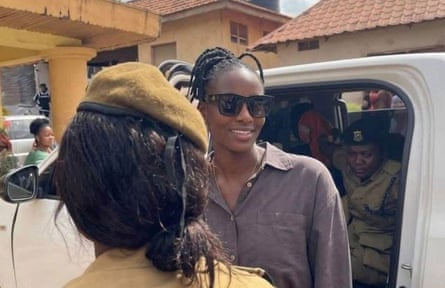
A young African woman in sunglasses gets out of a 4x4 escorted by soldiers
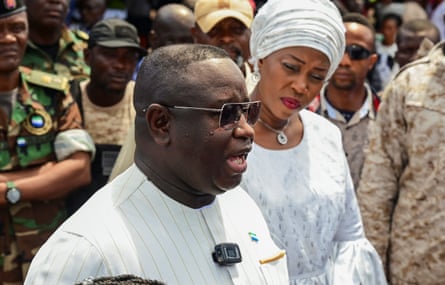
A middle-aged African man in a white shirt speaks to a crowd while a woman watches him

Continue ReadingCalls for release of Sierra Leonean singer jailed in ‘crackdown on free speech’

‘Huge milestone’ as Libyan militia commander accused of torture appears at ICC

Khaled Mohamed Ali El Hishri wearing headphones sits in a courtroom

A former militia commander accused of overseeing murder, rape, enslavement and torture in Libyan detention centres will appear at the international criminal court on Tuesday for a hearing that campaigners say is a landmark step towards “justice, truth, reparation and deterrence” of abuses of refugees trying to reach Europe from Africa.

The prosecution of Khaled Mohamed Ali El Hishri on charges of war crimes and crimes against humanity is the first to reach a courtroom resulting from the ICC’s investigation into crimes in Libya after the fall of Muammar Gaddafi in 2011.

Legal experts said the hearing, when judges will decide if there is sufficient evidence against Hishri for a trial, would be a “huge milestone”.

“It is a really important development,” said Allison West, a senior legal adviser at the European Center for Constitutional and Human Rights. “The is the first case in the [ICC’s] Libya investigation that has been ongoing for more than 15 years. It’s the first time we have got someone into custody.”

For survivors of abuse in Libya, the court hearing will be a moment that survivors and victims “never thought would happen”, said David Yambio, who was held in Mitiga prison between 2019 and 2020 and accuses Hishri of beating him.

“Now [Hishri] is in front of the court, it sends a strong message to perpetrators wherever they are that they will be brought to account and justice will be delivered, even if it takes a long time,” Yambio said.

Hishri was arrested in Germany last year when, it is thought, he sought medical treatment for a family member. A senior officer in the Special Deterrence Force, a powerful armed group that ran detention sites in western Libya, the 47-year-old is accused of imposing a brutal regime at the Mitiga prison in Tripoli between February 2014 and at least mid-2020.

Such sites became infamous after Gaddafi’s fall as they filled with refugees detained in Libya or intercepted by the Libyan coastguard, which has been supported by the EU and member states since 2017, as they tried to reach Europe.

Amnesty International and other human rights groups have described “harrowing violations” that were “the horrifying consequences of Europe’s ongoing cooperation with Libya on migration and border control”. Human Rights Watch (HRW) said thousands of detainees were held in Mitiga in overcrowded, unhygienic cells and were systematically subjected to violent assaults.

At a hearing in December, prosecutors said there were reasonable grounds to believe Hishri personally killed one detainee, while a “significant number” of people died during his time at the prison, either from torture, being left outside in winter, untreated injuries or starvation.

Hishri is also accused of “personally torturing, mistreating, sexually abusing and killing detainees” and imposing “prison conditions aimed at increasing … suffering”. Detainees were variously shot, confined in small metal boxes and beaten with cables “sometimes for the entertainment and amusement of guards”, it is alleged.

Defence lawyers are expected to challenge the jurisdiction of the ICC and have called for Hithri’s release.

West said the case against Hithri would shine a new light on serious crimes against people in Libyan detention centres but that many alleged perpetrators remained at liberty. Eight ICC arrest warrants are still pending in connection with the violence in Libya that followed the fall of Gaddafi.

“One of the most significant things about this case, other than actually Hithri being in the dock, is that there are a lot of people who aren’t,” West said.

While some countries in Europe have investigated and prosecuted individuals for human smuggling and trafficking of people in Libya, these cases have not included charges of war crimes or crimes against humanity.

That Germany arrested Hishri was important, campaigners said. “One state finally … cooperated, in that they actually arrested and surrendered the suspect to the court, because there’s been many instances in the past where that hasn’t happened,” said Alice Autin, a HRW researcher.

One of Hishri’s alleged co-perpetrators at Mitiga prison was arrested in February last year in Italy but then released on a technicality and returned to Libya, prompting controversy in Italy and dismay at The Hague. “This case [with Hishri] is not against the most senior person of that prison but is … the first step in getting sort of to the perpetrators of that system,” Autin said.

Libya’s warring factions agreed a ceasefire in 2020 but the country remains divided between the administration of the military leader Khalifa Haftar in the east and the Tripoli-based government of national accord (GNA) led by the prime minister, Abdul Hamid Dbeibah, in the west.

The case of Hishri is politically sensitive. The Special Deterrence Force is allied to the internationally recognised GNA in Tripoli and nominally under the interior ministry.

The ICC, set up to be an independent international “court of last resort” for grave crimes that could not be dealt with locally, has been under immense pressure in recent years. The US has imposed sanctions on four judges for what it has called its “illegitimate actions” targeting the US and Israel, while the court’s chief prosecutor is being investigated over alleged sexual misconduct, which he denies.

Yambio called for an end to European programmes that support the Libyan militias. “The EU is complicit in these crimes,” he said.

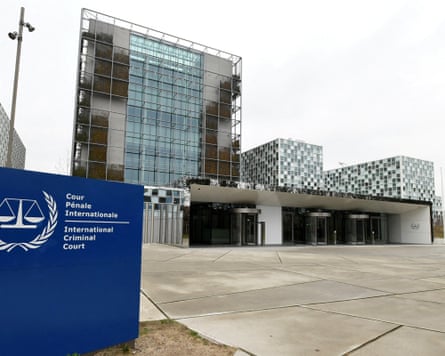
Exterior of the glass-fronted court building

Continue Reading‘Huge milestone’ as Libyan militia commander accused of torture appears at ICC

Belgian ex-diplomat dies before standing trial over 1961 murder of Congolese leader

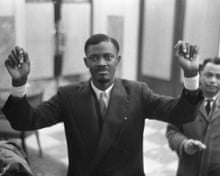
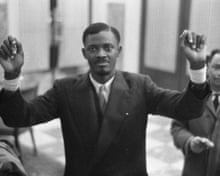
Patrice Lumumba pictured with his hands tied behind his back in 1960, surrounded by men in uniforms.

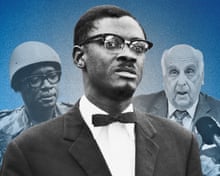
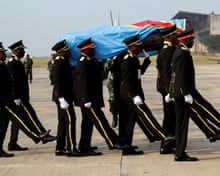
A 93-year-old Belgian former diplomat who became the first person to be charged in the murder of the Congolese leader Patrice Lumumba has died before he could stand trial.

The death of Étienne Davignon, an aristocrat who served as a European commissioner during a decades-long career as one of Belgium’s leading diplomats and industrialists, was confirmed by the Jacques Delors Institute thinktank, where he had served on the board.

In March, Davignon was ordered to stand trial for war crimes for alleged involvement in the extra-judicial killing of Lumumba 65 years ago, a final attempt to shed light on one of the 20th century’s most consequential political assassinations.

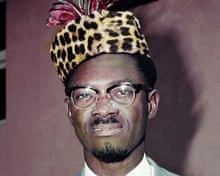
Lumumba, who was elected the first prime minister of the country now called the Democratic Republic of the Congo upon its independence from Belgium in 1960, was ousted from power months later and killed by Belgian-backed secessionist rebels on 16 January 1961.

The murder was a dark chapter in Belgium’s colonial history and a watershed for the era’s liberation struggles in African countries.

Prosecutors said Davignon, a junior diplomat at the time, had participated in the unlawful detention or transfer of Lumumba and deprived him of his right to an impartial trial.

Davignon was also accused of involvement in the murder of two of Lumumba’s political allies, Maurice Mpolo and Joseph Okito. He had denied any wrongdoing and at the time of his death was awaiting the outcome of an appeal against the Belgian court’s decision to order him to stand trial.

The court’s decision had been welcomed by the Lumumba family, who said: “For our family, this is not the end of a long fight, it is the beginning of a reckoning that history has long demanded.”

Davignon was the last person still alive to be targeted by the Belgian investigation. The court ruled that cases against other suspects would not remain open because of their deaths.

After his Congo assignment, Davignon rose to become a leading figure in the Belgian establishment, serving as the cabinet chief to the prime minister Paul-Henri Spaak in the late 1960s and as European commissioner from 1977-85. He held a number of board positions for Belgian and foreign companies.

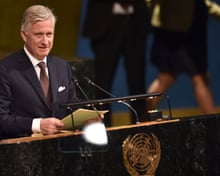
Born a viscount, he was elevated to the rank of count by King Philippe in 2018.

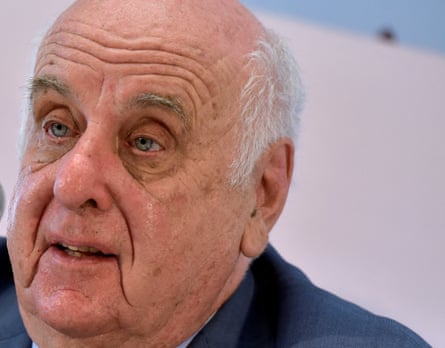
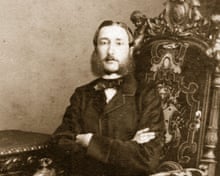
Étienne Davignon.


Continue ReadingBelgian ex-diplomat dies before standing trial over 1961 murder of Congolese leader

‘It’s heartbreaking’: panic in eastern DRC over return of Ebola

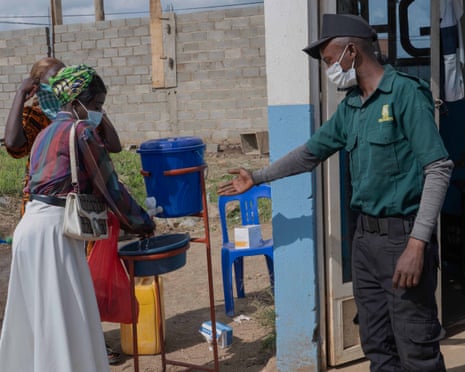
A hospital worker holds out his hand to direct a woman to a handwashing facility

“On public transport, in bars and at mass gatherings, everyone is talking about Ebola,” said Gloire Mumbesa, 38, a resident of Mongbwalu, a mining town in the Democratic Republic of the Congo. He said cases of the disease had been reported locally and panic was engulfing the area because of the lack of a vaccine for the Bundibudyo strain. “The fear is that this disease may spread to many other areas.”

Residents of Ituri province in eastern DRC, where the World Health Organization announced an outbreak of Ebola last week, are living in growing fear of the possible continued spread of the disease and its deadly impacts, nearly six years after the last outbreak in the region ended.

“We’re stunned by the resurgence of Ebola in our region,” said Dieudonné Lossadekana, 51, a civil society coordinator in Bunia city, where the first suspected case was reported. “We’ve already recorded several dozen deaths. For us, it is heartbreaking.”

The economic impacts of the outbreak are a key worry, with residents concerned that authorities may impose restrictions that would hinder them from earning a living in a region plagued by armed conflict and where people are already struggling financially.

“We live in a region where poverty is rife and people live from hand to mouth,” said Claude Kasuna, 48, in Irumu territory. “When a health emergency like this one strikes, it hits us hard economically.”

The WHO director general, Tedros Adhanom Ghebreyesus, declared the outbreak a “public health emergency of international concern” after more than 300 suspected cases and 88 deaths were reported in the DRC and two deaths in neighbouring Uganda.

The majority of the deaths and suspected cases have been reported in Ituri province, a business centre and migratory hub that borders Uganda and South Sudan. The gold-rich province is the centre of a long-running conflict between militias allied to the Hema and the Lendu, who are fighting over land and the mineral. The fighting has killed more than 50,000 people since 1999.

A health worker who was the first suspected case reported fever, haemorrhaging, vomiting and other symptoms on 24 April and died at a medical centre in Bunia, according to the WHO.

Jean Pierre Badombo, a former mayor of Mongbwalu, a mining town in Ituri at the centre of the outbreak, told Reuters that people started falling ill in mid-April after a large open-casket funeral procession arrived from Bunia. “After that, we experienced a cascade of deaths,” he said.

On Monday the Congolese health minister, Samuel Roger Kamba, said the government would open three treatment centres for Ebola in Ituri.

The WHO regional office for Africa said on Sunday that 35 experts from the organisation and seven tons of emergency medical supplies and equipment had arrived in Bunia.

Elsewhere in eastern DRC, one case was reported in rebel-controlled Goma, a woman who travelled to the city from Bunia where her husband had died of the disease.

Heather Kerr, the DRC country director at the International Rescue Committee, said the conflict in the region made containing the Ebola outbreak “all the harder”. “Eastern DRC’s years of conflict and displacement have left health systems on their knees,” she said. “With dozens of lives already lost and an already overstretched health system, we need to act fast.”

Manenji Mangundu, the DRC country director at Oxfam, said the outbreak was “hitting a country already stretched to breaking point” due to ongoing conflict and years of aid cuts.

First identified in 1976 in what is now the DRC, Ebola is a highly contagious and often fatal viral disease that affects humans and non-human primates. It spreads through body fluids or contaminated materials and causes organ damage, blood vessel impairment and sometimes severe internal and external bleeding.

WHO has said the current outbreak involves the rare Bundibugyo variant, which has no approved treatment or vaccine. It is named after the district in western Uganda where it was first discovered in 2007.

Jean-Jacques Muyembe-Tamfum, the director general of the National Institute of Biomedical Research in the DRC and a co-discoverer of the Ebola virus, said some candidate compounds for a Bundibugyo vaccine were expected to enter trials by the end of May or in June.

In the meantime, he said, the government was implementing public health preventive measures including protecting healthcare workers and treating cases based on symptoms. “This is how we brought the Bundibugyo strain outbreak under control in 2012 in Isiro, not far from Ituri,” he said.

This is the 17th Ebola outbreak in the DRC. From August 2018 to June 2020, the country recorded the second largest outbreak of the disease in history globally, and the country’s deadliest, centred in North Kivu and Ituri provinces. It caused more than 2,000 deaths.

In Ituri, authorities have to address enduring stigma and misconceptions and rumours associated with Ebola in fighting the disease, just as with past outbreaks. Kasuna, the Irumu resident, said: “Our people tend to believe in false myths rather than rely on scientific evidence. We need to raise awareness to save people’s lives.”

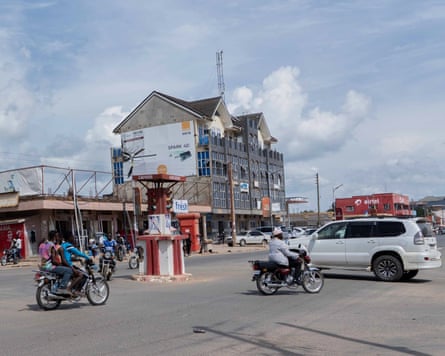
Light traffic on a road in Bunia


Continue Reading‘It’s heartbreaking’: panic in eastern DRC over return of Ebola