Ebola: US ban on travellers from DRC, Uganda or South Sudan ‘not the solution’

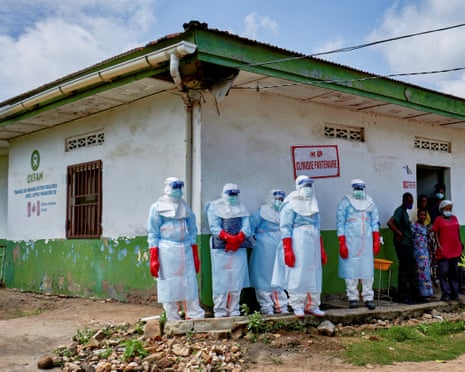
Red Cross workers in full protective equipment including head coverings, visors, face masks and long bright red rubber gloves stand outside a low-rise white building with a green stripe of paint around the bottom.
theguardian.org

A US travel ban for people coming from the Democratic Republic of the Congo, Uganda or South Sudan in response to the Ebola outbreak could make the situation worse, critics have said.

The outbreak was declared a public health emergency of international concern on Sunday and continues to spread, with a new case reported in the DRC’s South Kivu province, an area under the control of armed rebel groups.

The American travel ban, which applies to non-US passport holders who have been in any of the three countries in the past 21 days, has caused disruption to the DRC men’s football team’s World Cup preparations. It also caused a flight to Detroit to be diverted to Canada on Wednesday because a traveller from the DRC was onboard.

Africa Centres for Disease Control and Prevention (Africa CDC) said that while it “fully recognises the sovereign responsibility of every government to protect the health and security of its people … generalised travel restrictions and border closures are not the solution to outbreaks”.

The body said: “Such measures can create fear, damage economies, discourage transparency, complicate humanitarian and health operations, and divert movement toward informal and unmonitored routes – potentially increasing public health risks rather than reducing them.”

There is no vaccine or treatment available to fight the Bundibugyo strain of Ebola responsible for the outbreak.

Africa CDC said this highlighted “a deeper structural injustice in global health innovation: the Bundibugyo Ebola virus was identified nearly two decades ago, yet no licensed vaccines or therapeutics specific to this strain exist today.”

It said: “Africa CDC believes that if this disease had predominantly threatened wealthier regions of the world, medical countermeasures would likely already be available.”

Dr Githinji Gitahi, the group CEO at Amref Health Africa, backed Africa CDC’s stance. He said: “Travel bans don’t stop viruses, they stop solidarity. The fastest way to protect everyone is to invest in outbreak control at the source, not isolate the affected. Africa needs partnership, not punishment.”

Uganda’s information minister, Chris Baryomunsi, told Reuters the US was “overreacting” by putting the travel ban in place. “We’ve handled cases of Ebola and other epidemics for a number of years,” he said. “There is capacity within the country to contain these epidemics.”

The outbreak had been linked to 139 deaths and about 600 suspected cases in the DRC as of Wednesday, the World Health Organization said, plus two confirmed cases in neighbouring Uganda.

Most cases have been in the DRC’s Ituri and neighbouring North Kivu provinces. On Thursday, the Alliance Fleuve Congo, which includes the Rwanda-backed M23 rebels, said there had been a case in South Kivu, which is under their control.

An Ebola case in the North Kivu capital city, Goma, which is also under M23 control, has prompted urgent calls for its airport to be reopened to facilitate the flow of aid and medical supplies.

Researchers at Imperial College London have revised their estimates of the size of the outbreak upwards based on the latest WHO figures.

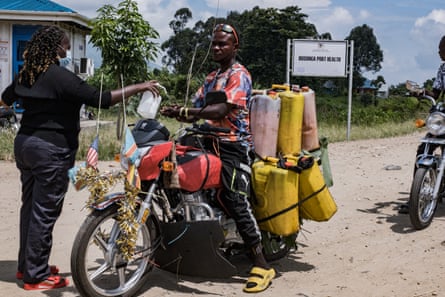
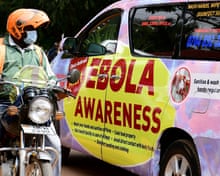
A woman dressed in black and wearing a blue face mask squirts hand sanitiser on a man riding a motorcycle, which is heavily laden with what appear to be plastic fuel cans.
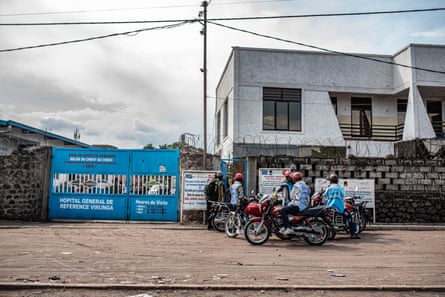
Blue gates are closed in front of a square, low-rise white building. A group of motorbike riders cluster in front of it.


Continue ReadingEbola: US ban on travellers from DRC, Uganda or South Sudan ‘not the solution’

Macron says France must address issue of reparations for its role in slave trade

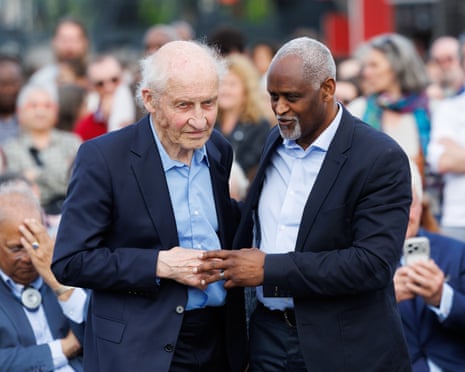
Pierre Guillon de Princé, an elderly white man, stands with Dieudonné Boutrin, a middle-aged black man with grey hair, at an event to unveil a memorial. They both wear dark blue suits and open-necked pale blue shirts and hold hands to each other's backs and touch hands in front.

Emmanuel Macron is under pressure to open discussions on reparatory justice for France’s role in hundreds of years of enslavement of African people as he makes a key speech on the legacy of slavery.

On Thursday the French president will celebrate the 25th anniversary of France becoming the first country in the world to recognise the slave trade and slavery as crimes against humanity in a 2001 law brought by Christiane Taubira, a leading MP from French Guiana.

Macron’s office said “the memorial work around the question of slavery and the slave trade is a permanent project of recognition for the president”.

As he enters his final months as president, however, demands are growing on Macron to launch a formal discussion process on how to address the legacies of enslavement in French society. France is facing a political row over racism in politics, the media and society, and the far right is polling high in the run-up to the 2027 presidential election.

The sense of urgency comes amid anger in France that its representatives – alongside those of UK and other European nations – abstained in March’s UN vote to describe the transatlantic chattel slave trade as the “gravest crime against humanity” and call for reparations as “a concrete step towards remedying historical wrongs”.

Victorin Lurel, a Guadeloupe senator, wrote in an open letter to Macron that France had committed a “moral, historic, diplomatic and political mistake” in abstaining and had “tarnished” its image internationally.

From the 16th to the 19th centuries, France was the third largest trafficker of enslaved people across the Atlantic and Indian oceans among the European nations, after Portugal and Britain. France was responsible for kidnapping and enslaving about 13% of the estimated 13 to 17 million men, women and children forced from Africa across the Atlantic.

Among those calling for a process of dialogue in France is Dieudonné Boutrin, who heads the International Federation of Descendants of the History of Slavery and is a descendant of enslaved Africans who were trafficked from Benin to the French Caribbean island of Martinique. Boutrin works alongside Pierre Guillon de Princé, a descendant of 18th-century slave-ship owners in Nantes, who last month made a formal apology for his ancestors’ role in transporting about 4,500 enslaved Africans to the Caribbean, at least 200 of whom died at sea.

Boutrin and Guillon de Princé wrote to Macron this month asking him to initiate discussions on reparatory justice. They said this would “restore trust between our communities, acknowledge the reality of history, foster a spirit of brotherhood, and heal the psychological wounds suffered by communities of colour who have been made to feel inferior. Slavery is a wound whose scars are still visible through racism, the spread of which we have so far been unable to halt.”

Aïssata Seck, the director of France’s Foundation for the Remembrance of Slavery, an advisory body to the government partly funded by the state, and its president, the former prime minister Jean-Marc Ayrault, published an open letter to Macron last month asking for France to take the lead in opening up dialogue on how to address and repair the racism and inequality that are legacies of enslavement.

Paris is regarded as crucial to the global discussion on reparations, because several “overseas departments and regions” remain part of France, such as the Caribbean islands of Martinique and Guadeloupe, French Guiana, and the Indian Ocean islands of Réunion and Mayotte. In these places, structural inequalities and disparities on employment, health, the cost of living, pollution and environmental safety are seen by local parliamentarians as a direct legacy of the mechanisms of enslavement and colonialism.

France is also facing demands for potentially billions of dollars in reparations to Haiti, after it imposed a harsh financial penalty on the country in 1825 to compensate owners of enslaved people after the Haitian revolution. That debt, which many Haitians blame for two centuries of turmoil, was only fully repaid to France in 1947. In 2025, Macron announced a joint commission with Haiti to examine the issue, with conclusions due by the end of this year.

France was the only country to bring back slavery, when Napoleon reinstated it in 1802 after a first attempt to ban it in 1794. Slavery was finally abolished in 1848, with compensation awarded to the owners of enslaved people.

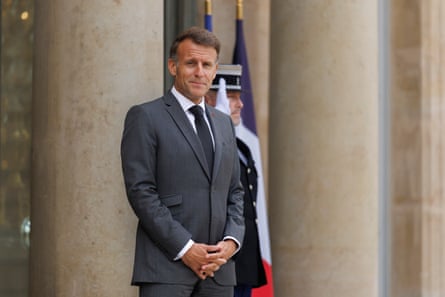
Emmanuel Macron stands outside the Élysée Palace with his hands clasped in front of his body. He wears a grey suit and dark tie.


Continue ReadingMacron says France must address issue of reparations for its role in slave trade

US is ‘simply choosing not to stop’ Ebola outbreak after massive public health cuts, experts say

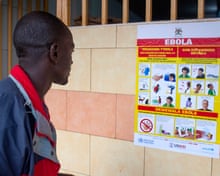
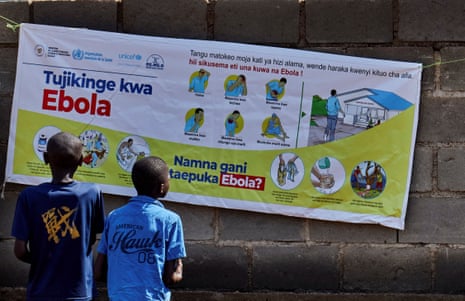
Children read a poster showing information out the Ebola outbreak.

A previously undetected outbreak of Ebola is coursing through parts of central Africa, and the US appears to be doing little to help stop it, after massive cuts to global and domestic public health efforts.

There is no cure and no vaccine for the rare Bundibugyo variant of Ebola, which has caused two outbreaks in recent decades. Health leaders and scientists are now racing to understand where the virus is spreading and attempting to stop it – but the US is notably absent in these efforts.

In the past year, the US Agency for International Development (USAID) has been dismantled, thousands of staff at US health agencies were laid off, communications stalled and key scientific research canceled.

There are 482 suspected cases and about 116 deaths reported since April in the Democratic Republic of the Congo (DRC), with two cases and one death in Uganda and potential spread to neighboring South Sudan. The outbreak “might have been going on for a few months”, said Kristian Andersen, a professor of immunology and microbiology at Scripps Research.

The outbreak was immediately declared a public health emergency of international concern (PHEIC) by Tedros Adhanom Ghebreyesus, the director general of the World Health Organization (WHO), before even convening the committee that usually makes that determination. Officials say it may last for months.

“The DRC is one of the most vulnerable health systems in the world, and was the second-biggest recipient of USAID funding,” said Matthew Kavanagh, director of the Center for Global Health Policy and Politics at Georgetown University. The US withdrawal of funding with “zero notice” has been “disruptive to the country’s basic activities”, he said.

US foreign assistance to the DRC dropped from $1.4bn in 2024 to $431m in 2025 and only $21m so far this year. Assistance to Uganda dropped from $674m to $377m in 2025 and a negative $1.2m so far in 2026.

“It was pennies compared to what you get in return,” Andersen said of global health investments. It is far cheaper and easier to prevent and contain outbreaks than it is to respond to them, he said. With the US cutting off the first option, the second scenario will become increasingly common.

The US also announced it would leave the WHO and end $130m in funding, which resulted in 2,371 lost jobs at the organization, Kavanagh said, calling the cuts a “self-inflicted wound that the administration has really brought on us”. This outbreak and response was “deeply foreseeable when you gut public health surveillance and you gut public health capacity”, Kavanagh added.

“It’s not just that we’re leaving the table, we are completely cutting ourselves out of the conversation,” Andersen said. “We are upending the table.”

The CDC has “always been the premier agency” when it comes to country-level leadership and played a key role as a partner “you could turn to”, Andersen said.

But under the second Trump administration, Ebola response teams were suspended, and health centers and medical supplies – particularly crucial with a virus spread through touch, with supportive care the only treatment – were dramatically cut back.

A world-class Ebola lab in Frederick, Maryland, with the National Institutes of Health (NIH) was designed for exactly this scenario. The lab would normally be swinging into action, following up on research indicating monoclonal antibodies and a vaccine might be effective against this strain, possibly testing those treatments and vaccines, performing in-depth sequencing work on the samples shared during the outbreak.

But that lab was shuttered last year, with staff laid off abruptly and their work – key for preventing and responding to outbreaks – ended with no notice. The website for the lab is still closed, indicating it has not been revived during this outbreak.

Satish Pillai, an incident manager for the CDC’s Ebola response, said he “can’t speak” to the NIH lab when the Guardian asked about it in a press conference on Monday. Instead, Pillai said that the US is able to test for Ebola through its laboratory network, a comment unrelated to the Guardian’s questions.

Because of layoffs, terminations and high-profile departures, key confirmed positions at US health agencies are vacant. Currently, the CDC has no director; there’s no US surgeon general; there’s no commissioner at the FDA.

Officials say there are now between 25 and 30 staff in the DRC country office. The CDC is sending one more person, Pillai said, and other experts are available remotely.

The DRC office suffered massive and sudden cuts when USAID was unexpectedly dissolved last year. Former employees sued the US government after they were abandoned and lost everything, with no jobs or options to evacuate from DRC, they said.

“When those USAID stop-work orders came out, there was a whole series of people who were actively looking for spillover in the DRC and in Uganda,” Kavanagh said. “There were hundreds of health workers doing surveillance activities, and then, of course, you had the bigger picture, which is the thousands of health workers who were doing HIV, TB, malaria, maternal and child health – all of these things funded through US funding from USAID and also some from CDC to be doing global health activities – who were the frontlines of detection.”

Patients don’t usually come to the clinic suspecting they have Ebola, he pointed out; they usually come in with a fever or other symptoms, and “those frontline community health workers … are always the ones that detect outbreaks early”.

That work ended abruptly and is now being replaced with country-by-country agreements, some of which appear to be predicated on resource-sharing agreements. The US government is “essentially holding hostage” the countries that have built health systems around US guidance, “and then from one day to the next you just cut it”, Andersen said.

In the past, the US had ensured that “many, many potential global outbreaks didn’t become global”, but now it’s stepping back, Kavanagh said, adding: “This outbreak should have been detected weeks ago, and exactly how and why will be figured out as we go, but it certainly says that the United States has stopped playing the role.”

Instead, the US is announcing travel bans for noncitizens who have recently traveled to the region, which is “public health theater” that essentially punishes the countries and doesn’t actually stop cases, Kavanagh said. The Africa CDC called for countries to refrain from “fear-driven” travel bans. “The fastest path to protecting all countries in the world is to aggressively support outbreak control at the source,” Dr Jean Kaseya, director general of the Africa CDC, said in a statement.

“At this point, this is an out-of-control epidemic that has now crossed borders, and this is really bad for the region, and will result in lots more deaths, and could be a real crisis,” Kavanagh said. Health leaders in the DRC are among the smartest, most experienced Ebola responders – but now they’re confronting an outbreak “with hundreds of millions of dollars cut from the global capacity to help them respond”.

Andersen noted “these countries are way more competent than we are in responding to something like Ebola” and that African scientists have done “remarkable” work already sequencing the virus, which demonstrates a new spillover event and could offer clues to where the outbreak originated.

“But that doesn’t mean that we should just completely cut ourselves out of the picture,” he said.

Outbreaks like these have economic, geopolitical and global stability implications, Kavanagh said. But they also matter because allowing anyone to die “needlessly of a disease that can be stopped is immoral, and we are living in a world where we don’t have to allow infectious diseases to spread unchecked”, he said. “Ebola can be stopped, and if we don’t mobilize the dollars and the public health efforts, then we are simply choosing not to stop the outbreak. Because it can be stopped. The question is, will it be? And when?”

Continue ReadingUS is ‘simply choosing not to stop’ Ebola outbreak after massive public health cuts, experts say

US doctor who contracted Ebola in DRC flown to Germany for treatment

boxes of medical supplies with a World Health Organization label at the top

An American doctor who contracted Ebola in the Democratic Republic of the Congo has been flown to Germany for treatment, along with his wife and four children, as the World Health Organization warned of the “scale and speed” of the outbreak.

Authorities have reported at least 134 suspected deaths and more than 500 cases of the hemorrhagic Bundibugyo virus, which has no approved treatments or vaccines. The outbreak, which has spread into urban areas, has been declared a public health emergency requiring international response.

Dr Peter Stafford, a surgeon and leader of the Christian missionary group Serge, has said he unknowingly operated on a patient with Ebola before the outbreak was detected. His wife, Rebekah Stafford, also a doctor, and their children, are being monitored for symptoms of the disease.

The infected surgeon was barely able to stand on his own when he departed for Germany, according to two leaders of the Christian missionary group where he worked.

Dr Scott Myhre, area director for Serge told NBC News that Stafford “looked really tired and really sick” as he left. “There were people in full – we call it PPE – the personal protective equipment, and they’re completely covered, and he’s hanging on them barely strong enough to walk.”

Stafford worked at Nyankunde hospital in the DRC’s Ituri province, where the Africa centers for disease control first confirmed the Ebola outbreak. He had operated on a 33-year-old patient with severe abdominal pain.

Doctors at first believed the patient had a gallbladder infection but, according to Myhre, Stafford “did an abdominal procedure and found that the gallbladder was normal and closed him up, but this patient subsequently died the next day”.

The patient was buried before he could be tested for Ebola, but Stafford developed symptoms and tested positive on Sunday, according to the US Centers for Disease Control and Prevention.

Myhre described Stafford as “a very meticulous professional, and for every surgical case he does, he would be completely gowned in sterile garb and gloves and hats and glasses. But that’s not quite enough to prevent an Ebola exposure.”

In an updated advisory Wednesday, the WHO said there are now more than 600 suspected cases and 139 suspected deaths from the virus, mostly in the DRC.

But with two cases and one suspected death in neighboring Uganda, the organization said the risk of a global pandemic was very low, but the threat for countries in the region was severe.

“We expect those numbers to keep increasing,” Tedros Adhanom Ghebreyesus, WHO’s director-general, said. “We know that the scale of the epidemic in DRC is much larger”.

Continue ReadingUS doctor who contracted Ebola in DRC flown to Germany for treatment

Rubio criticizes WHO’s Ebola response as US continues sweeping public health cuts

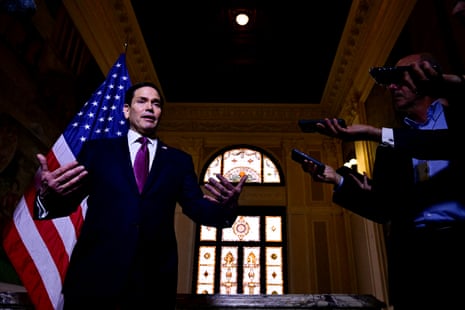
a man speaks while people hold phones in his direction

US secretary of state Marco Rubio said on Tuesday that the World Health Organization (WHO) was “a little late” in identifying the deadly Ebola outbreak in the the Democratic Republic of the Congo and Uganda.

On Tuesday, Rubio told reporters: “The lead is obviously going to be CDC (the Centers for Disease Control) and the World Health Organization, which was a little late to identify this thing unfortunately.”

His comments follow Donald Trump’s decision to withdraw the US from the WHO, a move which experts described as “sowing the seeds of the next pandemic”. Trump made the move in one of his first acts on returning to office last year. The US’s departure also led to the loss of nearly a quarter of the WHO’s workforce – about 2,000 jobs – from a total staff of about 9,400.

Rubio said that the US, which has committed about $13m in assistance after sweeping aid cuts last year, was hoping to open about 50 clinics to treat Ebola in the DRC.

“It’s a little tough to get to because it’s in a rural area … and [a] hard-to-get-to place in a war-torn country, unfortunately,” Rubio said. “We’re going to lean into that pretty heavy.”

The WHO said earlier on Tuesday that it was concerned about the “scale and speed” of the Ebola outbreak that has killed an estimated 131 people in the DRC.

Gigi Gronvall, an immunologist and associate professor at the Johns Hopkins Bloomberg School of Public Health, rejected Rubio’s criticism of the WHO.

“Blaming the WHO is misplaced, because they are operating with limited resources in a difficult setting with many security challenges. But it’s also cold comfort for all the people who have gotten Ebola and died. And this should concern Americans as well. It’s highly worrisome given that public health resources in the US have been slashed and even a couple of cases in the US would be challenging with our current workforce,” Gronvall said.

She added: “It is a strategic mistake – and a national security vulnerability – that we are worse off now to handle infectious disease threats than at the start of Covid-19. Hantavirus [and] Ebola are terrible, serious diseases but they are not as transmissible as some other infectious disease threats we could face. Instead of dismantling everything, we need to invest in the vaccines, diagnostic testing, and public health and hospital responses we would need to protect Americans.”

On Sunday, the WHO announced that the Ebola outbreak in the DRC and Uganda was a “public health emergency of international concern”, saying: “Neighboring countries sharing land borders with the Democratic Republic of the Congo are considered at high risk for further spread due to population mobility, trade and travel linkages, and ongoing epidemiological uncertainty.

“The event requires international coordination and cooperation to understand the extent of the outbreak, to coordinate surveillance, prevention and response efforts, to scale up and strengthen operations and ensure ability to implement control measures,” the WHO added.

The organization also noted that countries not bordering the DRC and Uganda should avoid closing borders or restricting travel and trade during disease outbreaks, arguing that such measures are driven more by fear than science. Restrictions can force people and goods through unmonitored crossings, potentially increasing the spread of disease, they said.

WHO authorities also cautioned that travel bans can damage local economies and disrupt emergency response efforts.

The Guardian has reached out to the WHO for comment.

The WHO’s warnings come as US health agencies continue to face sweeping layoffs during Trump’s second term. Earlier this week, the Department of Health and Human Services announced plans to eliminate dozens of positions across agencies including the Agency for Healthcare Research and Quality, the Centers for Disease Control and Prevention, and the National Institutes of Health, among others.

The cuts follow health secretary Robert F Kennedy Jr’s announcement last year that he intended to reduce the department’s 82,000-person workforce by 10,000 jobs.

The latest layoffs also arrive amid mounting concerns over the US’s preparedness for the next pandemic.

While experts say the recent hantavirus outbreak is unlikely to spark a global health crisis, it has underscored the erosion of public health infrastructure in the US. Public health experts have also warned that deep political divisions and rampant misinformation could undermine Americans’ willingness to follow future health guidance.

Echoing Gronvall, Jennifer Nuzzo, an epidemiology professor and director of the Pandemic Center at Brown School of Public Health, said: “The CDC first learned of the outbreak when it was publicly confirmed, despite the fact that there’d been rumors of an outbreak for weeks. This represents a notable change for the US government, which has historically played a key role in responding to rumored outbreaks in places like DRC and, if the rumors are confirmed to be true, helping to stop the outbreak.

“It feels like the US government is on the sidelines this time,” she added.

Melody Schreiber contributed reporting

Continue ReadingRubio criticizes WHO’s Ebola response as US continues sweeping public health cuts

WHO considers use of experimental vaccines as Ebola cases and deaths rise in DRC

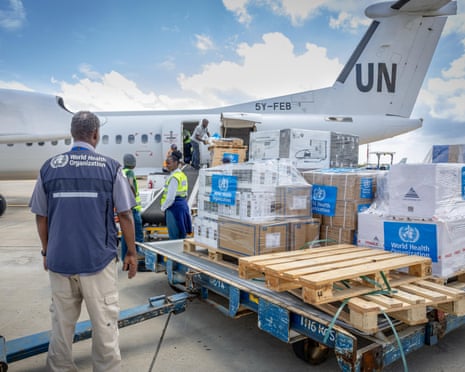
Workers with pallets of supplies about to be loaded on to a UN plane
theguardian.org

The director general of the World Health Organization has said he is deeply concerned about the scale and the speed of the Ebola outbreak in the Democratic Republic of the Congo.

Dr Tedros Adhanom Ghebreyesus said there had been at least 500 suspected cases of Ebola and 130 suspected deaths in DRC since the new outbreak began. Thirty cases had been confirmed in DRC’s north-eastern province of Ituri, and one death and one case had been confirmed in Kampala, Uganda, he added. A US citizen has also tested positive and been transferred to Germany.

“These numbers will change as field operations are scaling up, including strengthening surveillance, contact tracing and laboratory testing,” Tedros told members of the World Health assembly, who are meeting this week in Geneva.

Tedros declared the outbreak a public health emergency of international concern in the early hours of Sunday morning. On Tuesday he said: “This is the first time a director general has declared a PHEIC before convening an emergency committee. I did not do this lightly … I’m deeply concerned about the scale and speed of the epidemic.”

The WHO will convene its emergency committee on Tuesday to advise what recommendations it should make on how to control the outbreak. The US officially left the WHO in January in a move Donald Trump said was motivated by the organisation’s poor management of the Covid-19 pandemic.

Tedros said reports of cases in urban areas, where the virus typically finds it easier to spread, were also cause for concern.

Cases among health workers indicated potential spread in clinics and hospitals, he said, and there was “significant population movement in the area”, for work and also due to conflict.

The province of Ituri, where most cases have been reported, was “highly insecure”, Ghebreyesus said. “Conflict has intensified since late 2025, and the fighting has escalated significantly over the past two months resulting in civilian deaths. Over 100,000 people have been newly displaced. And in Ebola outbreaks, you know what displacement means.”

An outbreak of the Zaire strain from 2018-2020 in Ituri and North Kivu provinces was the second deadliest on record, killing nearly 2,300 people. The international response then was complicated by widespread armed violence in eastern DRC that continues today.

Ebola spreads through direct contact with bodily fluids from infected people or animals and causes symptoms that can include high fever, vomiting and internal and external bleeding. According to the WHO, the average fatality rate from Ebola is around 50%, varying from 25% to 90% in past outbreaks.

Bundibugyo virus, the type of Ebola that is causing the current outbreak, has no vaccines or treatments.

Although more than 20 Ebola outbreaks have been recorded in DRC and Uganda, this is only the third time that the Bundibugyo virus has been detected. Cases have now also been confirmed in Bunia and North Kivu’s rebel-held capital of Goma, as well as Mongbwalu, Butembo, and Nyakunde.


Continue ReadingWHO considers use of experimental vaccines as Ebola cases and deaths rise in DRC