Number of suspected Ebola cases in DR Congo passes 900 as health workers face attacks and shortages

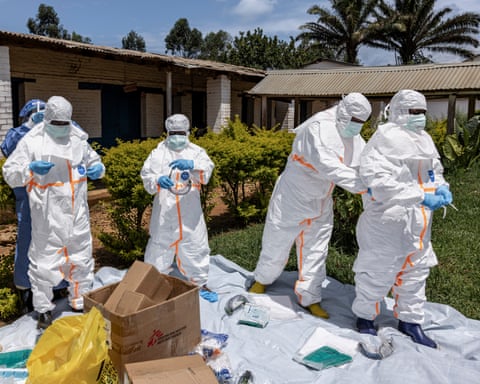
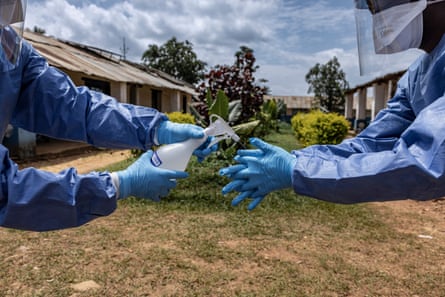
A medical worker in blue protective clothing and orange gloves gestures outward in a rural village setting

Congolese authorities say that suspected Ebola cases have now passed 900 in the ongoing outbreak in the east of the country.

The Congolese ministry of communication, in a post on X on Sunday, said there were 904 suspected cases and 119 suspected deaths.

Authorities had previously announced more than 700 suspected Ebola cases, and more than 170 suspected deaths, mostly in Ituri province, where the outbreak is centred.

The World Health Organization has said the outbreak now poses a “very high” risk for the Democratic Republic of Congo, but that the risk of the disease spreading globally remains low.

Health authorities in the country are facing serious challenges as they try to stem the outbreak, which has been declared a global health emergency.

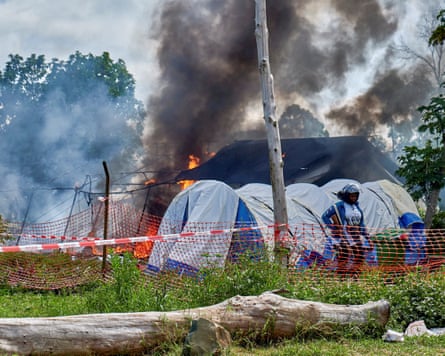
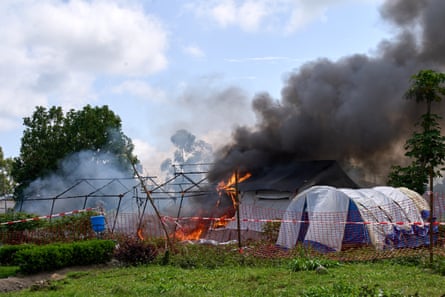
There have been arson attacks on Ebola treatment centres in the country’s east – two centres in two towns were hit last week, exposing the anger in a region beset by violence linked to armed rebel groups, the displacement of a large number of people, the failure of local government and international aid cuts that experts say have stripped health facilities in vulnerable communities.

Colin Thomas-Jensen, director of impact at the Aurora Humanitarian Initiative, said the attacks may reflect the “built-in skepticism and anger” of people in eastern Congo over how the region has been treated, with years of violence from foreign-linked rebel groups and a failure of their government and international peacekeepers to protect them.

Another source of anger has been the strict protocols around the burial of suspected victims of Ebola, which authorities are taking charge of wherever they can to prevent further spread of the disease during traditional burials – where families prepare the bodies and people gather for a funeral.

The first burning of an Ebola centre in Rwampara was by a group of young men trying to retrieve a friend’s body, according to witnesses and police. The witnesses said the crowd accused the foreign aid group operating there of lying about Ebola.

Authorities in north-eastern Congo have now banned funeral wakes and gatherings of more than 50 people, and armed soldiers and police are guarding some burials carried out by aid workers.

Eastern Congo has for years seen attacks by dozens of separate rebel and militant groups, some of them with links to foreign countries or the extremist Islamic State group.

The Rwanda-backed M23 rebels are in control of parts of the region. While the Congolese government still largely controls the north-eastern Ituri province, which is the centre of the Ebola outbreak, its control is tenuous. The Allied Democratic Forces, a Ugandan Islamist group linked to Islamic State, is one of the dominant rebel groups there and is responsible for violent attacks against civilian targets.

Before the outbreak, Doctors Without Borders said in an assessment that the insecurity in Ituri had worsened recently, causing doctors and nurses to flee, leaving overwhelmed health facilities and, in some parts, “catastrophic conditions”.

The UN humanitarian office says almost 1 million people have been displaced from their homes by conflict in Ituri.

It means the Ebola outbreak is “unfolding in communities already facing insecurity, displacement and fragile healthcare systems,” said Gabriela Arenas, a regional coordinator at the International Federation of Red Cross and Red Crescent Societies.

There are concerns the disease might spread to the large displacement camps near the city of Bunia, where the first cases were reported.

Health experts say international aid cuts last year by the US and other rich nations were devastating for eastern Congo because of its multiple problems.

The cuts “reduced the capacity to detect and respond to infectious disease outbreaks”, said Thomas McHale, public health director at Physicians for Human Rights. Congo has had more than a dozen previous Ebola outbreaks.

Aid groups fighting this outbreak on the ground say they don’t have the equipment they need, such as face shields and suits to protect health workers from infection, testing kits, and body bags and other materials needed to safely bury the bodies of those who have died, which can be highly contagious.

“We have made requests to different partners, but we have not yet really received anything,” said Julienne Lusenge, president of Women’s Solidarity for Inclusive Peace and Development, an aid group operating a small hospital near Bunia.

“We only have hand sanitiser and a few masks for the nurses,” she said.

The Bundibugyo type of Ebola virus responsible for the outbreak has no approved vaccine or treatment.
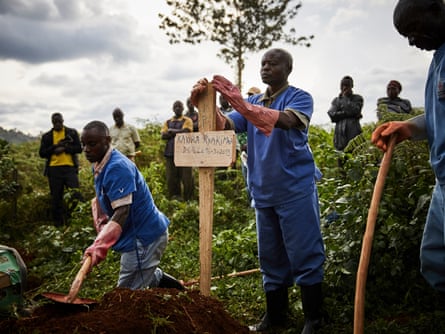
Health workers take part in the funeral of Ebola victims in Butembo, North Kivu province.
Flames and smoke rise from an Ebola treatment centre in Rwampara.

Continue ReadingNumber of suspected Ebola cases in DR Congo passes 900 as health workers face attacks and shortages

Hunger increasingly used as weapon of war as ‘food-related violence’ surges, analysis shows

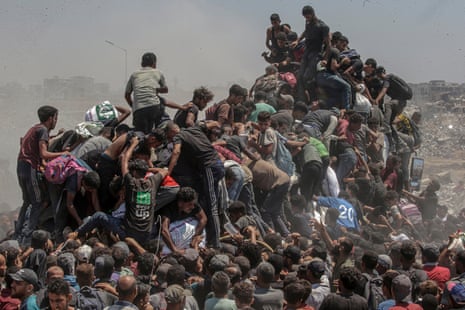
Displaced Palestinians scramble on top of a truck, reaching for aid supplies in Gaza
theguardian.org

Hunger is being increasingly exploited as a weapon of war with more than 20,000 documented incidents of “food-related violence” in the past eight years, new analysis reveals.

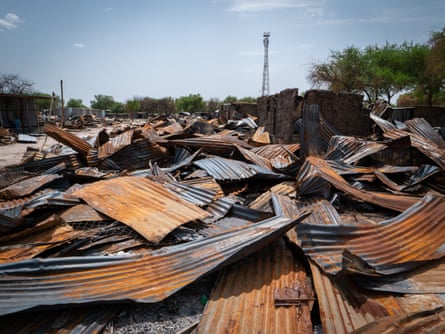
Attacks include 1,261 strikes on markets used by families for daily groceries and 863 incidents in which food distribution systems were targeted and workers killed.

The analysis looked at the period since UN resolution 2417 unanimously condemned the deliberate starvation of civilians in 2018. It found starvation is being increasingly weaponised with the supply of food routinely targeted in Gaza, Sudan, Lebanon and Haiti among others.

Data compiled by Insecurity Insight uncovered 21,403 incidents in 15 countries where food supplies have been deliberately targeted since 2018, when the UN security council unanimously passed a resolution condemning the unlawful denial of humanitarian aid as a tactic of warfare.

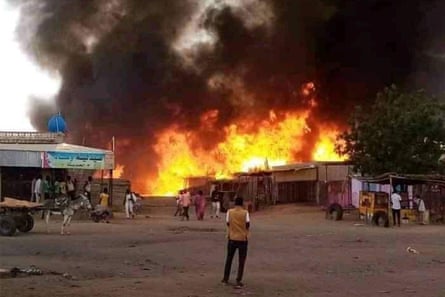
Researchers discovered 1,909 military strikes on farmland, and another 563 on water infrastructure vital for crops, which affected food security in more than 42 countries and territories.

States with the highest recorded incidents are the occupied Palestinian Territory with 9,013 attacks, followed by Yemen – 1,863 incidents – and Sudan, where food was targeted in 1,605 strikes. One of the most recent attacks in Sudan occurred on Tuesday when a drone struck a busy market, killing 28 people.

Witnesses said the main market in the town of Ghubaysh, West Kordofan, appeared to have been deliberately targeted by the military while it was crowded with civilians.

Other countries that documented repeated attacks on food supplies include Syria, which saw 1,538 incidents, many attributed to government or Russian military forces before the fall of the Assad regime; and Mali, where 1,415 attacks were recorded as the ruling junta struggled to maintain its grip on power in the west African country.

The research, to be released on Monday to coincide with the anniversary of the UN resolution, describes a “marked increase” in attacks on markets, farmland and food distribution systems.

Giulia Contò, conflict and hunger advocacy manager at Action Against Hunger, said: “Famine in Gaza and Sudan has captured global headlines over the past two years, but most conflict-induced hunger never does. It unfolds daily, with relentless attacks on the systems communities depend on to survive: livestock looted, markets bombed, aid convoys blocked.”

Researchers also found that civilians were frequently targeted as they attempted to obtain food. Between October 2023 and the end of 2025, more than 10,300 people were killed or injured trying to access aid.

Christina Wille, director at Insecurity Insight, urged the international community to implement the UN resolution, saying that it had a responsibility “to act upon violations”.

She said: “It is not that resolution 2417 has failed, but that member states have failed to implement it, and to demonstrate the political will to prevent those very same actions that the international community claims to oppose.”

Wille said that women were disproportionately affected by the weaponisation of hunger.

“Women in particular are faced with some of the toughest choices: unreliable access to food might mean travelling longer distances, increasing risks to their safety in volatile contexts.

“Women who were primarily carers are forced to become breadwinners, often while reducing their food intake to prioritise their family members. Without enough food, children are unable to play, learn or grow, and the consequences on their development will last a lifetime.”

Conflict remains the primary driver of hunger, accounting for more than half of all people facing severe hunger.

Last month, UN agencies warned that a growing share of global hunger is becoming entrenched in a small group of conflict-hit countries, with two-thirds of people facing acute food insecurity concentrated in just 10 nations.

The destroyed market, reduced to piles of corrugated metal sheets, in Lankien, Jonglei state, South Sudan, 23 April 2026
A large fire destroys a livestock market in El Fasher, in Sudan’s North Darfur state.
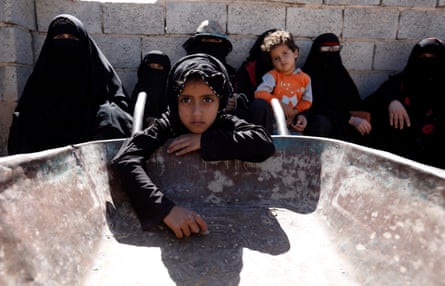
People, mostly women and children, wait for food aid in Sana’a, Yemen, with a young girl leaning into an empty serving vessel and facing the camera looking sad.

Continue ReadingHunger increasingly used as weapon of war as ‘food-related violence’ surges, analysis shows

White House pauses removal of detainees to DRC as Ebola outbreak widens

Two children surrounded by health workers in protective gear.

The Trump administration will temporarily pause the removal of refugees to the Democratic Republic of Congo (DRC) during a spiraling Ebola outbreak, according to reporting by Politico, but experts say the move won’t help prevent the spread of the disease.

At least one woman is now in limbo after officials moved her to Kinshasa, the capital of the DRC, and now say they won’t bring her back because of the Ebola travel ban – despite a judge’s order for her return.

Adriana Zapata, 55, fled Colombia to the US, but she was sent to Kinshasa over a month ago – even though the DRC said it could not care for her complex medical needs. A US judge ordered her return to the US, but American officials are saying they cannot bring her back because of the travel ban instituted on Monday.

“I’m just really worried about losing her,” Zapata’s lawyer, Lauren O’Neal, told the Gothamist. “I don’t want her to die before we can get her back here.”

Immigration agents could come into contact with the virus during the trips, and the virus could spread closer to the US because of Trump’s immigration tactics, unnamed officials told Politico. Yet they said the decision is at least partly motivated by legal concerns – that removal to a third country with an active Ebola outbreak could be used in an immigrant’s defense.

“By the government’s own logic, if it is not safe for people to come from there to here, it is equally unsafe to send people there,” said Jeremy Konyndyk, president of Refugees International and the top Ebola response official at the US Agency for International Development (USAID) during the 2014-15 outbreak.

As long as the US has a ban on travelers from the DRC, Uganda and South Sudan, “on what grounds could it possibly be safe to deport people there?” Konyndyk asked.

It’s not clear what happens next to refugees who were already moved against their will to countries affected by or near the outbreak. At least 37 people have been moved to these countries in recent months, according to Gillian Brockell, an independent journalist who tracks third-country removals by the US.

Brockell suspects US officials are using the travel ban as an excuse for not returning Zapata. Sending people in detention centers to African nations far from home is a common threat, Brockell said, “so to publicly take one of their main scare tactics off the table, they are only going to do that if it helps them in some way”.

The US government has evacuated people from Ebola-affected regions before – including patients with active Ebola cases. One of the world’s leading experts on high-risk medical evacuations, the former state department official William Walters, is now an Immigration and Customs Enforcement (ICE) contractor, Brockell pointed out.

“The Trump administration could absolutely return Adriana Zapata to the US; telling the judge it can’t be done just isn’t true,” she said.

ICE “follows all applicable health and safety guidelines, including those outlined in the US Department of State’s travel advisories, when conducting removal operations,” said a spokesperson for the US Department of Homeland Security (DHS). But the DHS did not respond to the Guardian’s questions about Zapata’s return and the agency’s third-country removal plans during the Ebola outbreak, including whether flights to Uganda, South Sudan and Rwanda would continue.

Sending immigrants against their will to other countries could risk violating international law, said Camille Mackler, an immigration lawyer. “Basically, the US can’t send people back to where they will be persecuted, so we’re exporting our immigration enforcement.”

There are no official numbers, but experts estimate that between 8,000 and 15,000 people have been flown to third countries.

“We’ve already seen that people who are being detained by immigration are not receiving adequate medical care,” Mackler said. “They’re taking no protections for them, and then not thinking about the ripple effect that can have.”

If the outbreak continues expanding, there’s a chance detainees in the affected areas could get sick themselves – and if they were then sent to their countries of origin, they would be bringing the virus to South and Central America, where countries have little experience battling the viral hemorrhagic fever.

The US Centers for Disease Control and Prevention (CDC) says it has plans in place to test and monitor passengers from the region. The US announced on Thursday that all passengers traveling from the DRC, Uganda and South Sudan would be diverted to the Washington-Dulles international airport for screening.

“The US is putting in place travel measures to limit risk,” said Satish Pillai, the CDC’s Ebola response lead.

Even passengers from places like Kinshasa, with no known Ebola cases, will be monitored because “the outbreak in the affected area continues to expand”, Pillai said at a press conference on Friday.

“That is why CDC has initiated entry screening processes, which is a part of an overall broader, layered public health approach, starting with exit screening, airline illness reporting and public health monitoring after arrival,” Pillai said.

Measures like these mean it’s very unlikely travelers – including Zapata – will bring Ebola into the United States, said Alexandra Phelan, an associate professor at the Johns Hopkins Bloomberg School of Public Health and senior scholar at the Johns Hopkins Center for Health Security.

The “proper and equitable process that also protects public health” would be to bring Zapata to the US, per the judge’s order, and have her undergo the same health protocols as returning US citizens and residents at Dulles, Phelan said. That could include quarantine if there has been any high-risk exposure – though that’s “unlikely if she has remained in Kinshasa, which is not a known active transmission location”, Phelan added.

“If the Trump administration is serious about countering the spread of Ebola, the US government should restore health-related humanitarian funding it gutted across Africa; designate temporary protected status for the Democratic Republic of Congo, Uganda and South Sudan; and halt all deportation flights to the region – including flights involving Latin Americans and other third country nationals,” said Yael Schacher, director for the Americas and Europe at Refugees International.

Continue ReadingWhite House pauses removal of detainees to DRC as Ebola outbreak widens

‘Every health facility said they were full’: alarm over rapid spread of Ebola in DRC

Health workers in full-body protective clothing handle pieces of equipment in the grounds of the hospital

The warnings from aid groups and healthcare workers in the Democratic Republic of the Congo have been stark, their calls for coordinated international action impassioned.

As the country reels from the return of the Ebola virus, there is growing concern that its fragile healthcare system will struggle to cope with an outbreak that experts say goes well beyond the number of confirmed cases.

“The speed at which this Ebola outbreak is spreading is deeply worrying,” said Rose Tchwenko, the DRC country director at the NGO Mercy Corps. “The risk of wider spread is real, and more regional and global support is urgently needed.”

Hama Amado, a field coordinator in the city of Bunia for the Alima aid group, said the virus was gaining momentum and spreading in many areas. “Everyone must mobilise,” he told Associated Press on Thursday. “We are still far from saying that the situation is under control.”

It has been a week since the DRC reported its 17th outbreak of Ebola, a viral disease with a mortality rate of between 25% and 90% that is spread through body fluids or contaminated materials and causes organ damage, blood vessel impairment and sometimes severe internal and external bleeding.

Nearly 750 suspected cases and 177 suspected deaths have been recorded since the first known victim died in Bunia, the capital of Ituri province in north-western DRC, on 24 April. Mourners touched him during a funeral in the nearby town of Mongbwalu, contributing to the spread of the virus.

Hospitals and other healthcare facilities have quickly become overwhelmed. Trish Newport, an emergency programme manager at Médecins Sans Frontières, said a team had identified suspected cases over the weekend at Bunia’s Salama hospital but found no available isolation ward in the area. “Every health facility they called said: ‘We’re full of suspect cases. We don’t have any space,’” she said on social media. “This gives you a vision of how crazy it is right now.”


Several factors are impeding the aid response, including the strain of the virus, for which there is no approved treatment or vaccine; the remote and conflict-scarred location of the outbreak; and local funeral customs which are at odds with strict disease-control practice. All this is set against the backdrop of big shortfalls in aid budgets, driven largely by the Trump administration’s cuts to foreign aid.

According to a study by the International Committee of the Red Cross (ICRC) this year, more than half of health facilities surveyed in North and South Kivu provinces – where cases have also been reported – were damaged or destroyed, and nearly half had reported significant staff departures since January 2025 owing to conflict and insecurity.

Two incidents this week laid bare some of the aggravating factors. On Tuesday, at least 17 people were killed in an attack by the Allied Democratic Forces, a militant group operating in eastern DRC and parts of Uganda, on several villages near the town of Mambasa, in Ituri. “We are facing a double war: one of weapons and another of the disease outbreak,” said Zawadi Jeanne, a woman from the town who lost her brother and uncle in an ADF attack last month.

On Thursday, a crowd set fire to a treatment centre in Rwampara, near Bunia, after authorities refused to give them the body of a victim they wanted to bury themselves.

The burial of bodies, which can be highly contagious, is handled by authorities for containment of the disease, but some families prefer traditional burials, which involve washing and touching the body. In previous outbreaks this has proven to be a key driver of the disease’s spread.

Batakura Zamundu Mugeni, a customary chief who was at the scene in Rwampara, told Agence France-Presse that authorities were working with health officials to track down any patients who may have fled, as well as contact cases. He blamed the unrest on “young people who do not grasp the reality of the disease”.

On Friday, the province banned funeral wakes and said burials must be conducted only by specialised teams. It also prohibited the transport of dead bodies by non-medical vehicles and limited public gatherings to a maximum of 50 people.

Instructions to avoid physical contact more generally are hampered by a strong culture of expressing affection through touch. “We live in a society where shaking hands is on the menu every day,” said Jackson Lubula, who lives in Bunia. “With this disease, anything is possible. A small mistake can cost you dearly, so I decided to wash my hands with soap every time after each greeting.”

Reports from across the affected areas add to the impression that the virus has been spreading unnoticed. A rapid needs assessment by ActionAid in the Bunia, Nizi and Nyankunde areas found nearly a third of schools had registered at least one suspected Ebola case or close contact.

On Saturday, the Red Cross said three of its volunteers who died this month were believed to have contracted the virus as long ago as 27 March while carrying out dead body management as part of an unrelated humanitarian mission.

People in Rwampara said the disease struck suddenly, and that early symptoms were mistaken for illnesses such as malaria. Botwine Swanze, whose son died, told a reporter for Associated Press: “He told me his heart was hurting. Then he started crying because of the pain. Then he started bleeding and vomiting a lot.”


Dr Núria Carrera Graño, a clinician with ICRC who has provided services in two previous Ebola outbreaks, described the situation in the DRC as a humanitarian, political and security crisis resulting from cumulative and unfortunate events.

She said responders should learn from past outbreaks about the importance of international cooperation and coordination. “We don’t have time to lose,” she said.

To control the outbreak, the DRC government is working with medics including those who have experience in handling the disease.

Dr Richard Kojan, an intensive care clinician with Alima who has provided services in several Ebola outbreaks, said there were many similarities between them, such as late discovery, insufficient resources to respond, and the lack of a vaccine at the outset.

“The outbreak is out of control,” he said from Kinshasa, the DRC’s capital, this week.

In the absence of a vaccine and approved treatment for the Bundibugyo strain of the virus, Kojan said, medics were working to optimise the standard of intensive care for patients and put in place surveillance and contact tracing for suspected cases.

“If they are admitted to the treatment centre early, the viral load will be low in their samples, and then, with optimised care, they will have a high probability of surviving,” he said.

The Alima team is also deploying a portable treatment unit called Cube, a transparent plastic structure that allows interaction between patients and their relatives and medics without the need to wear personal protective equipment. Kojan developed the concept after his experience with Ebola in the 2014-16 outbreak.

As the virus spreads, increasing numbers of people in Bunia are discovering friends and relatives have fallen victim, fuelling their anxiety.

“The mere thought of the name ‘Ebola’ scares me,” said Jeanne, who has a nephew in a health facility in Rwampara.

But she remains optimistic. “God is the one who knows what’s ahead,” she said. “I tell myself that the disease will spread but not to an alarming level. We can just hope for the best.”

Smoke rises from a building, with tents and a plastic cordon in the foreground
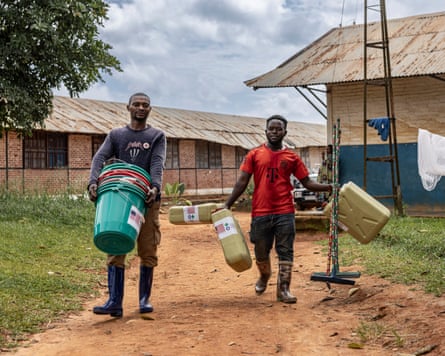
Two men carry plastic buckets and jerry cans as they walk along a path near buildings
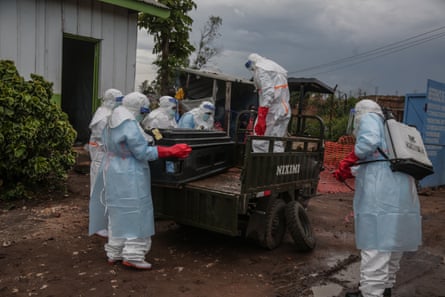
A group of medical staff wearing full-body protective equipment spray the trailer with disinfectant
A health workers wearing protective equipment sprays disinfectant on another’s gloved hands
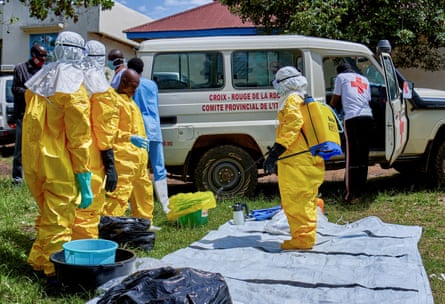
Red Cross workers wearing full-body equipment stand opposite another holding a sprayer and wearing a backpack of disinfectant
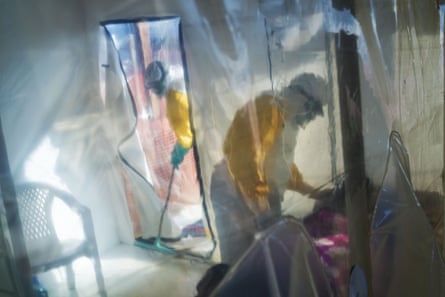
Health workers in protective suits in an isolation unit

Continue Reading‘Every health facility said they were full’: alarm over rapid spread of Ebola in DRC

Côte d’Ivoire wary of jihadist threat in north 10 years on from major attack

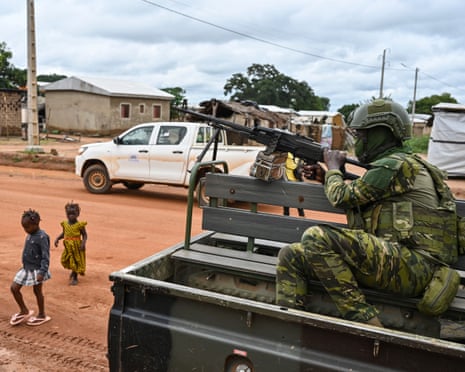
Ivorian soldiers patrolling on the back of a pick-up truck in Tougbo in the north-east near Burkina Faso's border last October.
Eromo Egbejule

These days, when she is not organising the annual International Day of Reggae celebrations in Côte d’Ivoire, Rose Ebirim picks up litter scattered on the beach in the historic port town of Grand Bassam, 25 miles east of Abidjan. Both activities have become a form of therapy since the time she saw someone die.

“13 March 2016 was a Black Sunday for me,” she said.

On that day, she saw three gunmen open fire at close range as they stalked three adjacent hotels on the beach in a 45-minute shooting spree. By the time security agencies shot the attackers dead, they had killed 19 people including nine foreigners, and traumatised the entire nation.

Al-Qaida in the Islamic Maghreb (AQIM) claimed responsibility for the attack, saying it was in retaliation for Côte d’Ivoire arresting its men and handing them over to Mali. It was not until December 2022 that an Abidjan court sentenced 11 men – including seven in absentia – to death for their roles in the attack.

“Our forces have strengthened their operational vigilance to ensure that such tragedies never happen again,” the defence minister, Téné Birahima Ouattara, said at a ceremony this March to commemorate the 10th anniversary of what was the first major terrorist incident on Ivorian soil.

Grand Bassam, a Unesco world heritage site and the country’s first capital, forms part of a relatively peaceful three-hour drive to the border with Ghana lined with resort towns that once again cater to residents and tourists.

But up in the north, on the borders with Mali and Burkina Faso, the threat of jihadism continues to lurk. Both states have expelled French and American troops in recent years after military takeovers, pivoting to stronger partnerships with Russia instead.

Côte d’Ivoire, now a key western ally for counterinsurgency in the region, stands as a buffer state between the Gulf of Guinea and the core of the Sahel. The violence in its neighbours has driven thousands of refugees into the country’s north.

At the time of the 2016 attack, the insurgency had just emerged in Burkina Faso as a spillover from Mali. Terrorism incidents linked to jihadists have almost tripled in coastal west Africa as armed non-state actors proliferate.

Military formations and security personnel in the region have been repeatedly targeted by Al-Qaida-affiliated Jama’at Nusrat ul-Islam wa al-Muslimin (JNIM), which swallowed AQIM. In June 2020, Katiba Macina, another group in the JNIM coalition, killed 14 Ivorian soldiers in the village of Kafolo near the Burkinabé border.

The groups are beginning to employ more sophisticated tactics and are adept at carrying out complex raids in a region that is now “the world’s most active zone of Islamist militancy”, said Héni Nsaibia, senior analyst for west Africa at the conflict monitor Acled. “JNIM’s use of armed drones has rapidly proliferated from fewer than 10 recorded strikes in 2024 to around 80 in 2025,” he added.

Since the Kafolo attack, the number of policemen and gendarmerie recruited in the Ivorian north has more than doubled. Five years ago, an EU-backed counter-terrorism academy opened in Jacqueville, another beach town west of Abidjan, where elite units are being trained to counter the evolving threat.

A spokesperson for the Ivorian government did not respond to questions about the status of talks about a speculated US drone base or American troops sharing an existing airbase with their Ivorian counterparts.

Backed by international development funding, the state has also been at work in remote border villages in the north – building primary schools, deploying mobile health clinics and funding vocational micro-loans for young cashew farmers who might otherwise be tempted by the financial promises of militant groups.

But its dense forests and porous borders are still cause for concern to citizens and residents. The Ivorian government spokesperson did not also respond to questions about regional and international counterinsurgency collaborations.

In Grand Bassam, the three hotels are shuttered. Near them, Ebirim still goes on with awareness about beach pollution and the reggae splash, which is now in its sixth year. “I occupy myself with those activities,” she said. “After 10 years, I’m starting to sort myself out.”

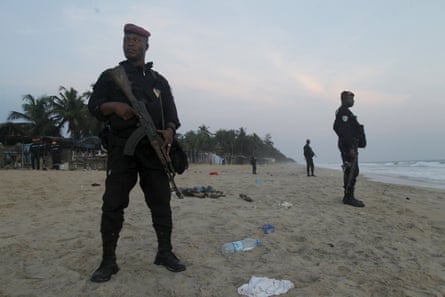
Soldiers stand in guard on the beach in Grand Bassam
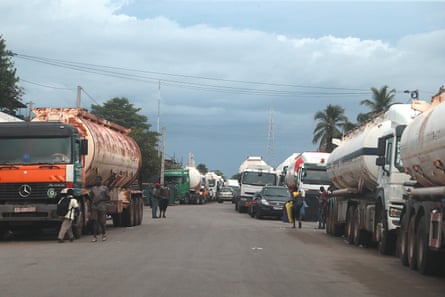
Dozens of loaded trucks parked outside Port-Bouet in Ivory Coast on 15 May, as freight traffic on the vital Abidjan-Bamako corridor continues to stall. The decline in transport is driven by a security crisis in neighbouring Mali, where armed groups imposed a full blockade on the Malian capital Bamako on 28 April.

Continue ReadingCôte d’Ivoire wary of jihadist threat in north 10 years on from major attack

Suspected Ebola cases triple in a week as WHO warns of rapid spread in DRC

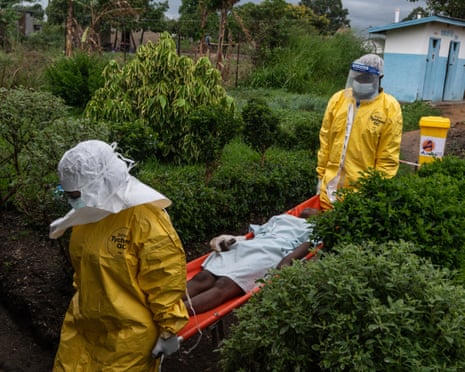
Two people wearing full personal protective equipment carry a person on a stretcher through hospital grounds.
theguardian.org

The Ebola outbreak in the Democratic Republic of the Congo poses a “very high” risk to the country, the World Health Organization said on Friday, revising its threat assessment upwards.

The outbreak is spreading rapidly, WHO leaders said, with almost 750 suspected cases and 177 suspected deaths, up from 246 cases and 65 deaths when it was first reported a week earlier.

The situation is “deeply worrisome”, said Dr Tedros Adhanom Ghebreyesus, the WHO director-general.

On Thursday, tents and medical supplies outside a hospital in Rwampara, Ituri province, were set on fire as medics tried to set up an Ebola treatment centre. A crowd was reportedly angry at not being allowed to retrieve the body of a local man who had died at the hospital. The bodies of Ebola patients must be buried according to strict infection control protocols to prevent further spread.

Tedros warned that “significant distrust of outside authorities among the local population” was causing issues for the response to the outbreak.

“Building trust in the affected communities is critical to a successful response, and is one of our highest priorities,” Tedros said.

The WHO’s representative in the DRC, Dr Anne Ancia, said the incident in Rwampara would “significantly jeopardise” the response operation there.

The treatment centre that was attacked was designed to separate Ebola patients from others being treated in the same hospital. Ancia said she was hopeful that it would be able to be up and running again within 24 hours.

The outbreak has been caused by the Bundibugyo strain of Ebola, for which no vaccines or treatments exist. Most cases are in the DRC’s Ituri province, with a handful reported elsewhere in the country, and two in neighbouring Uganda.

Rising case numbers may paradoxically be a “good sign”, indicating better detection, officials said. A slight fall in the number of samples testing positive suggests more people with potential symptoms are being picked up.

However, Ancia said: “We are running behind, we are not yet under control.”

She was confident, however, that the response would be successful.

“I can guarantee you that together, we will manage to get over this outbreak as soon as we can,” she said.

While the WHO raised its risk assessment for the DRC, it maintained its earlier assessment that there was a high risk at the regional level and low risk at the global level.

Representatives of humanitarian organisations working in Ituri said they did not yet have enough resources to mount an adequate response.

Dr Amadou Bocoum, country director for Care International in the DRC, said aid cuts last year meant “the system was not able to work properly because of lack of equipment”, while lower staff levels also made the labour-intensive work of informing cases and contact tracing harder.

Julie Drouet, country director for Action Against Hunger, said: “Everyone is working to try to implement as quickly as possible … the response in the field, however it is not quite yet ready. It is not really yet up to the emergency that we have in Congo at the moment.”

A WHO press briefing also heard that scientists had identified an antiviral drug, obeldesivir, which may be able to prevent contacts of Bundibugyo cases developing the disease, and were working to establish trials in the affected areas.

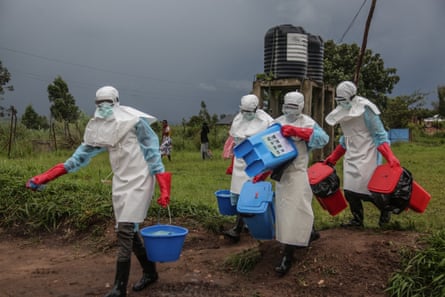
Medical staff wearing personal protective equipment carry blue buckets and crates of disinfectant.
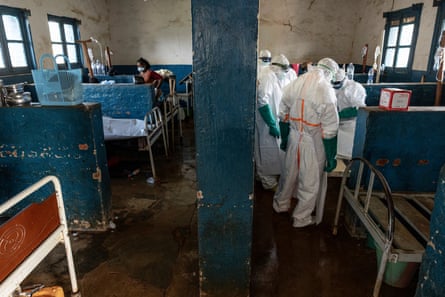
People wearing PPE work in a run-down ward with metal beds.

Continue ReadingSuspected Ebola cases triple in a week as WHO warns of rapid spread in DRC