Friday briefing: ​What do the cuts in aid mean for the fight against Ebola in the DRC?

A Red Cross worker in protective gear sprays disinfectant in a narrow alley between rundown buildings

Ebola is spreading rapidly in parts of east Africa. The deadly disease, which kills around half of those it infects, is suspected to have claimed the lives of at least 240 people since the outbreak began in Ituri province in the Democratic Republic of the Congo earlier this month.

Public health officials are scrambling to contain the virus in one of the toughest environments: Ituri province, the centre of the crisis, is a mining hub where thousands of people work in close proximity every day, and a conflict zone, with ongoing fighting between rebel groups. Medical facilities are modest, while waves of displaced people are being forced into overcrowded camps to escape fighting, making it even harder to control transmission. The virus has already spread to other regions in eastern DRC and the Ugandan capital Kampala.

It is also the first major Ebola outbreak since the US, UK and other western countries made brutal cuts to humanitarian aid, which began with Donald Trump and Elon Musk’s gutting of USAID. The rapid response infrastructure from previous Ebola outbreaks has been stripped back so much of it is barely fit for purpose, hampering efforts to save lives, warn experts.

For today on First Edition, I spoke with Dr Papys Lame, the Ebola outbreak response coordinator in Ituri for the NGO Alima, and Selena Victor, senior director of policy and advocacy for Mercy Corps about efforts to contain the outbreak. But first, the headlines.

Five big stories

  1. UK news | Britain risks a financial hit worth £125bn a year after a rise in the number of young people not in employment or education to more than 1 million.

  2. US-Israel-Iran | Donald Trump has circulated a draft peace agreement for the war with Iran among allies including Israel as both sides try to prevent fresh breaches of the ceasefire escalating out of control.

  3. UK politics | Andy Burnham has rolled back from his previous calls for ministers to scrap a restriction on immigrants claiming benefits as the Makerfield byelection places greater scrutiny on him.

  4. Ukraine | A Russian drone that was part of an overnight attack on Ukraine crashed into an apartment building in eastern Romania, injuring two people, authorities said, in what an official statement condemned as an “irresponsible escalation” by Moscow.

  5. Climate crisis | Abandoning net zero and drilling for more oil and gas would be a massive setback for the UK and would not help the economy, leading experts have said in response to Tony Blair.

In depth: ‘You must be brave if you work in this environment’

There is no current vaccine for Ebola. The virus, which is caught from wild animals and passed between humans through body fluids, was discovered in 1976 and is largely found in rainforest regions of western, central and eastern Africa. Between 2014 and 2016, the deadliest known outbreak killed 11,325 people in Guinea, Sierra Leone and Liberia. Frontline workers are desperately trying to prevent a repeat in eastern DRC and Uganda.

Lame says that Ebola was likely passing through the community for some time in and around Bunia, the capital of Ituri province, before the outbreak was formally declared on 15 May. Symptoms are similar to common illnesses like malaria and typhoid: fever, muscle pain, vomiting and diarrhoea. While Ebola is not spread as easily as a respiratory illness like Covid-19 or influenza, the lack of lab facilities for testing has made it hard to monitor. Many more cases are suspected than the official WHO figures, he says.

“We don’t have a specific treatment for Ebola right now but we can save people if they come very early. Then, their chance of being cured is higher. But if people come late, the case fatality rate is high,” says Lame, who is from Senegal. “Patients are afraid because they know that Ebola does not have a cure. Many have lost a member of their family or a colleague. And it also impacts frontline workers, too, who have lost colleagues.”

At least five doctors and nurses have died after treating patients at Bunia Evangelical medical centre, including 30-year-old Dr Vladimir Maduali who died on Sunday, and Dr Tibenderana Katho Blaise who died two days later. Other colleagues are believed to have contracted the virus.

“We have preventive measures that we are putting into place to protect our colleagues. They are working with some confidence because some have experienced previous Ebola outbreaks. You must be brave if you work in this environment,” says Lame.


Conspiracy abounds

Despite the immense bravery of medical staff, there is a fragile relationship with the local community, which is hampering the response. Some in Ituri province think that the virus does not exist or it has been brought in by humanitarian workers, fearing that they will die if they go to hospital, says Dr Lame.

There have also been attacks on healthcare facilities. The Ebola virus can spread from contact with cadavers, and authorities have implemented strict rules around burials which has sometimes angered families. In one case, a group of young men carried out an arson attack on an Ebola centre in the Rwampara region to try to retrieve a friend’s body.

Speaking about the attack on Alima facilities, Lame explains how the conditions around containment can exacerbate the sense of loss and anger: “The death of a young footballer from suspected Ebola shocked the community and his family. Young people came to ask for his body without treatment. Because it was a suspected Ebola death, we had to organise a safe burial so people got angry,” says Lame. “For us, this is not an attack against the organisation. It is anger and frustration against the loss of an important person in the community.”


USAID cuts dismantled the system

Maintaining cooperation with the community is vital to ending the outbreak as quickly as possible, say public health officials. On Wednesday, World Health Organization chief, Tedros Adhanom Ghebreyesus, appealed for a ceasefire in Ituri between rebel groups to help contain the outbreak.

But the effort to end the Ebola outbreak will probably take several months. The 2014 Ebola outbreak in west Africa took more than two years to end, and there was a major international effort to protect people from the disease. Enormous western cuts to humanitarian aid appear to have made the response much slower this time. US foreign assistance to the DRC has fallen from $1.4bn in 2024 to $21m so far this year, with health officials warning that the US appears to be doing little to stop the outbreak this time.

“Ebola is one of those truly terrifying, upsetting, horrific things that does happen intermittently. Since the 2014 outbreak, we had gotten much better at identifying it and responding to the virus. There was a major effort to train local epidemiologists and health workers. The USAID cuts were obviously devastating. The system took a long time to build but didn’t take very long to dismantle,” says Selena Victor, senior director of policy and advocacy for Mercy Corps.

Some countries, including the US, are providing more funding to help. But the amount is dwarfed by the resources used to contain previous Ebola outbreaks – and officials are warning that basic PPE supplies were already a concern. The world must do all it can to make sure medical staff have the resources to respond this time, she said.

“I’m blown away by people’s willingness and commitment to help in these situations. Please, let’s not have a situation where they don’t have gloves, masks and gowns. The very least we can do is make sure that they have everything they need to stay safe,” she says.


A global problem

Last week, University of Oxford scientists said they are working on an Ebola vaccine that could be ready for clinical trials within two months, as part of the effort to contain the virus. The WHO is treating the outbreak as a public health emergency of international concern. But in the era of extreme political polarisation, governments are not responding as they have done to previous outbreaks.

The US has banned people from entering the country who have been in the DRC, South Sudan and Uganda in the previous 21 days. The Trump administration is also building a quarantine and treatment centre in Kenya for Americans affected by the Ebola outbreak, instead of bringing them home, attracting widespread criticism.

Lame said it was vital that his team get the resources they needed to help save lives – adding that more resources are still needed from abroad. “The community response against Ebola is critical, and we need many resources for this. International staff who can come and help with community engagement, human resources, logistics, water sanitation. Hopefully we will have enough to do our work.”

What else we’ve been reading

  • Argentina has a problematic self-image as “European” at the expense of African-Argentinian and Indigenous communities, as Tiago Rogero looks at what a recent spate of racist incidents says about race relations on the continent. Yassin El-Moudden, newsletters team

  • Laura Barton has a great interview with Paul McCartney about his early life and the inspiration for his new album. Patrick

  • Is Jamaica on the verge of becoming the region’s newest fossil-fuel producing state? Sarah Johnson takes stock of the debate triggered by news of a potential oil discovery. Yassin

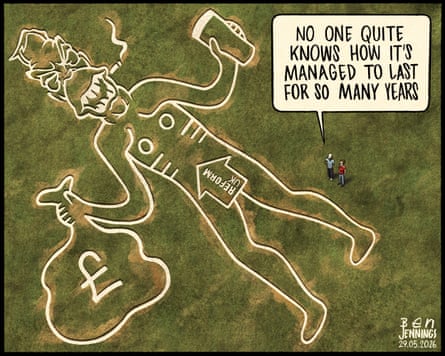
  • Steven Morris has a brilliant report on volunteers rechalking the enormous Cerne Giant in Dorset this year. Patrick

  • Students in France are now able to say bon appétit over a three-course meal for no more than €1. Kim Willsher breaks bread with some of the beneficiaries of a student-led campaign that has borne fruit. Yassin

Sport

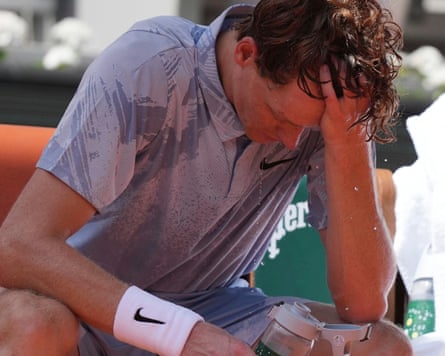
Tennis | Jannik Sinner’s bid for a maiden French Open title and career grand slam went up in smoke as he wilted in his second-round match against Juan Manuel Cerúndolo.

Cycling | Paul Magnier of Soudal Quick-Step completed a hat-trick of victories in this Giro d’Italia by winning a bunch sprint on stage 18 in Pieve di Soligo.

Athletics | Keely Hodgkinson has dangled the intriguing possibility that July’s ­London Diamond League ­meeting could be the day where she takes down Jarmila Kratochvilova’s 42-year-old 800m world record.

The front pages

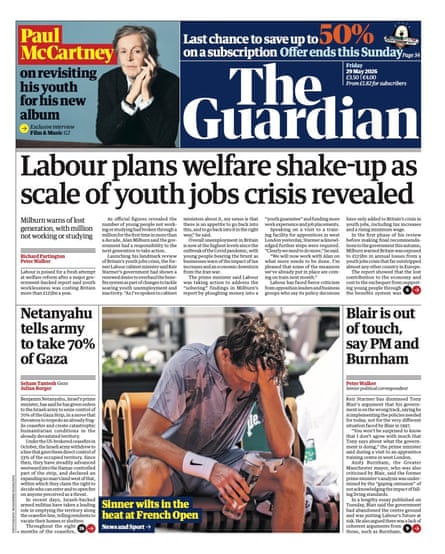
“Labour plans welfare shake-up as scale of youth jobs crisis revealed”, is the Guardian’s front page today. The Times leads with “Burnham backs state control in blast at Blair” and the i Paper says “Burnham hits back at Blair and Starmer as he outlines plan to run Britain”.

The Telegraph says “Prostate screening set to be rationed” and the Mail, on the same topic, writes “Decision that will ‘condemn thousands’ to death”.

The FT’s splash is “Manifold clashed with BP’s company secretary before ousting over conduct”. The Express says “Jewish people don’t feel safe on British streets”. In the Mirror “Flags group ‘founder’ charged with murder” is the top story. The Sun goes with “It’s all kicking off” and finally Metro, on a drug gang who “loved the high life”, splashes “Behind spas!”.

Something for the weekend

Our critics’ roundup of the best things to watch, read, play and listen to right now

Film
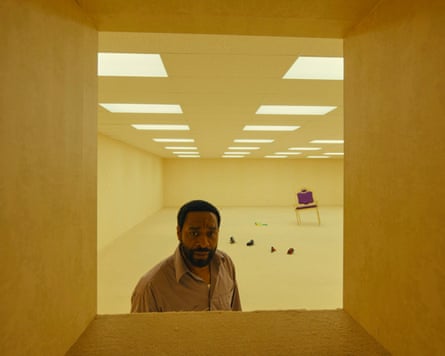
Backrooms | ★★★★★
YouTuber Kane Parsons makes his feature directing debut with this icily brilliant and genuinely disturbing conceptual horror film based on his web series, and scripted by Will Soodik. There is something here of J-horror, the V/H/S found footage franchise, Dan Erickson’s Severance and Nathan Fielder’s The Rehearsal. It’s about people walled up in their own memories, imprisoned in endlessly remembered scenes from their past, or miserably perceived versions of their present existences in which they have become caricatures of themselves, gargoyle stars of their paralysed inner world of failure. Or perhaps the action of the film is not metaphorical in this or any other sense, and the “backrooms” of the title simply exist. Peter Bradshaw

Music
Iceage: For Love of Grace & the Hereafter | ★★★★★
Their sixth album, is billed as a return to punky first principles. It’s certainly less epic than its predecessor – but the barely contained chaos that Iceage once dealt in is conspicuously absent. Instead, the new album feels powerful, but streamlined in every sense, and the songwriting is extraordinarily tight and punchily melodic throughout. The songs have a sparkle to them: a curiously effective backing for Rønnenfelt’s lyrics, which still tend to the pugilistic, visceral and bleak, and make love sound like mortal combat. The result leaves you thinking that while the band’s constant development and diversity is striking, their consistency is more striking still. Alexis Petridis

TV
Spider-Noir | ★★★★☆
As the title suggests, Spider-Noir has been conceived as a homage to the hard-boiled films and fictions of the 1940s. The show is gloriously full of shadows and cigarette smoke, sassy secretaries and shady dames, as well as superheroes and supervillains. Plot twists are served up – and if none is brilliantly innovative, the whole is fast and fun enough to get away with it. Everything is shot with style and confidence, while the script contains just enough sharp dialogue and witty banter to keep it aligned with the templates of the past. And Nicolas Cage fans, of course, will have his turn as Ben Reilly to keep them going. Lucy Mangan

Theatre
Redcliffe, Southwark Playhouse Borough, London | ★★★★☆
Queer history is made up of bad news. The official documents record the raids, the arrests, the executions. The rest – all the raging love and snatches of joy – is largely left for us to imagine. In Jordan Luke Gage’s impressive Redcliffe, the writer-performer fills in the gaps of the lives of William Critchard and Richard Arnold, two men who collided in mid-18th-century Bristol. Inspired by true events romanticised into a musical, this is an open-hearted production. Kate Wyver

Today in Focus

Why are our homes and cities all so hot?

In the week when the hottest May days were recorded, the Guardian’s environment editor, Fiona Harvey, examines a new Climate Change Committee report on how the UK can better withstand extreme heat.

Cartoon of the day | Ben Jennings

The Upside

A bit of good news to remind you that the world’s not all bad

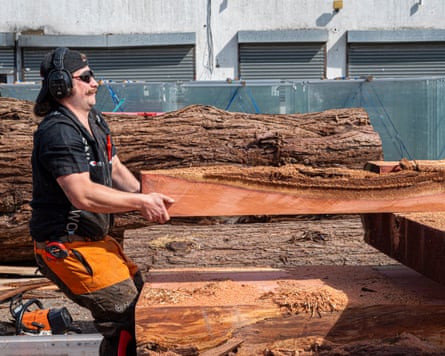
“That felt bonkers to me: they were creating the exact material we needed next to our site” says Joel de Mowbray, of the experience of watching trees felled near where he was working while he was having to source timber from miles away. He has now helped set up Tipping Point East, a hub set on a 20,000 sq metre industrial site in Newham, London, which promotes circular construction, where materials are reused instead of discarded. “We’re creating a regenerative supply chain for the city we love,” says De Mowbray. “Turning things that would otherwise go to waste into objects that have cultural potential”. The materials yard is full of neatly stacked glass panes, sinks and pipes that would otherwise have been thrown away which have now been certified to be re-used and donated to community builds or sold at very reasonable prices.

Sign up here for a weekly roundup of The Upside, sent to you every Sunday

Bored at work?

And finally, the Guardian’s puzzles are here to keep you entertained throughout the day. Until tomorrow.
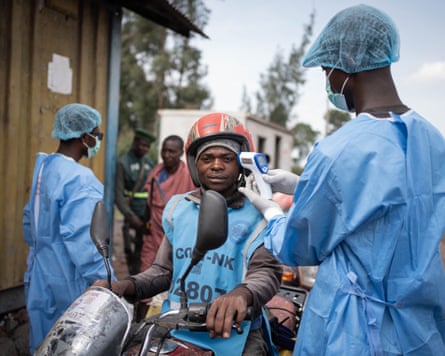
Prevention measures to contain the spread of Ebola in DR Congoepaselect epa12997409 Health workers in protective gowns and masks check locals’ temperature as a preventive measure against Ebola in Kanyaruchinya, near Goma, North Kivu, Democratic Republic of Congo, 27 May 2026. The World Health Organization (WHO) has declared the Ebola outbreak, caused by the Bundibugyo virus, in the Democratic Republic of the Congo a public health emergency of international concern.
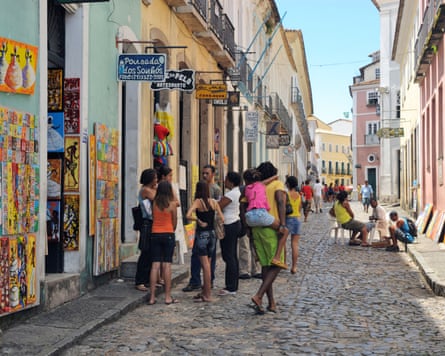
Tourists in Pelourinho, the beautifully restored historic center of Salvador de Bahia.
Jannik Sinner of Italy reacts as he cools himself with the water during a break at the second round men’s singles tennis match
The Guardian front page 29 May 2026
Chiwetel Ejiofor in a scene from “Backrooms.”
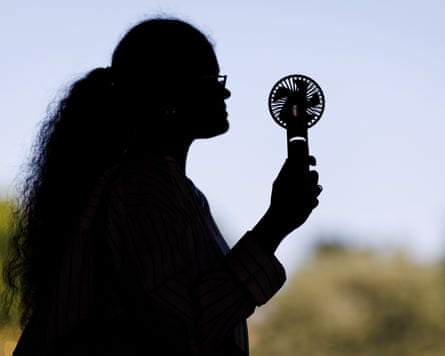
A person uses an electric fan to cool down during a heatwave in London
The Cerne Giant depicted as Nigel Farage, with an onlooker saying ‘no one quite knows how it’s managed to last for so many years’.
Making the rules work for them … milling British sequoias with National Saw Mills at Tipping Point East.

Continue ReadingFriday briefing: ​What do the cuts in aid mean for the fight against Ebola in the DRC?

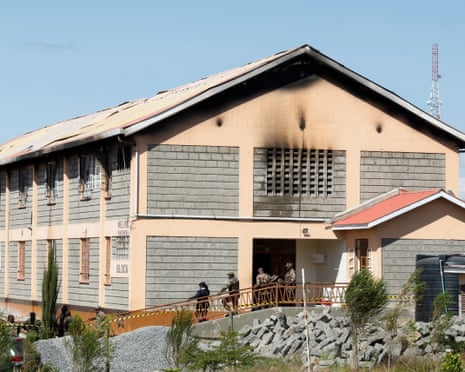
Dormitory fire at Kenyan girls’ school kills at least 16 students

Security officers stand outside the fire-damaged dormitory at Utumishi girls academy in Gilgil.

A fire that ripped through a dormitory at a girls’ school in Kenya overnight has killed at least 15 students, according to police, while dozens more were injured.

Gilgil police station said at least 15 girls died at Utumishi girls academy in Gilgil, Nakuru county, about 76 miles north-east of Nairobi, according to a police report seen by Reuters.

A police source told Agence France-Presse that 16 people had been killed, most of them children, while 73 were hospitalised. The cause of the fire in the dormitory, where about 220 girls were sleeping, has not yet been confirmed.

The tragedy is the latest fatal fire at a school in Kenya in recent years. In 2024, 21 boys were killed at a boarding school in central Kenya when a fire tore through their dormitory, while in 2017 nine girls died in a blaze at a school in Kibera, the largest slum in Nairobi.

In 2016, there were about 120 incidents of students setting fire to their sleeping quarters. A 2022 report by the country’s auditor general found that most state secondary schools were not prepared to deal with fires.

The Kenyan Red Cross said on X that the blaze in Gilgil was reported at about 3.30am on Thursday. “Several students have been evacuated and are receiving treatment in various hospitals,” it said. “A multi-agency response involving the county fire brigade, county disaster response teams, @PoliceKE and Kenya Red Cross remains ongoing.”

Masoud Mwinyi, an assistant to the deputy inspector general of Kenya’s police, told local media that officers were searching for pupils who may have escaped the fire but were still unaccounted for.

“We are combing the area because out of that shock and fear and anxiety, many people went out and it was at night,” he said.

Dozens of parents gathered at the school on Thursday morning, frantically searching for news of their children.

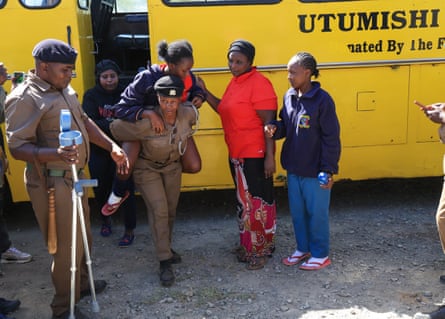
Wambui Nderitu told the BBC her niece had survived the fire but broken her leg. She added: “Some of those at the top floor had to jump out, that’s why they are injured.”

An injured Utumishi academy student is carried to safety.

Continue ReadingDormitory fire at Kenyan girls’ school kills at least 16 students

US building Ebola quarantine center in Kenya for Americans amid outbreak

people load supplies onto a plane

The Trump administration is building a quarantine and treatment center in Kenya for Americans affected by the Ebola outbreak, instead of bringing them home.

The White House on Wednesday confirmed that the US was setting up a facility in Kenya for Americans to quarantine after Ebola exposure in the Democratic Republic of the Congo (DRC).

“The facility is designed to provide access to high-quality care for Americans who would need to quickly get out of DRC and quarantine without the risks of a lengthy transport back to the US,” a White House official told the Guardian.

The center will also treat Americans who contract Ebola, the official said – “including critical care needs, though each case will be evaluated for forward transport for more advanced care as appropriate in order to maximize patient outcomes”.

The official did not clarify whether that further transport would be to the US or to Europe, where other Americans have been taken for quarantine and treatment. The official also did not clarify if Americans were allowed to return to the US if they did not want to go to Kenya.

The US has banned green card holders who recently travelled in DRC, Uganda and South Sudan from returning home, and other recent travellers to these three countries are also banned from entering the US.

“It is shocking to me that the administration is looking to prevent Americans from coming home to receive the proven world-class care that our taxpayer-funded biocontainment and treatment units are equipped to provide,” said Jennifer Nuzzo, an epidemiologist and director of the Pandemic Center at the Brown University School of Public Health.

“There are profound ethical concerns with this approach,” she added. “Without adequate plans for the safe quarantine of exposed individuals and prompt isolation of those who become infected, I fear these facilities could amplify the spread of the virus. The prospect of not being able to come home for safe and effective care may create disincentives for people to disclose having been exposed, which could drive cases underground, and cause the virus to spread even more.”

Americans responding to previous outbreaks – whether they were caring directly for patients or organizing the logistics of contact tracing and safe burial teams – knew that if they fell ill, they could return home to receive some of the best medical care in the world.

Without those assurances, and with the prospect of being indefinitely prevented from returning home to friends and family, US experts are much less likely to volunteer now.

“That’s basically telling any American health worker who might go and work on the effort to contain this outbreak that if they get sick, they can’t come home,” said Jeremy Konyndyk, president of Refugees International and former executive director of the USAID Covid-19 taskforce as well as a former leader in the 2014-2015 USAID Ebola response. “It disincentivizes people from going. In 2014, we faced this exact scenario – cases coming back to the United States – and we fought really hard not to put a travel ban in place because we knew that would ultimately be counterproductive to the goal of ending the outbreak.”

The risks of transportation are extremely low if a person is not symptomatic, and the US has extensive experience evacuating people who have been exposed to and test positive for Ebola or other contagious pathogens.

Continue ReadingUS building Ebola quarantine center in Kenya for Americans amid outbreak

WHO chief calls for DRC ceasefire to tackle Ebola outbreak

Three soldiers stand guard in the skeletal frame of a large burnt tent, with two intact tents behind

The head of the World Health Organization has called for an immediate ceasefire in the eastern Democratic Republic of the Congo to help tackle the Ebola outbreak there.

Tedros Adhanom Ghebreyesus posted on social media that the region was in the midst of a “catastrophic collision of disease and conflict with the Ebola outbreak in Ituri province outpacing the response”.

Tedros said on Monday that he would travel to the DRC this week.

As of Sunday there had been 900 suspected cases and 223 suspected Ebola deaths in the DRC and seven confirmed cases and one death in Uganda, WHO data shows.

The outbreak was confirmed on 15 May in Ituri, the DRC’s most north-eastern province, which borders South Sudan and Uganda.

Eastern DRC has a number of armed groups. Though the government still largely controls Ituri, insecurity had been worsening there before the Ebola outbreak. Almost 1 million people in the province have been displaced by conflict, according to the UN humanitarian office.

The outbreak has spread south to rebel-held areas of North Kivu and South Kivu provinces, where the Rwandan-backed M23 group controls large swathes of the region.

Tedros said: “Stopping this Ebola transmission depends entirely on humanitarian access. Yet ongoing clashes are driving mass displacement, pushing exposed contacts into overcrowded camps and severing critical containment corridors.

“Frontline workers are risking everything, while attacks on health facilities make tracking cases and their contacts nearly impossible. We cannot build community trust or isolate the sick while bombs are falling. We urge all warring parties to agree to an immediate ceasefire to contain this outbreak.”

The response to the outbreak has been complicated by the transient nature of many communities in Ituri, where goldmines attract migrant workers, as well as by international aid cuts.

Philippe Guiton, the DRC director of the aid organisation World Vision, said: “For children, the risks are especially acute. Years of conflict have weakened community systems, and acute malnutrition has left many young bodies too fragile to withstand a virus as aggressive as Ebola.”

The response has also been hindered by attacks on health facilities by people wanting authorities to release Ebola victims’ bodies for burial.

Traditionally, burials involve families washing and touching the body. However, the bodies of Ebola victims are highly contagious and have been a key vector for spreading the disease in previous outbreaks in the region.

On Saturday and Sunday, people attacked a hospital in Mongbwalu, in Ituri. Its medical director, Dr Richard Lokodu, told Reuters that 18 Ebola patients fled the facility on Saturday when “unidentified individuals” burned tents where patients were being isolated.

On Sunday, seven more patients fled and an individual suspected of having Ebola died haemorrhaging in the attempt, he said.

In Uganda, all seven confirmed cases were reported in Kampala, the WHO said. They included a driver who had transported another case; a Congolese woman who had travelled to Uganda for medical care; a Congolese health worker who worked with other Congolese people seeking healthcare in Uganda; and two Ugandan health workers who had cared for an Ebola patient.

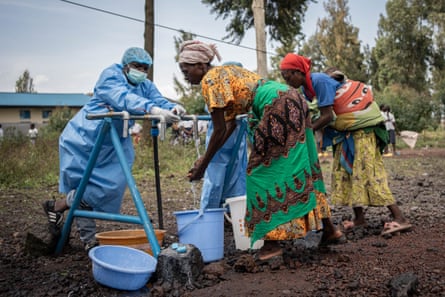
Women wash their hands under temporary outdoor taps as staff in protective gear look on
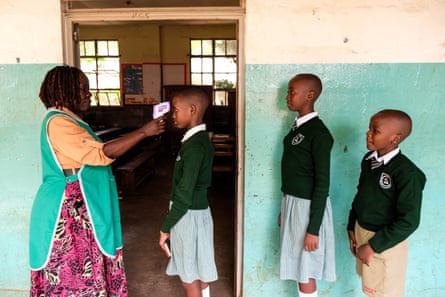
A nurse places a thermometer to the head of a child in school uniform, with two other children lining up behind

Continue ReadingWHO chief calls for DRC ceasefire to tackle Ebola outbreak

Spread of Ebola in DRC ‘outpacing’ response efforts, warns WHO

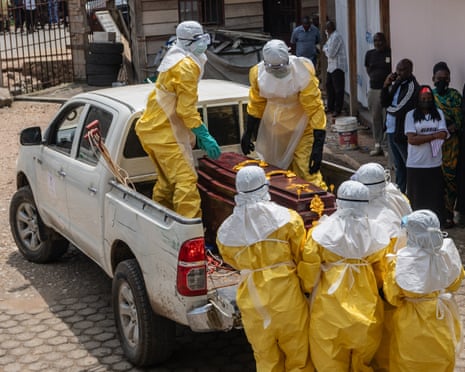
Health workers in yellow and white protective suits lift a coffin from a pickup truck

The World Health Organization has warned that the Ebola outbreak is outpacing response efforts and countries neighbouring the Democratic Republic of Congo (DRC) are at high risk from the disease.

“We are urgently scaling up operations, but at the moment the epidemic is outpacing us,” said the WHO’s director-general, Dr Tedros Adhanom Ghebreyesus, as he urged neighbouring countries to take immediate action.

Addressing an online meeting of the African Union about the outbreak, he also announced there had been 220 suspected deaths so far in the current Ebola outbreak and that he would travel to the DRC on Tuesday with Chikwe Ihekweazu, executive director of WHO’s health emergencies programme.

Tedros’s announcement came as attacks by residents on health facilities in Ituri province, the centre of the outbreak, hampered the response.

First on Saturday and again on Sunday, residents of Mongbwalu town in the DRC attacked the Mongbwalu general referral hospital.

Dr Richard Lokodu, medical director of the facility, told Reuters that 18 Ebola patients had fled on Saturday after “unidentified individuals” burned tents, erected by Médecins Sans Frontières, where patients were being isolated.

The hospital came under four waves of attacks on Sunday, he added, by young people mobilised by relatives of a religious leader who died of Ebola. Seven other patients escaped and Congolese police and soldiers had to intervene to restore order.

A suspected patient who was in critical condition with haemorrhaging died in the second attack while trying to flee from his bed.

The perpetrators of the attacks had wanted the bodies of the Ebola victims released for burial, Lokodu added.

In a similar incident, a crowd on Thursday set fire to a treatment centre in Rwampara, near Bunia, after authorities refused to give them the body of a victim they wanted to bury themselves.

The burial of bodies, which can be highly contagious, is handled by authorities for containment of the disease, but some families prefer traditional burials, which involve washing and touching the body. In previous outbreaks that has been proved to be a key driver of the spread of the disease.

Earlier this month, Tedros declared the outbreak a “public health emergency of international concern” after more than 300 suspected cases and 88 deaths were reported in the DRC and two deaths in neighbouring Uganda.

On Monday, Uganda announced two more Ebola cases, taking the total number of confirmed cases in the country to seven. The new cases are both Ugandan health workers in a private health facility in the capital, Kampala, the country’s health ministry said in a statement.

The outbreak is caused by the rare Bundibugyo ebolavirus, which has no approved treatment or vaccine.

The hotspots are Rwampara, Mongbwalu, Nyankunde and Bunia areas in the north-east DRC province of Ituri, a commercial and migration hub and a gold-rich region where conflict between militias allied to the Hema and the Lendu ethnic groups, who are fighting over land and the mineral, has killed more than 50,000 people since 1999.

Cases have also been reported in Butembo and rebel-controlled Goma, both in North Kivu province, and Bukavu city, also rebel-held, in South Kivu province.

On Monday, Tedros said containing the outbreak was complicated by Ituri and North Kivu being insecure and the lack of an approved vaccine.

Reuters contributed to this report

Continue ReadingSpread of Ebola in DRC ‘outpacing’ response efforts, warns WHO

‘She does not back down’: the couple seeking to legalise same-sex marriage in Botswana

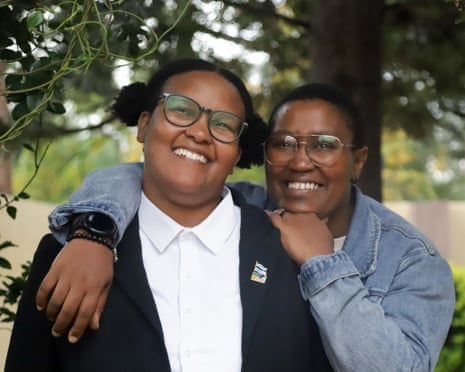
Bonolo Selelo and Tsholofelo Kumile smiling
Rachel Savage

Bonolo Selelo was at Botswana’s national museum for a Gaborone Pride event when she spotted Tsholofelo Kumile and was struck by her good looks. The two initiated a conversation and when Kumile expressed anxiety about what a tarot reading at the event might hold, Selelo thought nothing of offering her a hug. The reading turned out positive but Kumile claimed her hug anyway and they talked for hours.

That was 1 October 2023. Two months later, they moved in together. Then, on a hike during the Easter holidays in 2024, Selelo proposed to Kumile. A year later, they visited a local government office to register their intent to marry and were told it wasn’t legal.

“It was kind of expected. But I don’t think they expected the response,” Kumile said. She looked affectionately at Selelo. “She does not back down.”

The couple launched a court case, claiming the right to marry. Hearings are scheduled for 14 and 15 July. If they succeed, Botswana would become the second African country to legalise same-sex marriage, after South Africa in 2006. However, the case is facing fierce opposition from the government and traditional and church groups.

“We did have a frank discussion about it,” said Selelo, sitting next to her fiancee in the office of her law firm, which Kumile also works for. “I said … I want us to get married, because I love you, but there’s also the practical part.”

As a lawyer, Selelo worried what would happen to Kumile if she died. “I feel that I would be able to withstand a lot of legal pressure, but I wouldn’t want her to be harassed if I am no longer there to offer that protection. And, for me, marriage would give her that added protection that no other institution would be able to give her.”

Botswana decriminalised same-sex relations in 2019 when the high court ruled that a British colonial-era ban was unconstitutional. The decision was upheld on appeal in 2021. The government is now defending its ban on same-sex marriage.

A spokesperson for Botswana’s Attorney General said: “The Attorney General’s position… is that the Marriage Act stipulates that a valid marriage is one between a bride and a bridegroom and or a husband and wife, connoting a bond between a man and woman in the conventional sense. The Marriage Act does not provide for same sex marriages.”

Selelo and Kumile argued that another law, the Interpretation Act, supports their case, due to the law stating: “In an enactment words importing the male sex include the female sex and words importing the female sex include males.”

Much of southern Africa and the continent’s island states are relatively liberal compared with the rest of Africa, where 32 of 54 countries criminalise consensual same-sex intimacy. Since 2012, Lesotho, Mozambique, Seychelles, Angola, Mauritius and Namibia have legalised same-sex relations.

However, some countries on the continent have passed harsher laws amid a global backlash against LGBTQ+ rights. Uganda in 2023 and Senegal this year increased the prison times for consensual gay sex and both criminalised the “promotion” of homosexuality.

Opinions in Botswana about LGBTQ+ people have become more negative since the 2019 decriminalisation ruling. In a 2021 survey conducted by the pan-African survey organisation Afrobarometer, half of Botswanans said they either would like or would not care about having gay people as neighbours, the joint fifth highest out of 34 countries surveyed. Three years later, the figure had fallen to 41%.

Legabibo, an LGBTQ+ rights campaign group, is running a campaign called “Lorato Ke Lorato” (Love Is Love) to try to change hearts and minds. “We want to show ourselves as ordinary citizens … We’re not asking for any special rights,” said Matlhongonolo Samsam, who is leading the campaign.

On the other side is the Dingwetsi Association, a traditional women’s group that promotes heterosexual marriage and is seeking to join the case. Grace Silver founded it in 2015, concerned at rates of divorce and family breakups. She said it now had about 2,000 members paying 20 pula (£1.10) a month.

Members often wear traditional headwraps and blue, white and black tartan blankets that signify they are married women. Several showed up wearing the attire to a hearing in March for Selelo and Kumile’s case. “This is our culture. We need to protect it,” Silver said.

Accompanying Silver was Moshe Morebodi, of the Botswana House of Prayer and Transformation. “Same-sex human rights are a subset of a satanic sect,” he said.

About 80% of Botswana’s population is Christian, according to the World Religion Database. Tshepo Ricki Kgositau runs the Ricki Kgositau Foundation to support transgender Botswanans and is also a member of an LGBTQ+ task team within the Methodist Church of Southern Africa. She said: “It has been really disappointing to see the very conservative and narrow interpretation by some conservative faith community members … If you do not know love, you cannot claim to know God.”

The lack of same-sex marriage in Botswana caused Kgositau her own difficulties. In 2017, she married her husband in South Africa. He was meant to come to Botswana for their traditional wedding but because she had not yet legally changed her gender (which requires a court ruling), he was barred from entering the country. They also lost the money they had spent planning the celebrations. “It was absolutely devastating,” she said.

For Brendon Tereki and his partner, Tashatha, the legal case brings hope. After connecting on Facebook two years ago, their first meeting at a popular bar in Gaborone was also Tereki’s first date with a man in public. By the end of the night, Tashatha had made him feel comfortable enough that they were able to kiss. “He has made me open up more than I ever thought,” Tereki said. “I really want to get married.”

Closeup of the couple holding hands
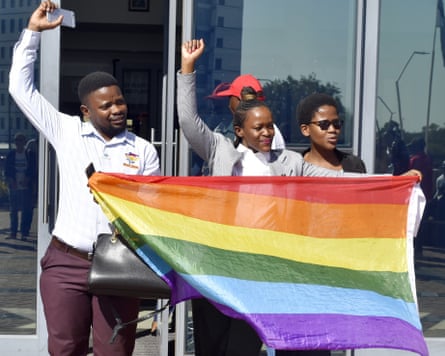
People holding a rainbow flag

Continue Reading‘She does not back down’: the couple seeking to legalise same-sex marriage in Botswana