Moroccan intelligence insider reveals widespread use of Pegasus hacking software

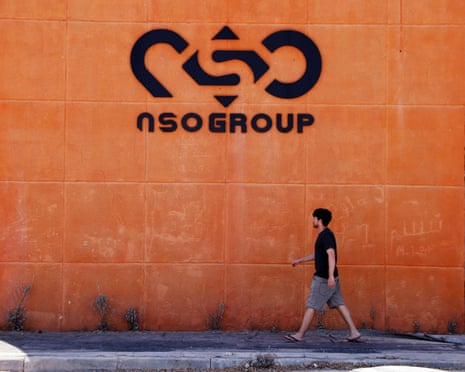
Man in T.short and shorts walking beside large NSO Group logo on orange wall

A former member of Morocco’s domestic intelligence service has helped to provide an unprecedented insight into how the north African state used hacking software – including Pegasus spyware – to target journalists, human rights defenders, French politicians and Spanish cabinet ministers and police officers.

Pegasus, which is manufactured by the Israel-based NSO Group, allows its operator to access everything on a target’s mobile phone, including emails, text messages and photographs. It can also activate the phone’s recorder and camera, turning it into a listening device.

Although NSO Group says Pegasus is sold only to governments to help them track criminals and terrorists, the spyware is alleged to have been used by several countries to target dissidents, journalists, diplomats and politicians.

Morocco has long denied using Pegasus to target critics at home or abroad, and has claimed that reporters who have investigated NSO Group were “incapable of proving [the country had] any relationship” with the company.

However, evidence from a whistleblower who worked for Morocco’s Direction Générale de la Surveillance du Territoire (DGST) for almost a decade suggests the country’s internal security services began using Pegasus in 2017 and went on to deploy it against domestic and foreign targets over the course of four years.

Testimony from the source, known by the pseudonym of Safir, forms the basis of a multiyear investigation by the Moroccan journalist Hicham Mansouri, which has led to a collaborative investigation between several media groups, with technical support from Amnesty International’s Security Lab.

The consortium, which was coordinated by Forbidden Stories and comprises 14 media organisations – including Le Monde, Haaretz, El Confidencial, Die Zeit and the Guardian – has also analysed material detailing Morocco’s surveillance practices, from leaked emails to targeting records relating to Pegasus and other spyware, and from victims’ testimony to internal training material. Two other former Moroccan intelligence agents also provided information and corroborated facts. Safir’s testimony is corroborated by leaked material, including the Pegasus project dataset, which has been forensically analysed by Amnesty International’s Security Lab.

According to information gathered by the consortium, NSO Group representatives gave high-ranking Moroccan intelligence officers and technical experts a long and detailed demonstration of new technologies – including Pegasus – in an expensive villa in Rabat in 2017. The source said the house was nicknamed “the FSSYS villa” after FSSYS Maroc, which was then the Moroccan branch of the UAE-based surveillance intermediary al-Fahad, and which frequently used the property for such demonstrations.

It is understood that those gathered for the demonstration immediately realised Pegasus’s “revolutionary” potential as its remote-infection capacity meant they would no longer have to physically access the mobile phones of their targets. As they watched, NSO representatives infected a number of test phones, remotely activating cameras, switching on microphones and accessing data and messages.

The whistleblower has suggested that the hugely expensive spyware was a gift from the UAE. “Millions for the Emiratis, that’s nothing,” said Safir. “The Emirates bought it and redistributed it to friendly services. You could say it’s like Netflix: a friend pays for the subscription, and the others use their account.”

Before Pegasus was adopted by the DGST, the service had relied on a mix of old-fashioned human intelligence, targeting terminals in internet cafes and even persuading shopkeepers to sell mobiles pre-infected with other spyware to dissidents. According to Safir, the costly new spyware was used only for high-value targets once cheaper and less sophisticated options had been exhausted.

“We never start with Pegasus,” they said. “It’s the monster’s weapon.”

Evidence gathered for the journalistic investigation, which is titled the Pegasus Project: Inside the Moroccan Spying Machine, also reveals that four unique Moroccan mobile phone numbers were selected as Pegasus targets in September 2017, seemingly in order to test the fledgling system in Morocco. They included mobile numbers linked to two DGST staff members, which were apparently input to determine the spyware’s capabilities.

The leaked database at the centre of a previous Pegasus project investigation reveals that the numbers of Moroccan journalists and human rights defenders began to be put into the Pegasus system that same month – September 2017. Before long, the targeting had begun to extend beyond Morocco’s borders.

A Spanish mobile number belonging to Aminatou Haidar, a prominent human rights activist from Western Sahara, was included in the leaked database and found to have been targeted by Pegasus dating back to 2018. Traces of the spyware were also found on a second phone belonging to Haidar in November 2021. Meanwhile, a Spanish mobile number for the journalist Ignacio Cembrero – whose work is focused on the Maghreb – was also listed on the Pegasus project database.

All in all, Pegasus project records show more than 200 Spanish mobile numbers were selected for Pegasus targeting by the user believed to be Morocco. In May 2022, the Spanish government revealed that the mobile phones of the prime minister, Pedro Sánchez, and the defence minister, Margarita Robles, were both infected with Pegasus spyware in May and June 2021.

The targeting came at a time when Madrid and Rabat were locked in a tense diplomatic row over Spain’s decision to allow the leader of the Polisario Front, which has long fought for the independence of western Sahara from Morocco, to be treated for Covid-19 in a hospital in northern Spain.

It later emerged that the phones of Spain’s interior minister, Fernando Grande-Marlaska, and its agriculture minister, Luis Planas, had also been targeted.

Repeated judicial attempts to get to the bottom of the use of Pegasus to target the Spanish cabinet have come to nothing. The investigating judge originally ended the inquiry in July 2023, but reopened it a few months later after the French authorities provided information on the use of Pegasus to infect the mobile phones of French ministers, MPs, lawyers and journalists.

But he shelved it once again in January this year, citing a chronic lack of cooperation from the Israeli authorities – including a failure to respond to his request to take a statement from NSO’s chief executive – that had violated “the principle of good faith” between countries.

However, recent analysis points to the DGST being responsible for the targeting of the senior Spanish politicians. Material assembled by the Pegasus project – including court documents – shows one of the attacker accounts that was assigned to Morocco’s Pegasus system and used to target politicians, journalists and human rights defenders in France was also used to target the phones of the Robles and Grande-Marlaska.

And yet, despite suspicions that Morocco may have been linked to the Pegasus targeting of Spanish politicians, Grande-Marlaska last year presented Abdellatif Hammouchi, the director general of the DGST, with the highest honour bestowed by Spain’s Guardia Civil, a gendarmerie that reports to both the interior and defence ministries. The move did not go down well with one Guardia Civil union, which said that giving the award “to a man who has faced international accusations of human rights violations and spying” was an affront to the dignity of the force’s officers.

More damningly, leaked documents, photographs and testimony from Spanish security forces and a former Moroccan intelligence agent suggest the DGST used its technical knowledge to seek access to the communications of Guardia Civil officers who had travelled to Morocco to share their counter-terrorism expertise.

The personal phone number of one senior Guardia Civil officer appears five times on the list of targets selected for Pegasus surveillance by the end-user believed to be Morocco.

“We spy on everyone,” one former DGST officer told the consortium, adding that such targeted surveillance was carried out “just in case”. A senior Guardia Civil official described the revelations of spying on his force as “a betrayal”.

Although officers from Spain’s other nationwide law enforcement agency, the Policía Nacional, employ stringent precautions while travelling to Morocco – including using separate mobile devices for sensitive information – the Guardia Civil did not think such precautions would be necessary when collaborating with an ally.

“We didn’t do it because we didn’t suspect we would be spied on,” a senior Guardia Civil intelligence officer said.

Further evidence that Morocco used Pegasus emerged last year after WhatsApp’s parent company, Meta, took NSO Group to court in the US for exploiting its messaging platform to target people. An unsealed, redacted presentation given to the board of NSO Group’s parent company, Q Cyber Technologies, in early August 2018 includes a list of Pegasus end-user codenames.

According to reporting by the Israeli newspaper Haaretz, countries using Pegasus are assigned a name based on the first letter of that country and the name of a car manufacturer. Subaru, for example, had previously been identified as Saudi Arabia. Morgan has now been identified as Morocco after former NSO employees confirmed to the consortium that Morocco was a Pegasus end-user and was known by that codename.

In November 2021, NSO Group was placed on a US blacklist after Joe Biden’s administration determined the company had acted “contrary to the foreign policy and national security interests of the US”. Three weeks later, the Israeli financial newspaper Calcalist reported that Israel’s defence ministry had barred imports of Israeli cyber-technology to a number of countries, including Morocco and the UAE.

The investigation has not found any evidence of Pegasus-aided surveillance in Morocco after late 2021.

NSO Group, the Moroccan government, the UAE authorities and al-Fahad’s parent company have all been approached for comment, as have the Spanish government and its interior, foreign and defence ministries.
Pegasus in capitals in green against green digital background
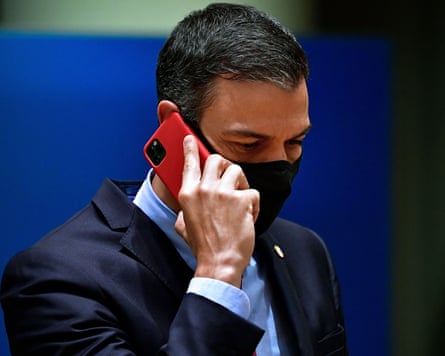
Pedro Sánchez on smartphone with mask in 2020
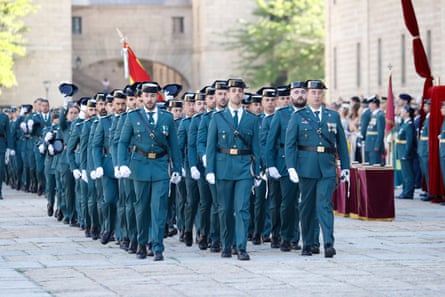
Three ranks of Guardia officers in teal uniforms

Continue ReadingMoroccan intelligence insider reveals widespread use of Pegasus hacking software

How global heating supercharged floods in West Africa, displacing thousands

Rescue workers guide a boat carrying evacuees through flooded streets in Accra past damaged buildings

Dozens of people drowned, hundreds had to be rescued and thousands were displaced when floods struck the coasts of west Africa last month.

Now scientists have concluded that the rains that caused the floods were supercharged by climate breakdown. Global heating, they say, turned what should have been a routine weather event into a climate catastrophe.

They also warn that the countries affected must adapt to a frightening new reality. “The climate is changing faster than most nations can adapt,” said Friederike Otto, a professor of climate science at Imperial College London.

“Adapting to these now common events is critical, but so is reducing emissions much further and faster, to allow us time to keep up with the changes we’ve already put into motion. Quite simply, until emissions stop these extremes will only grow worse.”

Residents on the Gulf of Guinea coast expect rain this time of year. Rainy season runs from May until the end of July. Granted, this year it had been particularly heavy, but what began on 20 June caught people by surprise.

Over the course of 72 hours, intense rainfall drenched the densely populated coastal regions of Côte d’Ivoire, Ghana, Togo and Nigeria. More than 140mm of rain fell in some cities in less than a day. The deluge overwhelmed drainage systems, triggering a series of flash floods.

From Lagos to Monrovia in Liberia, the overflow inundated neighbourhoods and washed away markets. It submerged roads and swamped infrastructure. At least 34 people died in Ghana. Five died in Togo. In Côte d’Ivoire, 59 have died as a result of floods since May.

On Thursday, Otto and the World Weather Attribution team said such a deluge was five times more likely in today’s climate. Heavy, three-day downpours in the region had increased in intensity by roughly 23% since record-keeping began, they said.

It will not be long until something similar occurs again, they warned. With the climate 1.4C hotter than before the industrial use of fossil fuels, they expect rainfall of a similar scale to explode above the Gulf of Guinea every two to four years.

To quantify the role the climate crisis had played in the disaster, scientists compared historical weather observations with climate model simulations. They focused specifically on the three most extreme days of rainfall.

Despite climate models often struggling to recreate similar events in regions in the global south, they showed climate change had caused a 4% increase in intensity. The researchers said this made them confident that greenhouse gas emissions had intensified the event.

Joyce Kimutai, who researches extreme weather and climate change at Imperial College London, was the lead author on the study. She said: “Climate models typically struggle to capture the full scale of tropical precipitation trends when we look at extreme events like this one.

“As such, the fact that we found such a role for climate change is significant. Combined with the very wetter trend in the observational-based data, it’s clear that human-caused warming made this event worse, and wetter, with devastating impacts.

“This study is a clear example of the need for international cooperation on climate justice. Industrialised nations have a responsibility to help nations like Togo, Côte d’Ivoire and Ghana to adapt to a worsening problem that they didn’t cause.”

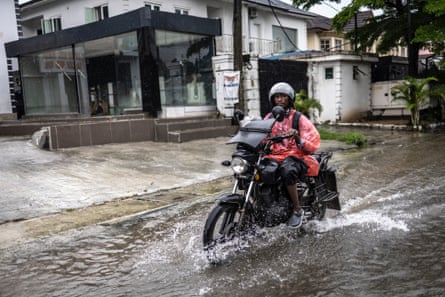
A motorcyclist rides along a flooded street in Lagos, Nigeria
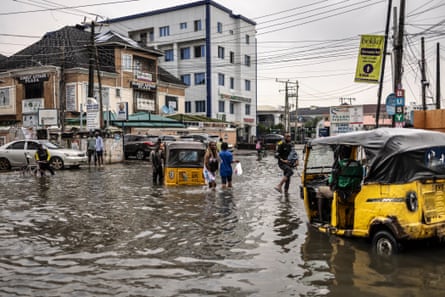
Pedestrians wade through a flooded street in Lagos on 3 July.


Continue ReadingHow global heating supercharged floods in West Africa, displacing thousands

New US Ebola patient arrives in Germany for treatment

nurses in personal protective equipment spray each other in a tiled room

A US national who contracted Ebola in the Democratic Republic of the Congo has arrived in Germany for treatment, the health ministry in Berlin said on Monday, weeks after another American infected with Ebola in the DRC was treated in Berlin.

Meanwhile, the Trump administration on Monday said it was blocking American citizens in ⁠the DRC from traveling to the US on commercial flights, Reuters reported, citing a White House official.

The new American patient landed in Frankfurt overnight and was transferred to the city’s university hospital, according to the German health ministry.

The head of the World Health Organization (WHO) said the man was a “humanitarian worker” who had been in Bunia, the capital of the north-eastern Ituri province of the DRC.

Ituri is the center of an Ebola outbreak that the DRC declared in mid-May – its 17th.

The WHO had provided the infected man with “clinical care and close monitoring”, The WHO director-general, Tedros Adhanom Ghebreyesus, said on X.

“The patient has been safely transferred to Germany for continued follow-up care,” he added.

An official working for the Christian aid group Samaritan’s Purse confirmed to Reuters that the patient, in his 60s, was a full-time employee of the organization working as a warehouse manager in the DRC.

The DRC’s ongoing outbreak is caused by the Bundibugyo strain of the virus – for which there is no vaccine or cure.

There have been more than 1,900 confirmed cases in the outbreak and more than 700 confirmed deaths, according to the WHO.

The German health ministry said the US patient represented “no danger for the general population or for other patients” in the Frankfurt hospital.

“The risk of someone infected with Ebola entering Germany is very low,” the ministry said.

It added that US authorities had requested help from Germany because of the country’s expertise in treating Ebola cases and the shorter flight time from the DRC to Germany.

Another US patient with the virus was quarantined at the end of May along with his family at Berlin’s Charité hospital.

He made a recovery after two weeks of treatment.

The Trump administration’s barring Americans in the DRC from traveling to the United States on commercial flights is being done under a transportation authority known as Title 49, according to Reuters’ reporting. That will place US citizens in the DRC or those who have recently left on a “do-not-board” list until they have spent at least 21 days in a third country, Reuters reported, citing a White House official.

About two dozen Americans were set to board flights to the United States on Tuesday after having ‌traveled to the DRC, according to the US official quoted by Reuters. Reuters reported that the US state department would support those American citizens and others affected during the ​waiting period.

Ebola spreads through direct contact with bodily fluids from infected people or animals – and the often fatal viral disease causes symptoms that can include high fever, vomiting and internal and external bleeding.

Continue ReadingNew US Ebola patient arrives in Germany for treatment

Killings continue on Del Monte farm in Kenya, families say, after G4S hired for security

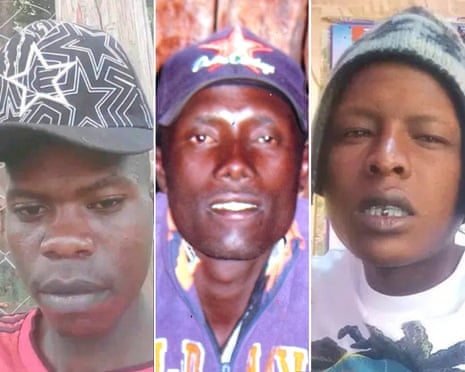
Composite of images of Michael Muiruri, Stephen Marubu Kibandi and Haron Kame Kibandi

Bereaved families and politicians have raised alarm about continued killings on Del Monte’s pineapple farm in Kenya despite the company hiring G4S to replace its in-house security team after previous deaths were exposed by the Guardian.

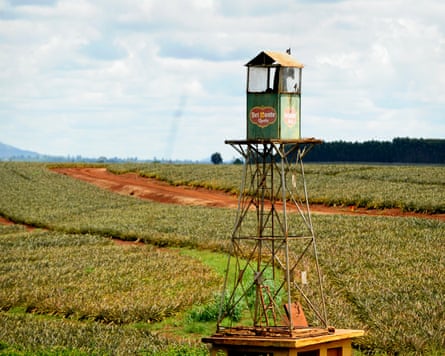
Del Monte appointed G4S to guard the farm, which is estimated to cover at least 40 sq km, the area of a small city, after the Guardian detailed allegations of brutal assaults and killings of people suspected of trespassing on its land. Kenyan police have been working with G4S to guard the site.

Three men, including two brothers, were killed in separate incidents over the past year allegedly involving G4S guards.

Stephen Marubu Kibandi, 34, was shot in the chest from close range by a police officer working alongside G4S guards last August after they claimed to have been attacked. The victim put his hands up in surrender before being shot, according to a witness.

His brother, 27-year-old Haron Kame Kibandi, died in April this year after allegedly being struck on the head by stones thrown by G4S guards and falling from a motorbike. A third man, 31-year-old Michael Muiruri, was killed after being knocked off a motorbike by a G4S pickup truck.

In 2023, the Guardian revealed allegations about the killing of four men at the farm over a decade. Security at the farm was reviewed as part of a human rights impact assessment, which found that the farm was causing human rights harms across several areas. In March 2024, Del Monte Kenya outsourced all of the security at the farm to a team of 270 G4S guards.

Announcing the deal, Wayne Cooke, the then acting managing director of Del Monte Kenya, said: “The safety and security of each individual within our company and the surrounding community are our top priority.” Del Monte Kenya appointed a new manager to address its “human rights challenges”.

This year, the Kenyan police extended their work with G4S to guard the site, setting up a “critical infrastructure protection unit” to help improve security at the farm.

Campaigners fear there will be more deaths on Del Monte’s pineapple farm because the involvement of police makes the use of lethal force more difficult to prosecute. G4S denies wrongdoing.

The farm in Murang’a county is the largest exporter of Kenyan produce, including to several UK supermarkets, and is worth more than $100m a year. The average monthly salary in the county is about £280 ($380) and pineapple theft has been a problem for decades.

A Kenyan senator has called for an independent investigation into the violence at the farm.

Stephen Marubu Kibandi

Stephen Marubu Kibandi died instantly when he was shot in the chest on 12 August 2025. A witness said Kibandi was among several men who were being chased by police and G4S guards on the Del Monte farm after resisting arrest. They said he was shot by a police officer while raising his hands in surrender. G4S says the police and guards were being attacked by men wielding machetes who also set fire to a G4S vehicle.

A copy of his postmortem findings, seen by the Guardian, said Kibandi died from “severe haemorrhage due to perforating chest injury due to single gunshot”. His death is being investigated by the police watchdog, the Independent Police Oversight Authority (IPOA).

G4S says it has shared footage with the IPOA showing police and its officers being attacked by men throwing stones and wielding machetes before the fatal shot was fired by a police officer. The spokesperson said its video also showed a G4S vehicle being set alight. The company declined to share the footage with the Guardian.

Stephen Nderitu, who witnessed the incident, said his friend had been approaching the police to argue they were doing nothing wrong. He told the Guardian: “There were two policemen and two G4S guards about 50 metres from where we were when I saw one of them point a gun at us and I jumped into the nearby thickets. Marubu held up both his hands and I heard a gunshot and saw him go down.”

The incident has been widely condemned and later prompted a protest in which a G4S van was burned. The local MP, Mary Wamaua Waithira, said: “Why shoot someone who has surrendered? He had lifted his hands up. We want the commanding officer for Ngati police station removed.”

Haron Kame Kibandi

Stephen’s brother, Haron, died on 20 April this year from brain injuries, days after being struck on the head by stones. Before his death, he claimed the stones had been thrown by G4S guards. Haron told medics this had caused him to fall from a moving motorbike being ridden by a friend. He was allegedly beaten, according to an account he gave to medics.

Simon Mburu, the manager of a health clinic to which Haron was taken, said: “He told me that he was hit by a stone by a G4S guard and when he fell down the person riding the bike continued.” When Haron was transferred to a hospital, he gave the same account. He died four days later. Scans revealed he had a “traumatic head injury” including an epidural haematoma, a lethal bleed between the skull and the brain.

Kennedy Kiarie, 28, was riding the motorbike when, he claims, stones hit Haron at field 17 inside Del Monte’s farm. He admits they were both stealing pineapples.

“I saw a G4S Land Cruiser with about six guards and two policemen parked as if laying and ambush,” he said. “As we approached, they shouted [and] they started throwing stones. I felt Haron leaning towards my right as if he was falling and I tried to hold him while riding with my left hand, but when I felt his weight overwhelming and the bike veering off, I left him.

“We went back and found him without shoes and the yellow jersey he had been wearing. His trousers had been pulled all the way down and he was lying on the roadside facing up. He told us that they had beaten him.”

He added: “I think stoning someone on a bike is brutal and they should just find ways of arresting thieves and taking them to court.”

The G4S spokesperson said it was not aware of any G4S involvement in the death of Haron.

Michael Muiruri

Michael Muiruri died on 8 August last year after he was knocked off a motorbike by a G4S pickup.

The G4S driver has been charged with causing death by dangerous driving and has been dismissed by the company. A postmortem report said: “The deceased was a pillion passenger when their motorcycle was hit from behind and throwing the deceased along the middle of the road before the same motor vehicles hit him and properly ran over.”

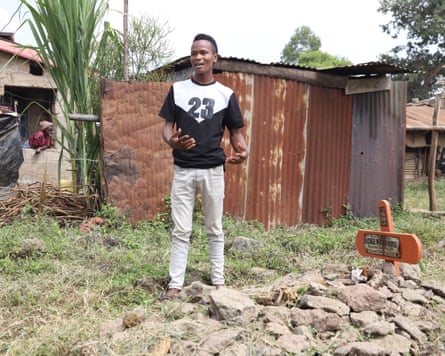
Brian Kuria Muthoni, 24, said he was riding the bike and his friend Muiruri was his passenger. He said: “We were hit from behind and the bike swerved to the left while Muiruri was thrown to the right side of the road from the impact. The vehicle then went over him and drove off at speed.”

Police impounded a G4S Toyota Hilux, which had a damaged fog light and bull bar consistent with impact, and the motorbike as part of an investigation into the incident. G4S and Del Monte Kenya say it was a traffic accident.

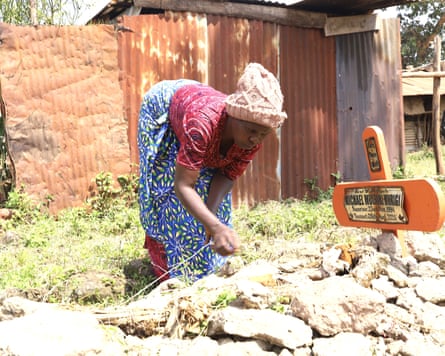
Muiruiri’s mother, Margaret Njeri Murigi, 52, said her son died within three hours of the incident and barely had time to answer her questions about what happened.

“He said they were hit from behind by a [G4S] car. He was bleeding from the mouth and had held his abdomen,” she said. “Every time I pass by Del Monte I feel a lot of pain. Even if he had gone into the farms, why didn’t they arrest him and take him to court?”

The G4S spokesperson said a company investigation found no evidence to suggest the driver’s actions were intentional.

Locals claim there have been other examples of G4S guards using vehicles as weapons against those they suspect of stealing.

‘No company should be beyond scrutiny’

Joe Nyutu, the senator for Murang’a county, said he was “deeply concerned” about the allegations. He said: “Repeated incidents over a relatively short period point to systemic issues that require examination, including security protocols, command responsibility and adherence to human rights standards. That is precisely why a comprehensive and independent investigation is necessary.”

Referring to Del Monte, he added: “No company operating in Kenya, regardless of its size or economic contribution, should be beyond scrutiny.”

Stephen and Haron were the only sons of 61-year-old Harrison Kibandi Marubu, from a village in Murang’a county. Standing between their graves, he said: “I have no one to inherit me now.”

“If I had the power to do something, I would show my anger towards G4S and Del Monte for what they have done to me. Must all the suspected thieves be killed? They don’t deserve to be condemned to the grave.”

Haron left a wife, 24-year-old Caroline Wanjiku, who now has to bring up their three-year-old daughter alone. “Life is tough because she asks me hard questions. I dropped out of high school and I don’t have a job,” she said.

The family was still mourning the death of Stephen when a call came that his younger brother had been found seriously injured on the roadside. He died days after his family first visited him in hospital.

Kibandi said: “I had never imagined my sons would be of any danger in this way because they both worked at Del Monte at different times as casuals. I feel so bad when I see the pineapple farms or a G4S vehicle because now I have no sons.”

He said that after Stephen’s death the family did not trust the police to investigate Haron’s death, so they did not report it to the authorities. He said: “Even if you report to the police, there would be no help.”

The brothers’ mother, Nancy Muthoni Kibandi, was too grief-stricken to talk about them. She waved her left hand and began to sob when asked how she felt.

Clement Kamau, who heads Kagama Community Action Forum, is documenting alleged human rights abuses linked to Del Monte’s pineapple farms. The UN special rapporteur on human rights defenders has said Kamau has faced threats and intimidation.

Kamau said: “They have armed policemen inside their vehicles and that means they have more power and even when you report violence, it’s the same policemen you will be dealing with.”

A spokesperson for Kenyan police said: “The involvement of the national police in Del Monte farm’s security was a well thought-out arrangement meant to not only secure a strategic investment in the country but also reinforce a firm measure of the rule of law and an end to impunity.

“Unacceptable behaviour including theft of produce made the government step in. There has since been a marked improvement on security around the area.”

A G4S spokesperson said: “G4S security officers working at Del Monte sites have undertaken comprehensive training, including operational procedures, human rights awareness, de-escalation techniques and the principles of minimum use of defensive force.

“The matters raised either relate to police operations, not G4S, or road traffic accidents that are investigated by the Kenyan police.”

A source at Del Monte Kenya said G4S was appointed to guard the farm because of its “strong commitment to maintaining human rights standards. They said: “Del Monte Kenya also engages another security firm, GardaWorld, which provides operatives for the control room. This diversity is intentional to avoid entrenched problems arising from the establishment of a single security firm. Del Monte Kenya employs no security guards directly, relying on the experience and expertise of the two specialist firms.”

The source said Del Monte Kenya “investigates instances of wrongdoing brought to its attention, and takes appropriate action where investigations identify improper conduct”. They added: “Throughout the course of its operations, Del Monte Kenya has implemented training and policies in order to uphold safe operations, and in particular has introduced additional training and mechanisms to promote safe and ethical security practices by security guards and police officers providing security services.

“Del Monte Kenya takes all allegations of abuse on the part of security guards extremely seriously. When any abuse or impropriety is found to have occurred, action is taken against the individuals involved.”

Margaret Njeri Murigi stoops over a grave covered in rocks
A tall watchtower looking out over fields
Brian Kuria Muthoni stands next to a grave covered with rocks
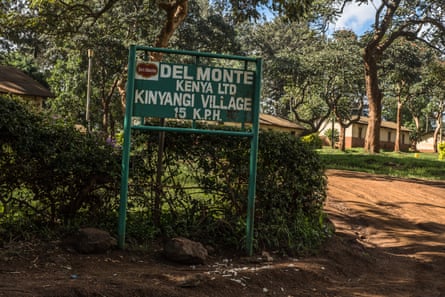
A green sign say  Del Monte Kenya Ltd  Kinyagi village 15 kph in a wooded area with a house in the background

Continue ReadingKillings continue on Del Monte farm in Kenya, families say, after G4S hired for security

First patients enrolled in record-breaking Ebola treatment trial in DRC

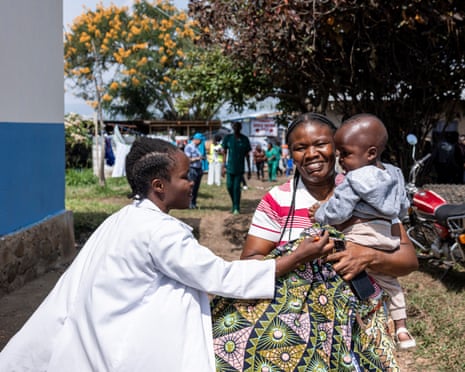
A smiling woman holds a baby boy in her arms while a nurse looks on and a group of people gather behind her.
theguardian.org

There is no approved drug to help the medical teams scrabbling to save lives in the Ebola outbreak in the Democratic Republic of the Congo – but there are hopes that could change within months as the first patients are enrolled in a treatment trial.

It is a record pace to set up and start this kind of research, scientists said, with patients enrolled just six weeks after the outbreak being declared a public health emergency of international concern by the World Health Organization (WHO) on 17 May.

Nevertheless, in Bunia, the capital of Ituri province, where the virus is raging, people are impatient.

“I hope these drug trials proceed quickly,” said Neema Haba, a mother of three and banana seller. “Financially, we are being driven to the brink by this outbreak and nothing is going right. We are struggling to provide for our children.”

As of 9 July, there had been 1,792 confirmed cases and 625 deaths caused by the Bundibugyo strain of the virus, for which there is no vaccine and no approved treatment. It is still “in the expansion phase”, according to the WHO.

The response is reliant on the basic techniques of identifying cases, isolating them for care and tracking and monitoring people they have been in contact with.

The latest figures show about 75% of known contacts are being traced, but low trust in authorities and a highly mobile population are hampering efforts. In addition, some frontline workers stopped work this week in protest at a lack of pay.

The bodies of Ebola victims are highly contagious, and must be safely buried by properly trained professional teams. Ovide Maliabo, a driver for one of the teams in Rwampara, a mining town in Ituri, said the work was dangerous in the face of community mistrust and he and his colleagues “see no point in risking our lives”.

“At one point, we narrowly escaped being lynched,” he said. “It’s a shame that we aren’t being financially supported.”

Bahati John, head of the team, said he had lost a tooth after being attacked by local people.

“Honestly, since we started working on 15 May, with all the insults we’ve had to put up with, we haven’t seen a single penny,” he said. “We are the breadwinners of our families, and our families are suffering.”

DRC officials said payments had been made but it is unclear whether activities have fully resumed. The closure of the local airport in Bunia was hampering the response, including by impeding the supply of banknotes, they said.

Hopes of turning the tide now rest with scientists searching for effective medicines.

The Partners treatment trial has opened with two drugs on its books – remdesivir, and MBP134. Patients will be randomly allocated to receive either drug, a combination of the two, or simply standard, supportive care.

Remdesivir is an antiviral made by pharma company Gilead Sciences, while MBP134 is a monoclonal antibody developed by Mapp Biopharmaceutical, containing two specially engineered immune proteins that recognise and neutralise the virus.

Both are given intravenously – MBP134 as a one-off infusion, and remdesivir as 10 days of intravenous therapy.

“These two drugs actually have been proven to work against the Bundibugyo virus in animal models,” said Prof Laurens Liesenborghs of the Institute of Tropical Medicine, Antwerp, who is working on the trial in Ituri.

“They showed great efficacy, but now we need to test it in humans. Basically, what we want to see is if they indeed can lower mortality.”

Bundibugyo typically has a lower death rate than the Zaire strain of Ebola, which has caused most previous outbreaks, but it still kills about one in three of those infected.

Researchers are watching carefully for any difference in death rates between the groups given experimental drugs and the group receiving standard care. “Any improvement is good,” said Liesenborghs. “But it needs to be statistically detected, so we need to see a substantial drop.”

In trials looking at the impact of monoclonal antibodies on Ebola cases caused by the Zaire strain, it lowered death rates from 50% to 35%, he said. “Hopefully we will see something in the order of that magnitude.”

The trial’s design allows other potential treatments to be added should they become available. A result is likely to need between 700 and 1,000 patients to be enrolled, Liesenborghs said. “We opened one site, hopefully we’ll open additional sites very quickly, but still then it will take a couple of months, depending on how the outbreak is going, obviously.”

WHO officials said enough remdesivir and MBP134 had been donated, by Gilead and the US government respectively, for 1,200 patients to be enrolled. The WHO is in discussions to ensure sufficient supplies will be available after the trial, should they prove safe and effective, it said.

Patients of any age, including pregnant and breastfeeding women, who are often excluded from medical research, can enrol in the trial.

“We always think of risk-benefit,” says Liesenborghs. “Here the benefit is potentially very high because you offer a potentially life-saving treatment to someone who has a very high chance of dying.”

Ebola causes miscarriages, while there is no sign of risk to pregnancies from animal experiments on the drugs, he added.

“It’s just fantastic we’ve managed to get started so quickly,” says Prof Amanda Rojek, international principal investigator for Partners, of the University of Oxford.

She said strong scientific leadership in the DRC, which has hosted major trials during earlier outbreaks of Ebola and other diseases such as mpox, had been vital.

“If we look back at west Africa [an Ebola outbreak in 2014-16 that saw more than 28,000 cases and 11,000 deaths], where it took us over a year to start clinical trials, we’re very proud of the team led by INRB [the DRC’s National Biomedical Research Institute] that we’ve managed to achieve that in kind of six weeks since the outbreak was first announced.”

The focus, Rojek said – as in the Recovery trial during Covid, delivered by the same Oxford group – was on keeping the trial as simple as possible.

Partners is sponsored by the WHO, with funding from the Wellcome Trust, FCDO and UKRI.

Prof Yap Boum, head of emergency response with continental health watchdog Africa CDC, warned that the danger was not over, but added: “What limits an outbreak is our capacity to provide care, our surveillance capacity and our ability to isolate people. These trials will enable us to access treatment, and when we treat people, it also sends a message to the community.”

Another trial is due to begin this week, looking at whether giving people who have been in contact with Bundibugyo cases a drug called obeldesivir can stop them developing the disease.

Africa CDC said that trial needed around $18m to proceed, with $6m committed to date.

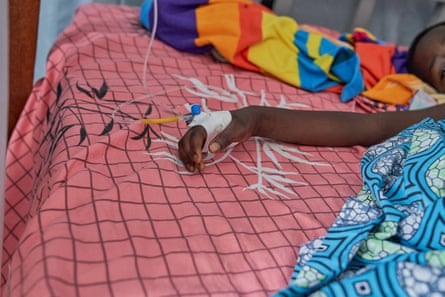
A patient lies in bed with a cannula in their hand.
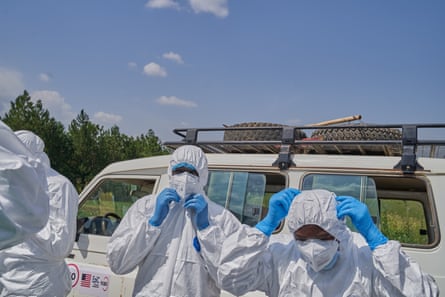
People wearing medical PPE
A man checks boxes stacked against the wall of a room.
A medical worker checks a syringe of drugs.

Continue ReadingFirst patients enrolled in record-breaking Ebola treatment trial in DRC

Nigeria says army has killed 300 bandits in north-western state of Zamfara

Nigerian troops on patrol in the north-eastern state of Borno

Nigerian soldiers killed more than 300 members of kidnapping and cattle bandit gangs in the north-western state of Zamfara this week, according to a government official.

Nigerian government troops targeted the gangs in Gummi district in a two-day operation that “led to the elimination of more than 300 terrorists,” Zamfara’s information commissioner, Mahmud Muhammad Dantawasa, said in a statement.

Gangs made up of cattle rustlers and jihadists have terrorised communities in northern and central Nigeria, where they raid farmers’ land, steal cattle and kidnap people for ransom. They also impose levies on farmers who want to access their own land in protection rackets.

Jihadists and criminal gangs have been cooperating in recent years, according to security analysts, who say their mutual interests align. Criminal gangs have become widespread in impoverished rural Nigeria, while jihadists continue to wage a 17-year insurgency in the north of the country. Both are invested in a weak central government.

Local residents of Gummi said soldiers and local vigilantes had launched a campaign on Wednesday night against about 1,000 bandits who had stolen livestock.

“The soldiers and the vigilantes killed more than 300 bandits in the fight which raged all night and the following morning,” Abubakar Muhammad told Agency France–Presse.

Troops had tried to launch an assault on the bandits’ camp two weeks ago but were outnumbered and were forced to withdraw, residents said.

The Zamfara government said the operation had been a significant breakthrough in its fight to restore order to the state.

Nigeria faces a number of security crises, with an Islamist insurgency by Boko Haram and its rival, the Islamic State West Africa Province.

The government has killed jihadists in recent months in partnership with the US, which has deployed hundreds of troops to the country to support its fight against Islamists. A joint US-Nigeria operation in May killed the second-in-command of Islamic State and about 200 fighters in a remote village in north-east Nigeria.

Nigeria also struggles with general lawlessness and banditry, fuelled by poverty. Jihadists and bandits have long used mass kidnappings of elementary-school children to extract ransom and pursue other demands.

The army said on Saturday that it had suffered casualties during the rescue of more than 40 kidnapped schoolchildren who were taken by what authorities said were jihadists. It came as a shock because it happened in the south-west of the country, which was previously thought to be relatively safe.

Continue ReadingNigeria says army has killed 300 bandits in north-western state of Zamfara