SpaceX 最大的收入来源是与 Anthropic 达成的数据中心交易

SpaceX 周三晚上向美国证券交易委员会(SEC)递交了招股说明书,首次披露了其财务状况。根据招股说明书,在合并了马斯克(Elon Musk)旗下的 xAI 和 X/Twitter 之后,SpaceX 最大的收入来源就是今年五月与 Anthropic 达成的为期三年的数据中心交易,租用 Colossus 1 园区的算力,每月支付 12.5 亿美元。但这笔交易并非是保障性,任何一方都可以提前 90 天通知终止交易。其它数据包括:2025 年营收 187 亿美元,营业亏损 26 亿美元,净亏损 49 亿美元。其中卫星宽带 Starlink / Connectivity 业务营收 114 亿美元营业利润 44 亿美元,太空发射业务营收 41 亿美元运营亏损 6.57 亿美元,AI 以及社媒业务营收 32 亿美元营业亏损 64 亿美元。招股书数百次提及 AI。马斯克持有 12.3% 的 A 类股和 93.6% 的 B 类股,B 类股投票权十倍于 A 类股,马斯克总共控制着公司 85.1% 的投票权。如果他出售任何 B 类股,它们将自动转换为 A 类股。

Continue ReadingSpaceX 最大的收入来源是与 Anthropic 达成的数据中心交易

Vivaldi 8.0 释出

基于 Chromium 的浏览器 Vivaldi 释出了 8.0 版本。Vivaldi 由 Opera 联合创始人谭咏文(Jon von Tetzchner)创办。Vivaldi 8.0 的新特性包括:被称为 Unified 的新外观,所有元素都统一在一个视觉平面上;提供了六种预设布局,其中之一是垂直标签,用户可选择垂直左侧、垂直右侧两种垂直标签布局,其它还有经典、简洁、自动隐藏以及底部四种布局。

Continue ReadingVivaldi 8.0 释出

Google 的 AI 搜索容易被人为操纵

Google 的 AI 搜索非常容易被人为操纵。因为以前的搜索结果是第一页给你 10 个链接然后让用户判断,现在的 AI 搜索是给你一个答案,而答案的来源可能只有一个。BBC 科技记者通过个人网站上一篇热狗文章演示了这一操纵。专家表示此类操纵正大规模系统性地发生。操纵 AI 搜索向用户提供偏见或不准确信息可能会带来严重后果。这并非一个无关紧要的问题。在全球范围内,逾 10 亿人日常使用 AI 聊天机器人,每月有 25 亿人浏览 Google 的 AI overviews。如果你能操控此类工具就能获得巨大的权力。Google 等公司也注意到了该问题。, Google 上周更新了其政策,将试图操纵 AI 回复的行为视为违反公司规定。Google 威胁对涉嫌操纵行为的公司或网站从搜索结果中移除或降低排名。

Continue ReadingGoogle 的 AI 搜索容易被人为操纵

储能“熄火”,钙钛矿“吞金”,杭州柯林3亿豪赌亏损机器人标的 | 并购一线

3个亿,41.57%股权,对于2025年全年营收仅2.07亿元、刚刚陷入亏损泥潭的杭州柯林(688611.SH)来说,这不仅是一次跨界收购,更像是进行一场“押宝式”的投资。

一边是自己刚崩盘的储能业务大坑还没填平——该业务2025年营收暴跌99.24%,几乎归零;同时,钙钛矿新业务还在持续投入、盈利遥遥无期;另一边,要控股的标的公司上海开普勒机器人有限公司(以下简称“开普勒”)2026年不到半年时间估值凭空蒸发近三成,一年净亏超6600万,至今未走出“入不敷出”的泥潭。

当“第二曲线”全面失速,增长主线青黄不接,这家老牌电力设备厂商的选择,不过是在增长瓶颈与转型焦虑里,又一次朝着风口蒙眼狂奔——只是这一次,它押的,可能有点大。

亏损标的半年估值蒸发30%

本次交易落定后,杭州柯林将正式把开普勒纳入合并报表,以控股子公司模式全盘接管。

从已经披露的数据来看,开普勒完全符合轻资产、高研发投入、早期商业化的阶段特征。2023年8月成立,顶着“重载全尺寸工业人形机器人领先者”的标签,主打具身智能,覆盖智能制造、仓储物流、巡逻巡检等场景,号称具备软硬件研发、本体设计与量产制造能力,赛道概念十足。

但开普勒至今尚未摆脱“烧钱换技术”的阶段,其2025年营收不足500万元,净利润巨亏6693.90万元;2026年第一季度营收263.63万元,亏损仍高达1709.27万元。仔细来看,远高于营收的三费费用是公司亏损的主营,2026第一季度其中研发费用就高达1185.00万元,约为营收的4.5倍;管理费用482.25万元;销售费用248.98万元。与此同时,开普勒经营活动现金流净额为-2839.88万元,尚未形成规模化商业落地的公司要维持发展,只有不断融资。

进入2026年,开普勒明显进入密集融资期。

2025年12月31日,杭州柯林作为战略投资者首次入股,斥资1亿元受让杨华所持有的开普勒38.71万元注册资本(股权占比10.00%),对应估值10亿元;4月,开普勒宣布完成亿元级A++轮融资,赛富投资基金领投,上市公司诺力智能、民爆光电等跟投;5月14日又宣布获得江阴霞创壹号数千万战略融资,短短数月产业资本、机构和上市公司轮番进场。

然而诡异的是,在资本密集涌入的背景下,杭州柯林的收购估值却不升反降:此次3亿元收购41.57%股权,整体估值约7.2亿元,对比杭州柯林首次入股半年不到的时间,开普勒估值缩水近30%。

对于此次收购评估,公司方面称本次收购“参考一级市场融资估值协商定价”,理由是“综合考量标的公司所处行业景气度、行业发展前景、核心竞争优势、内在价值及未来成长潜力,并结合公司自身技术储备、市场布局、客户资源禀赋及整体战略规划”。

而面对估值和业绩双双下滑的业绩压力,杭州柯林方面则强调,标的公司虽然营收小,不盈利,但手上却握有4700万元的订单,“产品应用场景已完成市场验证,可实现规模化落地,企业亦已具备量产能力”。但这4700万的订单是否能在2026年全部兑现,不得而知。

第二曲线全面失速

杭州柯林之所以急于跨界人形机器人,核心原因在于其此前重点打造的第二曲线接连失速,新旧业务青黄不接,公司陷入无核心增长主线的尴尬境地。

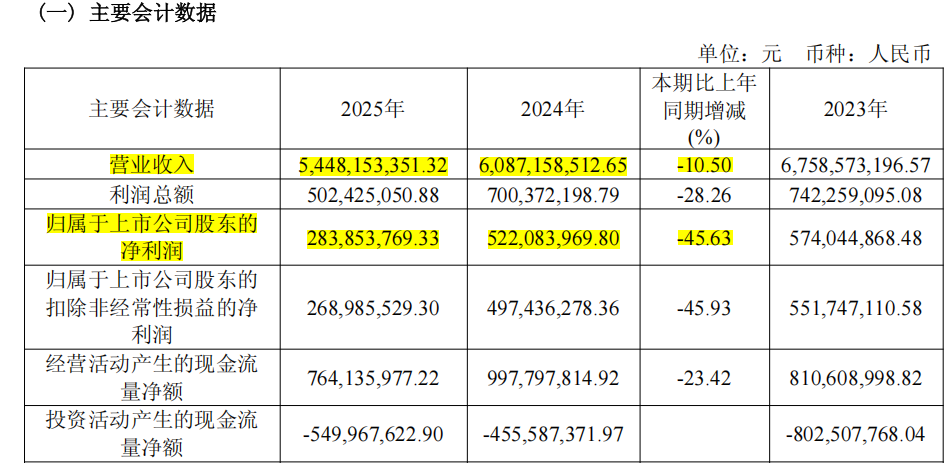
2021年上市后,公司营收虽然在上市前三年相对稳定,但净利润却持续下滑。
图源:Choice

图源:Choice

时间来到2024年,杭州柯林迎来了储能业务爆发带来的增长红利,彼时公司储能系统业务收入一跃成为第一大业务,实现营收约3.80亿元,同比暴涨1598.95%,占主营业务收入比例高达70.26%,凭借储能业务的强力拉动,公司全年营收、净利润双双实现大幅增长,分别同比增长168.23%和54.72%,创下上市以来最佳业绩表现。储能业务的爆发,主要依托江津先锋120MW/240MWh独立储能电站、内蒙古阿拉善100MW/400MWh储能电站两个大型项目,大额项目收入让市场看到公司从传统电力设备监测向新能源领域转型的潜力,也坚定了公司多元化布局的决心。

然而储能业务的高光时刻转瞬即逝,2025年直接迎来崩盘式下滑,成为拖累公司业绩的最大黑洞。数据显示,2025年杭州柯林储能系统业务营收同比下滑99.24%,收入仅为2024年的零头,毛利率也从2024年的15.31%转为-14.09%,曾经的增长引擎彻底熄火。与此同时,电站运营业务盈利能力也大幅缩水,毛利率从2024年的96.64%暴跌至43.56%,收入与利润双重承压。储能业务的崩塌,直接导致公司整体营收腰斩、利润由正转负,过去依赖单一大型项目驱动的增长模式彻底暴露弊端,行业周期波动、项目可持续性不足、市场竞争加剧等问题集中爆发。

同样是为了开启新的增长点,公司早在2023年11月便布局钙钛矿光伏业务,计划投资2.2亿元建设100MW中试线,试图打造第三条增长曲线,但目前看来业务培育进度远不及预期。2025年钙钛矿业务营收仅2557万元,毛利率同样为负,尚处于持续投入阶段,完全无法对公司业绩形成有效支撑,新旧业务交替出现巨大断层,公司开始陷入增长真空期。

这一切折射出的是杭州柯林在战略转型的失利。近几年公司急于寻找新增长点,先后切入储能、钙钛矿、人形机器人三大热门赛道,试图以多元化布局对冲单一行业周期风险。储能业务缺乏持续订单,项目交付完毕后收入随即断崖式下跌;钙钛矿处于技术迭代与市场培育早期,中试线产能释放缓慢,产品盈利困难;人形机器人更是处于产业化初期,技术路线尚未统一,商业化落地周期长、投入大,短期不仅难以贡献利润,还会持续消耗公司资金与管理资源。

最终,连续的跨界布局,不仅没有形成多点支撑的增长格局,反而导致公司资源分散、新业务集体亏损,陷入越转型越被动的局面。此次,控股手握4700万元订单的机器人公司,是否能帮助杭州柯林走出亏损泥沼,还需要时间的检验。( 文| 公司观察,作者 | 曹晟源 ,编辑 | 邓皓天 )

更多精彩内容,关注钛媒体微信号(ID:taimeiti),或者下载钛媒体App

Continue Reading储能“熄火”,钙钛矿“吞金”,杭州柯林3亿豪赌亏损机器人标的 | 并购一线

618打了这么多年,今年京东终于换了张底牌

京东试图用AI重新定义618。

“AI将首次全场景、全产业融入京东618。”正如京东集团技术委员会主席、京东云总裁曹鹏在京东618启动发布会上所说的那样,AI成为了今年618的关键词。

这是京东第一次把AI推到618的绝对主角位置。在过去很长一段时间里,618的标签一直是补贴、低价、流量——而不是技术。但今年,无论是京东云总裁曹鹏的公开发言,还是发布会的议程设置,都在向外界传递一个信号:京东正在把618当成AI能力的一次集中检阅。

一场以AI为内核的618

5月18日,京东在北京召开了2026年618启动发布会,正式宣布本届大促将于5月30日晚8点开启,至6月21日收官。本次发布以“AI 全场景融合 + 低价硬核让利”为核心主线,一方面官宣 AI 研发投入同比增长超 200%、全产业落地的重磅布局,另一方面主打“官方直降 低至5折”策略,推出官方直降、买贵双倍赔等系列举措。

对于京东来说,这将是首次将全场景、全产业融入AI的一届618。

曹鹏在发布会上披露,2026 年京东体系 AI 相关研发投入同比增长将超过 200%,投入规模稳居行业第一梯队,重点夯实模型底座、场景应用与硬件生态三大核心板块。

这也意味着,京东的AI能力已经不仅仅局限于“AI客服”或“智能推荐”,而是逐步深入到整个产业链条。

在技术底座层面,京东以基础大模型 JoyAI 为核心,衍生出物流超脑大模型、健康京医千询大模型、工业 JoyIndustrial 大模型及具身智能 JoyAI-RA 等垂直模型,覆盖零售、物流、健康、工业、外卖、家政等3000 多个场景。据曹鹏介绍,京东建设了全球最大的具身智能数据采集中心,并发动60万人进行数采行动,并在过去两年内采集超1000万小时数据。

在消费端,AI技术的引入正在推动消费体验的升级。据悉,在京东App用“京言”辅助购物的用户近8000万,同比增长超200%。该产品可实现智能导购、订单管理、售后咨询等全链路服务。此外,一季度数字人直播的开播量同比增长10倍。

在各类AI智能终端也将在此次京东618上集中亮相。以接入京东附身智能JoyInside的智能产品为例,包括学习场景下的学习灯、魔法打印机、居家场景下的智能床垫、炒菜机器人、智能轮椅等多款JoyInside孵化新品将上线京东“新奇集市”频道。

京东科技AI创新业务附身智能负责人戴文君表示:“京东JoyInside附身智能已与近200个家电家居、机器人、健康、玩具等品牌深度合作,为智能硬件植入AI大脑。今年JoyInside将植入超千万台智能硬件设备。”

在产业端,京东的AI技术则主要应用于物流履约上的降本增效。京东物流 “超脑大模型” 将在 618 期间大规模实战,覆盖超 1000 个核心供应链场景,动态规划最优运输路径,降低空驶与转运成本。配套 “狼族” 机器人军团全面上岗,“智狼” 货到人系统提升仓储坪效 4 倍、上架效率 6 倍,“独狼” 无人车与 “飞狼” 无人机协同配送,全国数千台无人车同步运行。

此外,AI 经营诊断工具将服务超 100 万商家,在商品运营、营销投放、售后管理等环节提供决策支持,缩短新品上市周期 30%。

不只低价,Joybuy正面硬刚亚马逊

在AI之外,低价也同样是此次京东618的另一个核心关键词。

今年京东618主打“官方直降 低至5折”——秒杀频道优惠力度不止5折;特价频道全新推出“线上2元店”;国家补贴x百亿补贴频道,双补加码优惠低至5折;京东新品频道,每天10点大牌新品1元抢;月黑风高每晚8点价格直降,大牌捡漏1元起;京东试用频道,百万大牌产品1元试用等。

与此同时,京东618期间也为各类线下服务业务提供了各种优惠,消费者可享受京东家政日常保洁首单7折起、空调清洗低至每台63元起,以及京东快递、汽车养车等各类服务1元起试的优惠。本地生活服务方面,点京东外卖,每天都有20元外卖金券,还有整合外卖、急送、家政“三合一”权益的超级月卡;京东旅行推出988元旅行券包;京东团购推出“百亿补贴专区”。

不仅如此,此次京东618还将覆盖海外业务,京东旗下欧洲线上零售品牌Joybuy将通过自建物流网络,为英国、德国、荷兰、法国等地消费者提供“上午下单、下午收货”的服务。该业务于今年3月上线,同步覆盖英国、德国、法国等六个国家,还推出3.99欧元/英镑JoyPlus会员,直接对标亚马逊Prime,价格却比后者低了不止一半。

在自营+本地仓配的重资产模式下,Joybuy复制了京东在国内市场的主要模式,即以正品保障和极速配送为差异化特色。在产品层面,该平台覆盖3C数码、家电、美妆等多品类超10万种商品,还设有欧莱雅、博朗、德龙等国际大牌的官方旗舰店,提供正品保障。在配送速度上,则承诺“211限时达”物流服务,即上午11点前下单,当天晚上11点前就能送达;晚上11点前下单,第二天下午3点前送达。

公开信息显示,目前Joybuy已经在欧洲布局了60多个仓储,搭建了自有末端配送物流;去年,还花22亿欧元收购了德国电子巨头Ceconomy,拿下其线下门店网络。

对于京东来说,618的全场景 AI 落地,标志着电商大促正式从流量竞争、价格竞争,进入技术 + 体验 + 价格的综合竞争新阶段。从AI到国内外电商、物流、健康、外卖、家政、家装、金融、养车,京东618正在从曾经的电商行业购物狂欢,扩展到覆盖线上线下,国内与海外业务的全面争夺。(作者 | 谢璇,编辑 | 盖虹达)

更多精彩内容,关注钛媒体微信号(ID:taimeiti),或者下载钛媒体App

Continue Reading618打了这么多年,今年京东终于换了张底牌

The Token Do-or-Die Line: Financial AI Companies Scramble to Cut Costs

NextFin News — “To be frank, the window of opportunity isn’t long anymore. For companies, an AI transformation may have to be completed within the next two years,” said Liang Zhongzhi, Senior Technical Director at Yinmi Fund.

He noted that companies that complete the transformation first will gain enormous cost and efficiency advantages, enabling them to lock in incremental growth in their respective markets. In his view, AI transformation is no longer about development—it’s a matter of corporate survival.

However, most companies’ AI implementation efforts are currently stuck. Many vendors and apps are simply “stuffing” an AI assistant into their existing interaction model, yet still fail to truly solve users’ business problems, resulting in generally low usage intensity. The core issue often isn’t the technology itself, but the fact that existing production relationships can’t align with the new productive forces—and reshaping those relationships is an extremely painful process.

According to McKinsey’s The State of Organizations 2026, as many as 88% of AI pilot projects failed to scale. The main reasons were not technical flaws, but rather the absence of evaluation mechanisms and governance barriers. Insufficient organizational readiness, as a “slow variable,” is more concealed than technological risk.

Yinmi Fund’s exploration is highly instructive. Starting in 2026, the company proactively pursued change and launched an AI-driven overhaul. On the R&D side alone, all roles were consolidated into a single role: “product engineer.” Its AI assistant, “AI Xiaogu,” has cumulatively handled more than 1 million user questions. When token consumption reaches real-world usage at the level of a million tokens per day, cost is no longer an abstract figure—it becomes a very real bill.

According to a recent public disclosure by Yinmi Fund Chairwoman Xiao Wen, Yinmi has deployed more than 200 models internally, with monthly token consumption reaching the hundreds-of-billions level. AI is no longer an experimental project; it has truly become as fundamental as water, electricity, and gas—an everyday necessity for ordinary employees in their daily work.

Three Token-related Issues in Financial Scenarios

Before exploring cost-reduction paths, Yinmi Fund tried a range of approaches, including tiered model scheduling, prompt streamlining, caching and precomputation, and RAG optimization. These delivered results, but the team hoped to find a solution closer to the underlying logic.

Liang Zhongzhi’s analysis suggests that token usage in financial scenarios has three major characteristics that directly drive up costs:

First, the context is exceptionally long. Financial decision-making requires synthesizing a large amount of information—one client’s holdings data, trading history, risk preferences, and communication records. Put together, that can easily run into several thousand or even tens of thousands of tokens. That’s simply not in the same ballpark as writing a piece of code completion.

Second, the accuracy bar is extremely high. Individual users might tolerate an AI-written blog post being a bit wordy, but businesses can’t tolerate AI getting the return calculation wrong in an investment recommendation. This means financial scenarios often require stronger (and therefore more expensive) models, as well as more inference steps.

Third, the “value density” varies enormously from one scenario to another. A user asking “What is fund dollar-cost averaging?” and a high-net-worth client asking “How should I allocate my 5 million in assets?” may consume roughly the same number of tokens, but the business value differs by orders of magnitude.

“The term ‘token anxiety’ is spot-on,” but in Liang Zhongzhi’s view, it is more a product of a cognitive stage: the anxiety often comes from “not knowing whether it’s worth it.” If you can clearly calculate the business value corresponding to every unit of token consumption, the anxiety will disappear.

Beyond common forms of waste such as “showboating calls,” “brute-force context stuffing,” and “duplicate reasoning,” Liang Zhongzhi highlighted an even more hidden kind of waste: “using probabilistic reasoning to solve deterministic problems.” These are scenarios that should have been built as traditional software—build once, reuse indefinitely—but instead are repeatedly handed off to AI, creating linear costs out of thin air. Taken together, this waste may account for more than 50% of an enterprise’s token consumption in AI applications.

To address this, Yingmi Fund developed a “token arbitrage” framework:

Step one: determine whether the scenario has an optimal solution. If it does, the best approach is to develop it as traditional software—build once, reuse indefinitely, with zero marginal cost—such as a fund screener, NAV lookup, or account overview.

Step two: if you determine there’s no optimal solution, then look at whether Token arbitrage holds. In a linear-cost setting, Token consumption is essentially paying for “leverage that grows nonlinearly.”

Based on this, YMI Fund chose to invest heavily in Tokens for financial advisory scenarios—so that each Token replaces not a few cents of compute cost, but tens or even hundreds of yuan in marginal labor cost.

“Machines in the Industrial Revolution were a one-time investment with marginal costs trending toward zero; machines in the AI era are pay-per-use, so marginal costs don’t go to zero. In the era of traditional software, you aimed for build once, reuse indefinitely; in the AI era, what you’re aiming for is that every single call creates positive value. That’s a fundamental shift in mindset.” Liang Zhongzhi pointed out.

Make Tokens Something Other Than a Cost Center

In fact, fine-grained control of token costs is shifting from an elective to a required course for enterprises.

A Goldman Sachs report, released in May 2026, noted that the AI industry is moving from a cost narrative to a profit narrative. The report showed that token pricing for mainstream large models, which had previously been falling by about 40% a year, has begun to stabilize, while the compute cost per token—driven by NVIDIA, AMD, Google TPU, and others—has continued to drop at an annual rate of 60%–70%. The “scissor gap” between the two curves is opening up profit headroom. Goldman Sachs projected that by 2030, consumer- and enterprise-side Agents combined will drive global Token consumption to 24 times the 2026 level, reaching roughly 120 quadrillion Tokens per month.

“If modern Chinese uses fewer tokens than English, then what about classical Chinese—one of the highest–information-density written forms among human languages? Could that work too?”

In late 2024, a wave of “learn Chinese to save tokens” went viral on overseas social media: U.S. developers found that expressing the same meaning in Chinese used far fewer Tokens than in English.

Liang Zhongzhi verified this with hands-on tests: he wrote the same passage in English, modern Chinese, and Classical Chinese, then calculated Token usage. The result was striking—Classical Chinese used only about 30%–40% as many Tokens as English.

This is also the core idea behind Token-Zip: use a low-cost, high-speed model to translate the user’s original input into Classical Chinese; then use a high-cost, high-quality model to “think” and answer in Classical Chinese; and finally convert it back to produce the final output. It’s essentially adding a “compress–decompress” layer on both ends of the expensive model.

Real-world tests showed that across 54 English prompt use cases spanning 14 domains, costs were reduced by an average of 51%, and response quality also improved. “We suspect this is because the conciseness of classical Chinese forces the model to focus more on the core information and cut down on fluff,” Liang Zhongzhi added.

In addition, finance is a category of scenarios that require extensive natural-language interaction—such as robo-advisory services, customer inquiries, research report generation, and compliance reviews—where both inputs and outputs are primarily in natural language. Token-Zip’s benchmark data showed that natural-language–dense content delivers the best compression results, for example: law 60%, education 60%, healthcare 57%, and finance/economics 45%. This means financial scenarios are inherently well suited to the compression approach represented by Token-Zip.

Over the past two years, Yingmi Fund has built a layered strategy for controlling Token costs:

First is model routing: not every scenario uses the most expensive model; only scenarios that truly require strong reasoning capabilities use top-tier models. And model selection is not a one-time decision, but a process of continuous optimization.

Second is prompt engineering and context management, including streamlining the system prompt, dynamically loading context, and optimizing few-shot examples.

Third is scenario solidification: once an AI scenario is used repeatedly and its logic stabilizes, it can be gradually solidified from “reasoning from scratch” each time into template-based execution, potentially reducing Token consumption by 80%. AI helps developers quickly validate whether a scenario is valuable and how its logic works; once validation succeeds and the pattern is stable, the scenario can be solidified.

Of course, after these three steps are completed, for scenarios that truly require expensive models and cannot be further solidified, Token-Zip can provide an additional compression layer. In addition, Yingmi Fund has also put into practice a path with the greatest strategic value——re-assetizing AI-native capabilities, i.e., packaging all internal financial capabilities (such as data queries, investment research and analysis, trade execution, etc.) into AI-native standardized tools (MCP Servers). Each tool comes with clear semantic descriptions and standardized input/output formats, which will dramatically reduce Token consumption when the AI calls them.

Overall, from model routing to scenario hardening, and on to Token-Zip and the packaging of AI-native tools, Yingmi Fund has been building a systematic Token cost-control framework. The core of this framework isn’t simply “saving money,” but turning every Token spent into a value investment that can be calculated, measured, and optimized.

Once you understand that every Token is buying you leverage for nonlinear growth, Token anxiety truly fades away. “Spending Tokens isn’t a bad thing, but throughout the process you must think about how to convert that Token spend into incremental business growth in a steady, sustained way,” Liang Zhongzhi advised.

更多精彩内容,关注钛媒体微信号(ID:taimeiti),或者下载钛媒体App

Continue ReadingThe Token Do-or-Die Line: Financial AI Companies Scramble to Cut Costs