
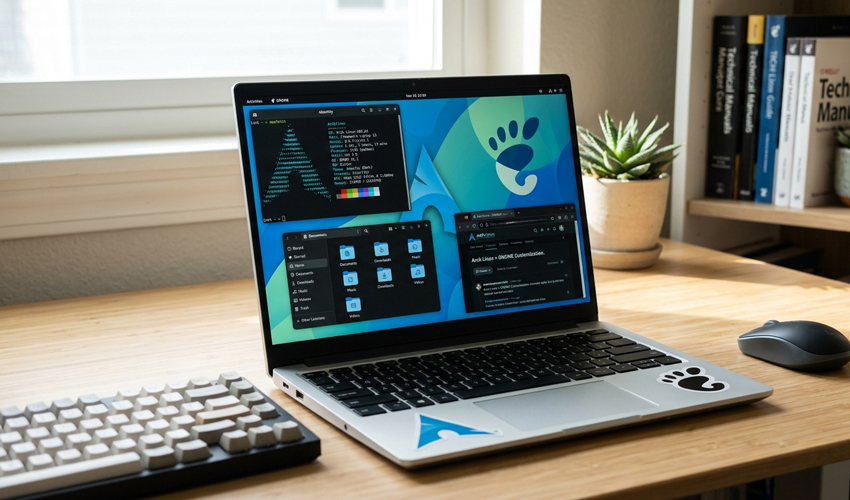
Arch Linux users are among the first to experience the latest GNOME desktop, as GNOME 50 has begun rolling out through Arch’s repositories. Thanks to Arch’s rolling-release model, new upstream software like GNOME arrives quickly, giving users early access to the newest features and architectural changes.
With GNOME 50, that includes one of the most significant shifts in the desktop’s history.
A Major GNOME Milestone
GNOME 50, officially released in March 2026 under the codename “Tokyo,” represents six months of development and refinement from the GNOME community.
Unlike some previous versions, this release focuses less on dramatic redesigns and more on strengthening the foundation of the desktop, improving performance, modernizing graphics handling, and simplifying long-standing complexities.
For Arch Linux users, that translates into a more streamlined and future-ready desktop environment.
Goodbye X11, Hello Wayland-Only Desktop
The headline change in GNOME 50 is the complete removal of X11 support from GNOME Shell and its window manager, Mutter.
After years of gradual transition:
- X11 sessions were first deprecated
- Then disabled by default
- And now fully removed in GNOME 50
This means GNOME now runs exclusively on Wayland, with legacy X11 applications handled through XWayland compatibility layers.
The result is a simpler, more modern graphics stack that reduces maintenance overhead and improves long-term performance and security.
Improved Graphics and Display Handling
GNOME 50 brings several key improvements to display and graphics performance:
- Variable Refresh Rate (VRR) enabled by default
- Better fractional scaling support
- Improved compatibility with NVIDIA drivers
- Enhanced HDR and color management
These changes aim to deliver smoother animations, more responsive desktops, and better support for modern displays.
For gamers and users with high-refresh monitors, these upgrades are especially noticeable.
Performance and Responsiveness Gains
Beyond graphics, GNOME 50 includes multiple performance optimizations:
- Faster file handling in the Files (Nautilus) app
- Improved thumbnail generation
- Reduced stuttering in animations
- Better resource usage across the desktop
These refinements make the desktop feel more responsive, particularly on systems with demanding workloads or multiple monitors.
New Parental Controls and Accessibility Features
GNOME 50 also expands its focus on usability and accessibility.